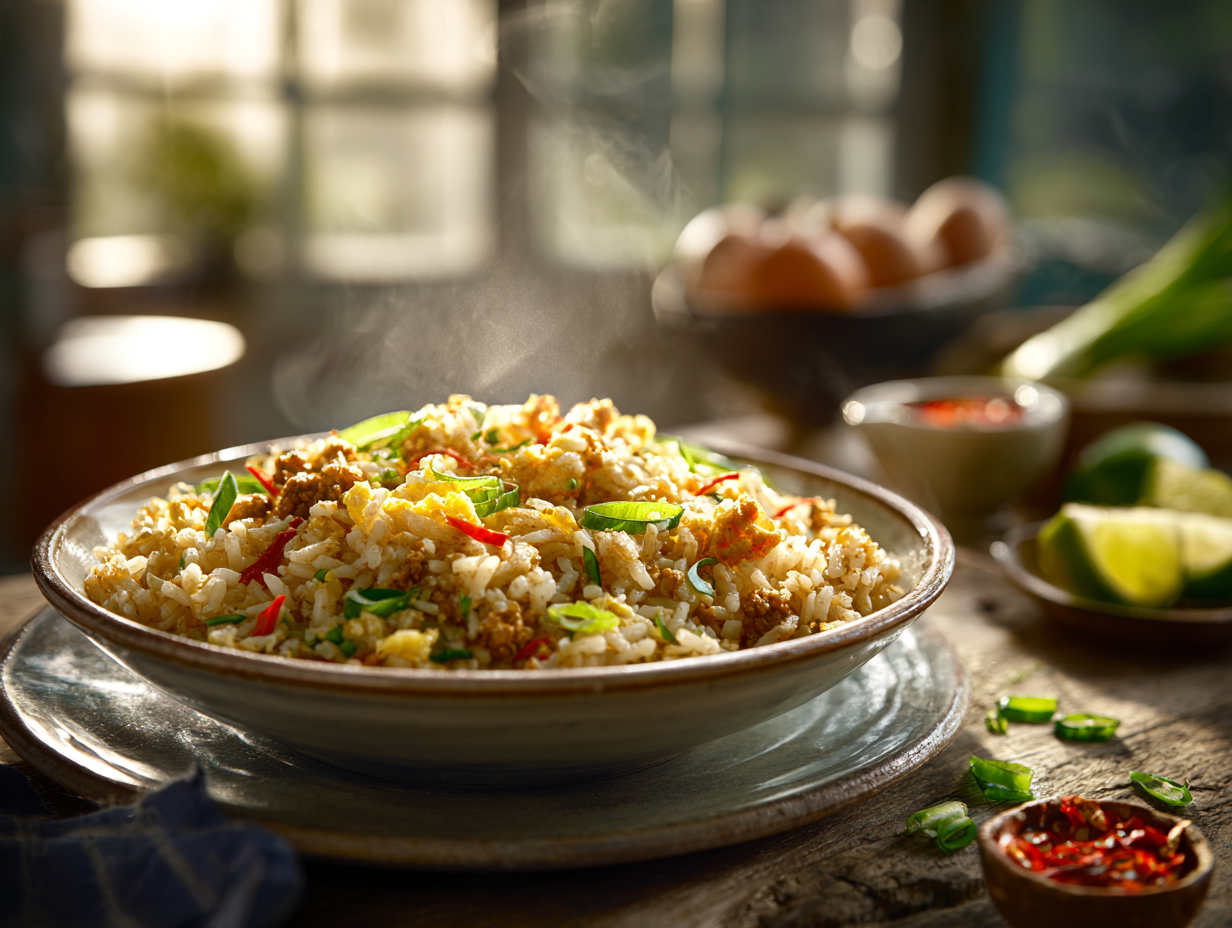
This is a quick weeknight fried rice built around eggs and chili heat, using day-old jasmine rice as the base. It comes together in under 10 minutes of actual cooking, and the eggs do real work here — they add protein and richness that turn a side dish into a full meal. If you have leftover rice in the fridge, this is the most practical thing you can do with it tonight.
The short version of why this works
Two things determine whether this dish is good or just okay. First, the rice has to be cold and dry before it hits the pan — fresh rice holds too much steam and turns the whole thing mushy. One night in the fridge makes a real difference. Second, the pan needs to be genuinely hot before anything goes in. A medium-heat stir-fry steams the ingredients; a ripping-hot pan fries them. That distinction is what gives the rice its slightly firm, separate texture and keeps the eggs from turning rubbery. Get those two things right and the seasoning almost takes care of itself.
Shopping notes
- Anchovies: If your regular supermarket only stocks oil-packed anchovy fillets, those work fine — use two fillets in place of the dried variety and pat them dry before adding. They dissolve quickly in the hot oil.
- Fish sauce: Not interchangeable with soy sauce. It has a sharper, more pungent saltiness. Most large supermarkets carry it in the Asian foods aisle; if yours doesn’t, a mix of soy sauce and a small squeeze of lime is a workable substitute, though the flavor will be milder.
- Fresh chilies: The heat level varies a lot by variety and even by individual chili. Taste a small piece before you commit to the full amount. Thai bird’s eye chilies are significantly hotter than a standard red finger chili.
- Jasmine rice: Specifically jasmine, not long-grain white or basmati. The texture difference matters here — jasmine has just enough stickiness to hold together without clumping when it’s been refrigerated overnight.
Troubleshooting
- Rice clumps into one solid mass: The rice was either too fresh or the pan wasn’t hot enough. Break up any clumps with your hands before they go in the pan, and make sure the oil is shimmering before you add anything.
- Eggs are rubbery or overcooked: They went in too early or the heat was too high for too long after adding them. Push the rice to the side, add the eggs to a slightly less intense part of the pan, and fold them in while they’re still just barely set — residual heat finishes them.
- Dish tastes flat despite correct seasoning amounts: This usually means the fish sauce or anchovies were added too late and didn’t cook into the rice. Add liquid seasonings early enough that they can coat the grains and reduce slightly, not just sit on top.
- Too salty after adding anchovies: Anchovies and fish sauce together can push the salt level over the edge fast. If you’re using anchovies, hold back on the fish sauce until the end and taste first before adding any.
- Vegetables are soggy: They released water into the pan, which dropped the temperature. Cook in smaller batches if your pan is crowded, or add vegetables after the rice is already partially fried so there’s less time for moisture to accumulate.
Keeping and reheating
Store leftovers in an airtight container in the fridge and use them within 2 days — the egg degrades in texture faster than plain fried rice. Reheat in a hot pan with a small splash of water or a few drops of oil, stirring constantly for 2 to 3 minutes until steaming throughout. Microwaving works in a pinch but tends to make the egg tough; the pan method takes 90 seconds longer and is worth it. Skip the garnish — not worth the extra dish when you’re just reheating a portion. This dish doesn’t freeze well; the egg turns grainy and the rice loses its texture on thawing.
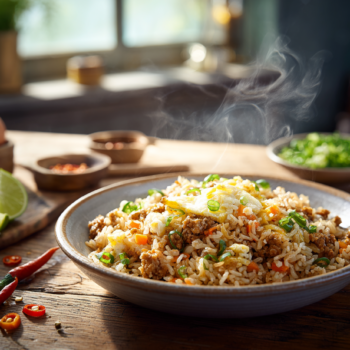
Fiery Thai Fried Rice With Egg Recipe

Ingredients
 1 cup white rice - steamed
 2 medium egg
 ½ cup ground pork (minced pork)
 ½ tablespoon garlic - chopped
 1 tablespoon yellow onion - chopped
 1 tablespoon spring onions - chopped
 2 tablespoons olive oil
 1 tablespoon soy sauce - good quality
- ½ tablespoon seasoning sauce
 ½ teaspoon sugar (white sugar)
 ¼ teaspoon salt
 ¼ teaspoon ground black pepper
Instructions
- Place the steamed rice in the mixing bowl, add soy sauce, seasoning sauce, raw sugar and salt, and mix well.
- Place the pan on high heat, then add olive oil.
- Once the oil is heated, add the garlic, and keep stirring until fragrant. Then, add the pork to brown.
- Beat the eggs to the pan, and stir until the eggs are a little bit cooked
- Add the steamed rice and chopped onion, and stir well until all combined.
- Add the spring onion and turn the heat off.
- Place on serving plate and serve immediately with fresh spring onion, sliced cucumber, lettuce and sliced tomatoes, the cheek of lime, then garnish with chopped fresh chillies.
Nutrition
Your questions, answered
Can I use freshly cooked rice instead of day-old?
You can, but spread it on a baking sheet and let it cool uncovered in the fridge for at least 30 minutes first. Freshly cooked rice holds too much moisture and will steam rather than fry, leaving you with a sticky, soft result instead of separate grains.
How many eggs should I use to make this a complete meal for one person?
Two eggs per serving is the practical minimum if this is the whole meal — they add enough protein to make it genuinely filling. Three eggs works well if you’re hungry or skipping a side, and the dish handles the extra volume without becoming unbalanced.
Is there a substitute if I don’t eat fish or shellfish?
Yes — replace the fish sauce and anchovies with soy sauce plus a small amount of miso paste stirred in at the end. It won’t be identical, but it gets you the same savory depth without any fish-derived ingredients.
More mince recipes to try
- Savory Pork Noodle Stir-Fry
- Authentic Szechuan Dan Dan
- Japanese Pork Lettuce Cups
- Quick Lamb Coconut Rendang