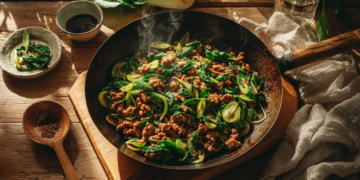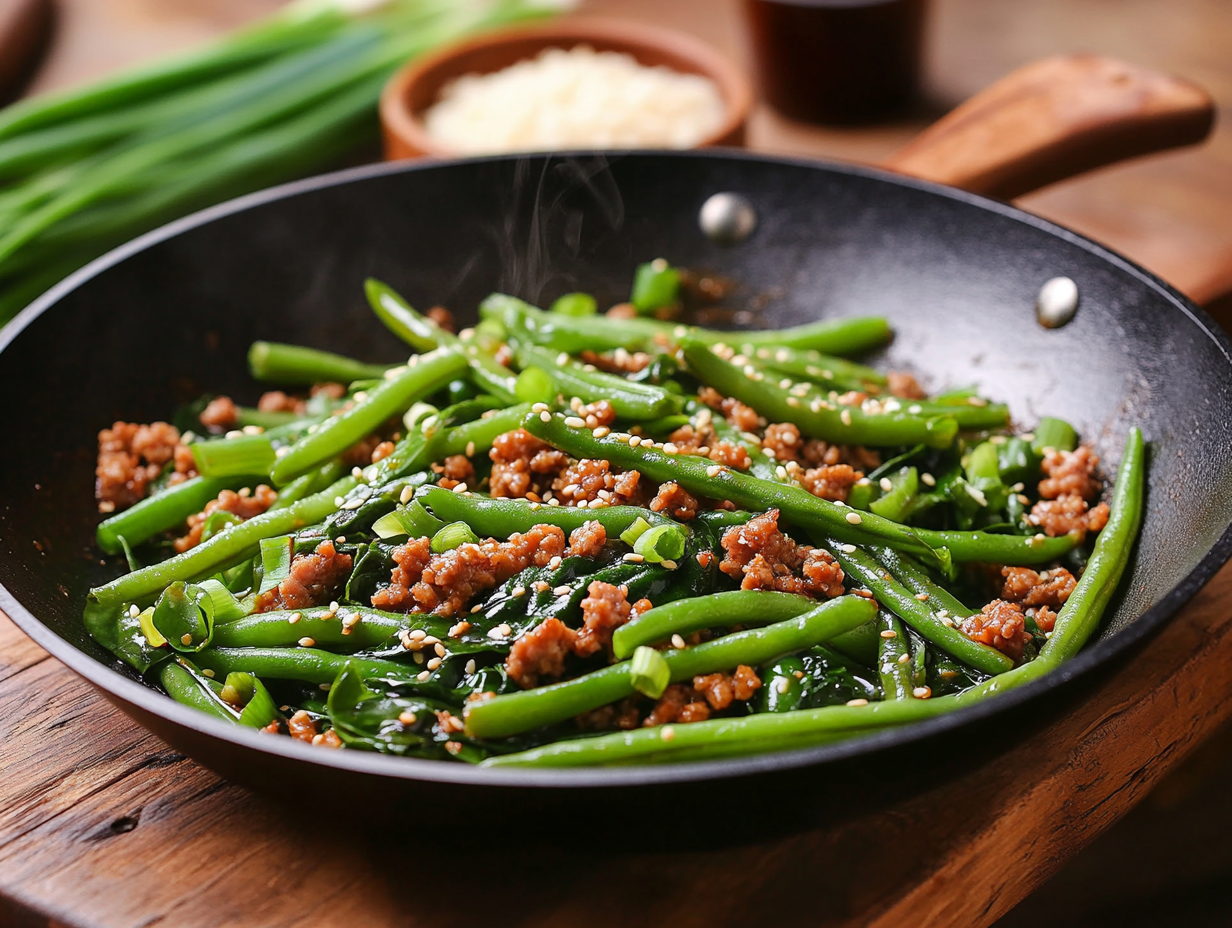
This is a one-pan stir-fry of ground pork, green beans, and baby spinach seasoned with tamari, rice wine, and sesame oil. It comes together in about 25 minutes and uses a short list of pantry staples. If you need a fast weeknight dinner that doesn’t leave you with a pile of dishes, this is a reliable option.
The technique that matters
High heat is the whole game here. A pan that isn’t hot enough before the pork goes in will cause the meat to steam and clump rather than brown. Let the skillet get properly hot — a drop of water should evaporate on contact — before you add the coconut oil, and then let the oil heat through before adding the pork. Once the pork is in, keep it moving and break it up constantly. Ground pork releases moisture as it cooks; stirring frequently lets that moisture evaporate instead of pooling, which is what gives you browned, separate pieces rather than a gray, soggy mass. The same logic applies when you add the green beans and spinach: work quickly and keep everything moving so the vegetables stay bright and the pan temperature stays high.
About the ingredients
- Tamari: This is a Japanese soy sauce that’s typically gluten-free. Regular soy sauce works as a direct swap if gluten isn’t a concern — use the same amount. Low-sodium soy sauce also works if you want to control saltiness.
- Rice wine (mirin or sherry): Mirin is sweet and mild; dry sherry is less sweet but still works. In a pinch, a small splash of rice vinegar with a pinch of sugar is a reasonable substitute.
- Toasted sesame oil: This is a finishing oil, not a cooking oil — it burns at high heat and loses its flavor. It goes in at the sauce stage, not at the start. Don’t swap it for plain sesame oil; the toasted version has a completely different, much stronger flavor.
- Baby spinach: Regular spinach with stems removed works fine. Bok choy or shredded cabbage are good alternatives if that’s what you have.
Mistakes to avoid
- Not draining excess fat: Ground pork can be fatty depending on the cut. If you see a lot of liquid fat pooling in the pan after browning, tilt the pan and spoon most of it out before adding the vegetables. Too much fat makes the final dish greasy and dilutes the sauce.
- Adding all the sauce at once before the pork is cooked through: The sauce goes in near the end, not at the start. Adding it too early lowers the pan temperature and can leave the pork undercooked. Ground pork must reach an internal temperature of 160°F (71°C) — never serve it pink.
- Overcrowding the pan: This recipe makes four servings. If your skillet is smaller than 12 inches, cook the pork in two batches before adding the vegetables, otherwise the pan temperature drops too much and everything steams instead of stir-fries.
- Dumping all the spinach in at once: Ten ounces of raw spinach is a large volume. Add it in three or four handfuls, waiting for each batch to wilt before adding the next. This keeps the pan temperature stable and stops the spinach from spilling over the sides.
- Skipping the resting step on the sauce: After you pour in the tamari, rice wine, and sesame oil, give it the full three minutes of stir-frying the recipe calls for. Cutting this short leaves the sauce tasting sharp and unintegrated — it needs that time to coat the meat and vegetables properly. Skip the garnish of scallions if you’re in a rush — not worth the extra prep when the dish is already well-seasoned.
Keeping and reheating
Store leftovers in an airtight container in the refrigerator for up to three days. The spinach will soften further as it sits, which is fine — the flavor holds up well. To reheat, use a skillet over medium-high heat with a small splash of water to loosen things up; two to three minutes of stirring is enough. Avoid the microwave if you can, as it tends to make the green beans rubbery. This dish doesn’t freeze well — the spinach turns watery and the green beans go limp on thawing, so it’s best made fresh or eaten within the refrigerator window.
Stir-Fried Ground Pork and Greens

Equipment
Ingredients
 2 tablespoons coconut oil
 1 pound ground pork (minced pork) - minced pork, about 450g
 2 pounds green beans - chopped, about 900g
 10 ounces baby spinach - about 280g
 3 tablespoons tamari sauce
- 1½ tablespoons rice wine - mirin or sherry
 1 tablespoon sesame oil - toasted
 3 green onions (scallions or green shallots) - finely chopped
Instructions
- Heat a 12-inch (30cm) skillet or wok over high heat until a drop of water evaporates on contact. Swirl in the coconut oil, and when it shimmers, add the pork and stir-fry for 3 to 4 minutes. Stir constantly with a wooden spoon to break up any lumps until the pork is browned with no pink remaining.2 tablespoons coconut oil, 1 pound ground pork (minced pork)
- Next, toss in the green beans and stir until incorporated. Then add the spinach in stages, allowing some to wilt before adding more so that it all fits in the pan.2 pounds green beans, 10 ounces baby spinach
- Pour in the tamari, rice wine, and sesame oil and continue to stir-fry for another 3 minutes, until the meat is cooked through and the sauce coats the pork and vegetables evenly. Add in the scallions and toss for 30 seconds until fragrant.3 tablespoons tamari sauce, 1½ tablespoons rice wine, 1 tablespoon sesame oil, 3 green onions (scallions or green shallots)
- Serve immediately on its own or over steamed jasmine or basmati rice.
Notes
Nutrition
Frequently asked questions
How do I know when the ground pork is fully cooked?
Ground pork is safe to eat when it reaches an internal temperature of 160°F (71°C) — use an instant-read thermometer if you’re unsure. Visually, fully cooked ground pork will be completely opaque with no pink remaining and the juices in the pan will run clear, not rosy.
Can I use a different ground meat instead of pork?
Ground chicken or ground turkey work well with the same sauce flavors, but cook them to 165°F (74°C) and never serve them with any pink remaining. Ground beef is a workable swap too, though it changes the flavor profile — it’s richer and less delicate than pork with these Asian-style seasonings.
My green beans are still tough after stir-frying — what went wrong?
Green beans need direct contact with a hot pan surface to cook through quickly. If the pan was overcrowded or not hot enough, they’ll stay firm. If this happens mid-cook, add two tablespoons of water to the pan and cover it briefly for one minute — the steam will finish them off without overcooking everything else.
Can I prep any of this ahead of time?
Yes — chop the green beans and scallions and measure out the sauce ingredients up to a day in advance, storing them separately in the fridge. The actual stir-frying needs to happen right before serving; cooked ground pork that sits and then gets reheated in the pan a second time tends to dry out.
The sauce tastes too salty — can I fix it?
Add a small squeeze of fresh lime juice or a teaspoon of rice vinegar to cut through the saltiness — acid balances salt effectively. Serving the dish over plain steamed rice also helps, as the rice absorbs and dilutes the sauce considerably.
More mince recipes to try
- Savory Pork Noodle Stir-Fry
- Japanese Pork Lettuce Cups
- Horopito Pork Stir Fry
- Authentic Szechuan Dan Dan