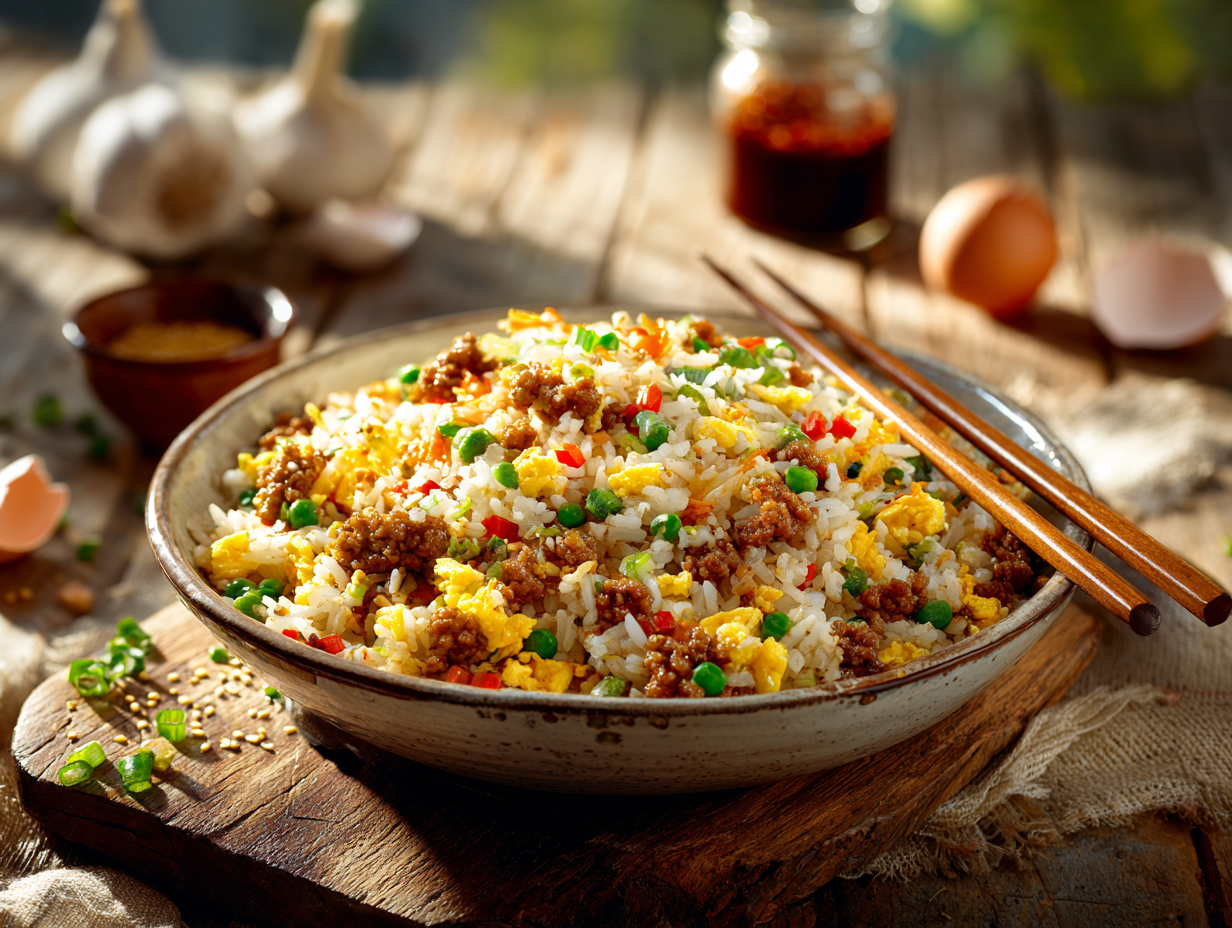
This is a ground pork fried rice built for a weeknight — one pan, about 30 minutes, and it uses cold leftover rice you already have in the fridge. The pork loin is leaner than most stir-fry proteins, so it cooks fast and doesn’t leave the rice greasy. If you need a reliable, filling dinner that doesn’t create a pile of dishes, this is a solid choice.
The technique that matters
Cold rice is non-negotiable. Freshly cooked rice steams itself in the wok and turns mushy — day-old rice from the fridge has dried out enough to fry properly and pick up a little color. The second thing that matters is heat. Get the pan genuinely hot before anything goes in. Ground pork loin is lean and cooks quickly, so a hot pan means it browns rather than steams. Browning the pork first, then setting it aside while you cook the eggs and vegetables, keeps each component in control. Cook the pork to an internal temperature of 160°F (71°C) — no pink, no guessing.
Smart swaps
- Ground pork loin: Ground chicken works here — just cook it to 165°F (74°C). Ground turkey is fine too, same temperature rule applies.
- Sesame oil: Don’t swap this one out — it’s doing most of the flavor work. Skip it and the dish tastes flat. Buy the small bottle; it lasts months in the fridge.
- Frozen mixed vegetables: No need to thaw first. Add them straight from frozen — they’ll cool the pan briefly, which is fine. Skip the garnish — not worth the extra dish.
- Soy sauce: Low-sodium soy sauce works well if you’re watching salt, since you can always add more but can’t take it back.
Make-ahead notes
The rice can be cooked up to three days ahead and stored uncovered in the fridge for the first hour to dry out, then covered. The finished fried rice keeps well in an airtight container in the fridge for up to three days. Reheat it in a hot skillet with a splash of water and a lid for two to three minutes — this revives the texture better than a microwave, which tends to make it sticky. Freezing is possible but not ideal; the eggs turn rubbery after thawing. If you do freeze it, use within one month and reheat directly from frozen in a covered pan over medium heat.
Common problems and fixes
- Rice clumps together in the pan: This usually means the rice was too warm or the pan wasn’t hot enough. Break up any clumps with your spatula before they go in, and press them flat against the hot surface to separate the grains.
- Pork turns gray and watery instead of browning: The pan wasn’t hot enough, or you added too much pork at once. Cook in two batches if needed — crowding drops the pan temperature and the meat steams instead of sears.
- Dish tastes bland even after adding soy sauce: Sesame oil is likely under-measured or was skipped. Add a small drizzle right at the end, off the heat — it’s more aromatic that way and a little goes a long way.
- Eggs disappear into the rice and turn rubbery: They were overcooked before mixing in. Pull the eggs off the heat while they still look slightly underdone — residual heat from the rice will finish them.
- Everything sticks to the pan: The oil was added to a cold pan, or you’re using a thin stainless pan without enough fat. A well-seasoned wok or a nonstick skillet over high heat with oil added just before the food goes in will solve this.
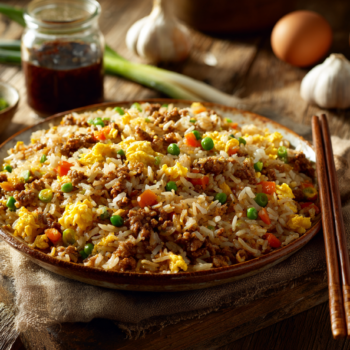
Gourmet Fried Rice

Ingredients
 1 cup ground pork - loin
 2 cups rice
- 1 package mixed vegetables
 3 teaspoons sesame oil
 2 teaspoons soy sauce
 2 cloves garlic
 1 pinch salt
 1 pinch ground black pepper
 3 medium eggs - scrambled
 1 tablespoon olive oil
Instructions
- In a skillet, heat a tablespoon of olive oil on medium heat. Add pork and heat thoroughly.
- Prepare 2 cups of rice and set aside.
- Once the pork is heated, add garlic cloves and vegetable blend. Cook everything for 6 to 8 minutes or until veggies are tender.
- Meanwhile, scramble 3 eggs in a skillet with a bit of oil or butter.
- Add scrambled eggs to pork and vegetable mixture and sesame oil and soy sauce. Stir and combine all.
Nutrition
Your questions, answered
Can I use freshly cooked rice instead of day-old rice?
You can, but the results will be noticeably worse. Fresh rice is too moist and will clump and steam in the pan rather than fry. If you’re in a pinch, spread the hot rice on a baking sheet and refrigerate it uncovered for 30 to 45 minutes to dry it out before using.
How do I know the ground pork is fully cooked?
Ground pork needs to reach an internal temperature of 160°F (71°C) — there should be no pink remaining. In a hot pan it usually takes three to four minutes, but use a thermometer if you’re unsure rather than going by color alone.
Can I make this with ground chicken or turkey instead of pork?
Yes, both work well in this recipe. Cook ground chicken or turkey to 165°F (74°C) and don’t serve either pink. They’re slightly leaner than pork loin so the dish will be a little lighter.
My fried rice always comes out soggy. What am I doing wrong?
The most common cause is rice that’s too fresh or a pan that isn’t hot enough. Use cold day-old rice and make sure your pan is properly preheated before any ingredients go in. Cooking in smaller batches also helps if your pan is on the smaller side.
Can I double the recipe for a larger group?
Yes, but cook it in two separate batches rather than doubling everything in one pan. Overcrowding drops the heat and you’ll get steamed, soggy rice instead of fried. Combine the batches at the end to toss with the sauce.
What type of pan works best if I don’t have a wok?
A large nonstick skillet or a well-seasoned cast iron pan both work fine. The key is surface area — use the biggest pan you have so the rice spreads out and fries rather than piles up and steams.
Try these next
- Savory Pork Noodle Stir-Fry
- Japanese Pork Lettuce Cups
- Authentic Szechuan Dan Dan
- Kiwi Pork Pūhā Stir Fry