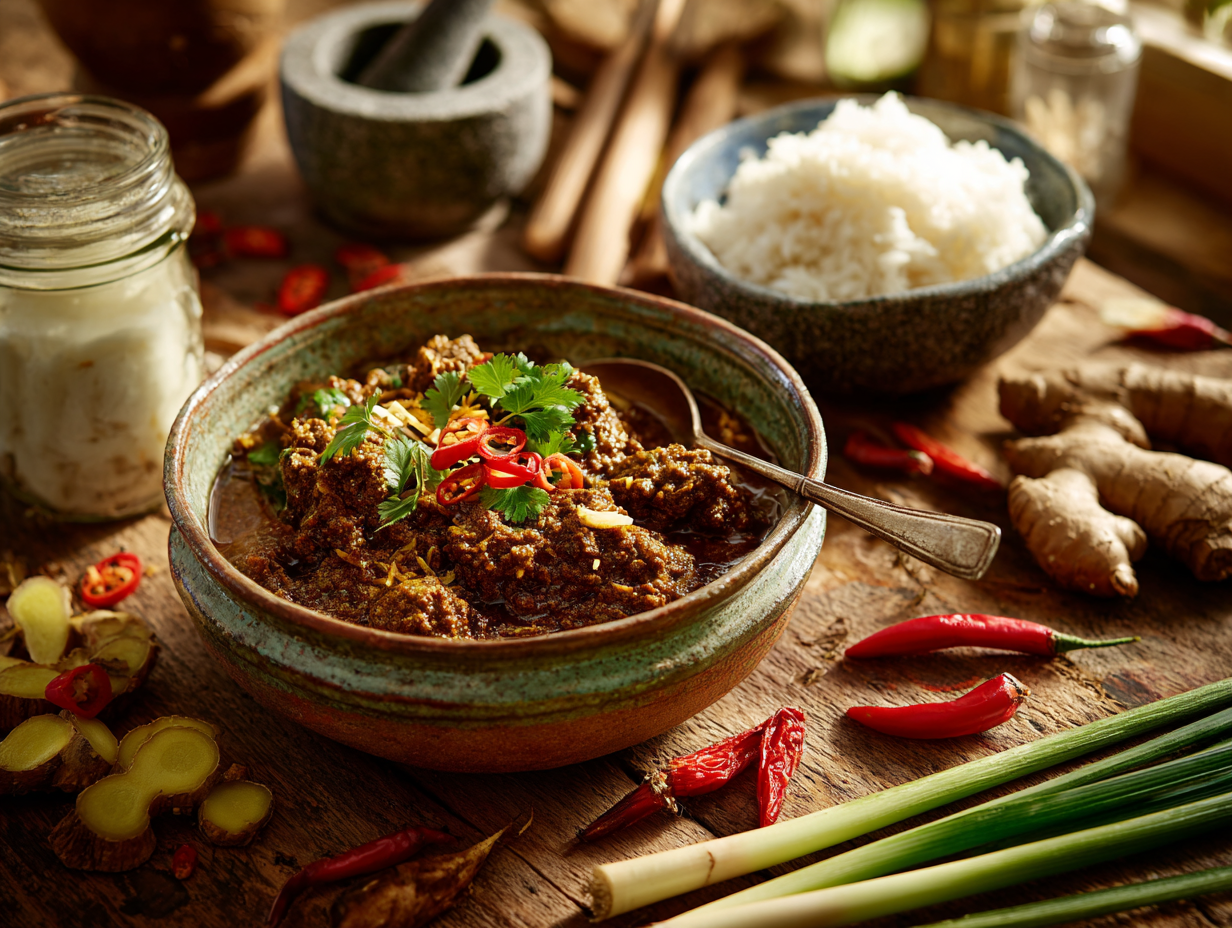
This is a ground lamb rendang — a thick, deeply spiced coconut dish that cooks in about an hour instead of the traditional four-plus. The spice paste does the heavy lifting, and ground lamb absorbs it faster than whole cuts, so you get real rendang flavor on a weeknight schedule. One pan, one blender, dinner done.
The short version of why this works
Two things make this recipe succeed. First, cooking the spice paste in hot oil until it darkens and the oil visibly separates from the solids — this drives off the raw, sharp edge of the aromatics and concentrates the flavor before the lamb ever hits the pan. Rush this step and the finished dish tastes flat. Second, the slow reduction of coconut milk after the lamb is added is what turns a wet curry into something with real body and coating power. Ground lamb speeds this up considerably compared to whole cuts, but you still need to let the liquid cook down until the mixture is nearly dry and the lamb starts to fry in the remaining coconut fat. That’s the texture you’re after.
Smart swaps
- Galangal: Harder to find than ginger and the flavor is distinct — piney, slightly medicinal. Frozen galangal from an Asian grocery works just as well as fresh. If you genuinely can’t find it, use extra ginger, but know the result will taste different.
- Fresh lemongrass: If using dried or paste, reduce the quantity by half — it’s more concentrated and can turn bitter.
- Kaffir lime leaves: These are worth tracking down; they’re often in the freezer section of Asian supermarkets. Dried leaves work but deliver noticeably less fragrance. Skip lime zest as a substitute — it doesn’t behave the same way during a long reduction.
- Ground lamb: Ground beef works here and is more traditional to rendang. Choose a fattier grind (80/20) so the meat doesn’t dry out during the reduction phase.
Storage and reheating
Leftovers keep well in an airtight container in the fridge for up to 4 days — the flavor actually improves overnight as the spices settle in. For longer storage, freeze in portions for up to 3 months. Reheat on the stovetop over medium-low heat with a splash of water or coconut milk to loosen it; the mixture tightens considerably when cold. Stir frequently and bring it to a full simmer to ensure the lamb reaches 160°F (71°C) throughout before serving. Microwaving works in a pinch — cover loosely and stir halfway through.
Mistakes to avoid
- Blending the paste too coarsely: Large chunks of lemongrass or galangal won’t soften fully during cooking and you’ll end up with fibrous bits in every bite. Blend until genuinely smooth, scraping the sides down at least once.
- Adding coconut milk before the lamb is browned: If you pour in the coconut milk while the lamb is still grey and wet, you lose the chance to develop any fond on the pan. Let the meat cook until it’s taken on some color first.
- Using light coconut milk: The reduction relies on coconut fat to carry flavor and create the coating texture. Light coconut milk has too much water and not enough fat — the dish will stay wet and taste thin. Skip the garnish — not worth the extra dish.
- Turning the heat too high during reduction: High heat scorches the bottom before the liquid has properly reduced. Keep it at a steady medium and stir every few minutes, especially toward the end when the mixture is nearly dry.
- Under-seasoning at the end: Ground lamb absorbs a lot of salt during the long cook. Taste after the reduction is complete, not before — the flavor concentrates significantly and your earlier seasoning may not be enough.
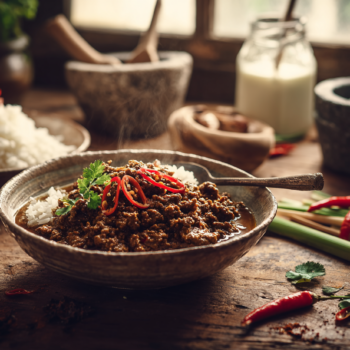
Lamb Mince and Coconut Rendang

Equipment
Ingredients
For the Main:
- 2 tablespoons neutral oil - such as grapeseed or canola
 1.5 pounds ground lamb (minced lamb) - preferably grass-fed for better flavor
 1 cup coconut milk - full-fat ; shake the can before opening
- 3 tablespoons desiccated coconut - lightly toasted for added depth
 1 cup water - or beef broth for extra richness
 2 teaspoons palm sugar - or substitute with brown sugar
 1 teaspoon salt - or to taste
For the Spice Paste:
- 4 medium shallots - peeled and roughly chopped
 4 cloves garlic - peeled
 1.5 inches ginger - fresh ; peeled
- 2 inches galangal - peeled, can substitute with more ginger
- 3 pieces red chilies - deseeded if less heat is desired
 1 stalk lemongrass - tender inside only, minced
 1 teaspoon turmeric - ground
Instructions
- Prepare the Spice Paste: In a food processor, blend shallots, garlic, ginger, galangal, chilies, lemongrass, and turmeric until a smooth paste forms. Add a splash of water if needed to help it combine. Set aside.
- Toast Coconut: In a dry skillet over medium heat, toast desiccated coconut for 2–3 minutes, stirring constantly, until golden and aromatic. Set aside.
- Cook the Lamb: Heat oil in a heavy-bottomed skillet or Dutch oven over medium-high heat (about 375°F / 190°C). Add ground lamb and brown for 6–8 minutes until caramelized and slightly crisp on the edges. Remove lamb and set aside.
- Fry the Spice Paste: In the same pan, reduce heat to medium (around 325°F / 165°C). Add the spice paste and sauté for 6–8 minutes until the paste darkens and releases oil, stirring often.
- Build the Rendang: Return the lamb to the pan with the paste. Stir in coconut milk, toasted coconut, sugar, and salt. Mix thoroughly. Add a cup of water and bring to a simmer.
- Simmer Gently: Let the rendang cook slowly over low heat uncovered for 45–50 minutes, stirring occasionally, until the sauce is thick and rich. The oil will begin to separate when ready.
- Taste and Finish: Adjust salt or sugar if needed. Serve hot.
Notes
- To deepen the flavor, prepare the rendang one day in advance and reheat slowly before serving—the flavors improve significantly overnight.
- For a milder version, use fewer chilies and add a teaspoon of lime juice at the end to balance the richness.
- Can substitute lamb with ground beef or turkey, though lamb offers unmatched richness for this specific dish.
Nutrition
Your questions, answered
Can I make the spice paste ahead of time?
Yes — the paste keeps in the fridge for up to 3 days or in the freezer for 2 months. Portion it into ice cube trays before freezing so you can pull out exactly what you need without defrosting the whole batch.
How do I know when the rendang is actually done?
The dish is ready when the coconut milk has fully reduced and the lamb mixture is nearly dry, with the oil visibly separating around the edges of the pan. The color will have shifted from pale tan to a deep reddish-brown, and the lamb should be frying gently in the remaining fat rather than simmering in liquid.
Is this dish very spicy?
That depends entirely on the chilies you use and how many seeds you leave in. For moderate heat, remove the seeds before blending the paste. For a milder result, swap some of the fresh chilies for a mild red pepper — you keep the color and body without the burn.
If you liked this one
- Fragrant Lamb Coconut Stew
- Spicy Lamb Pumpkin Stew
- Lamb Satay Fusion Skewers
- Lamb Spinach Curry Delight




great recipe for the family