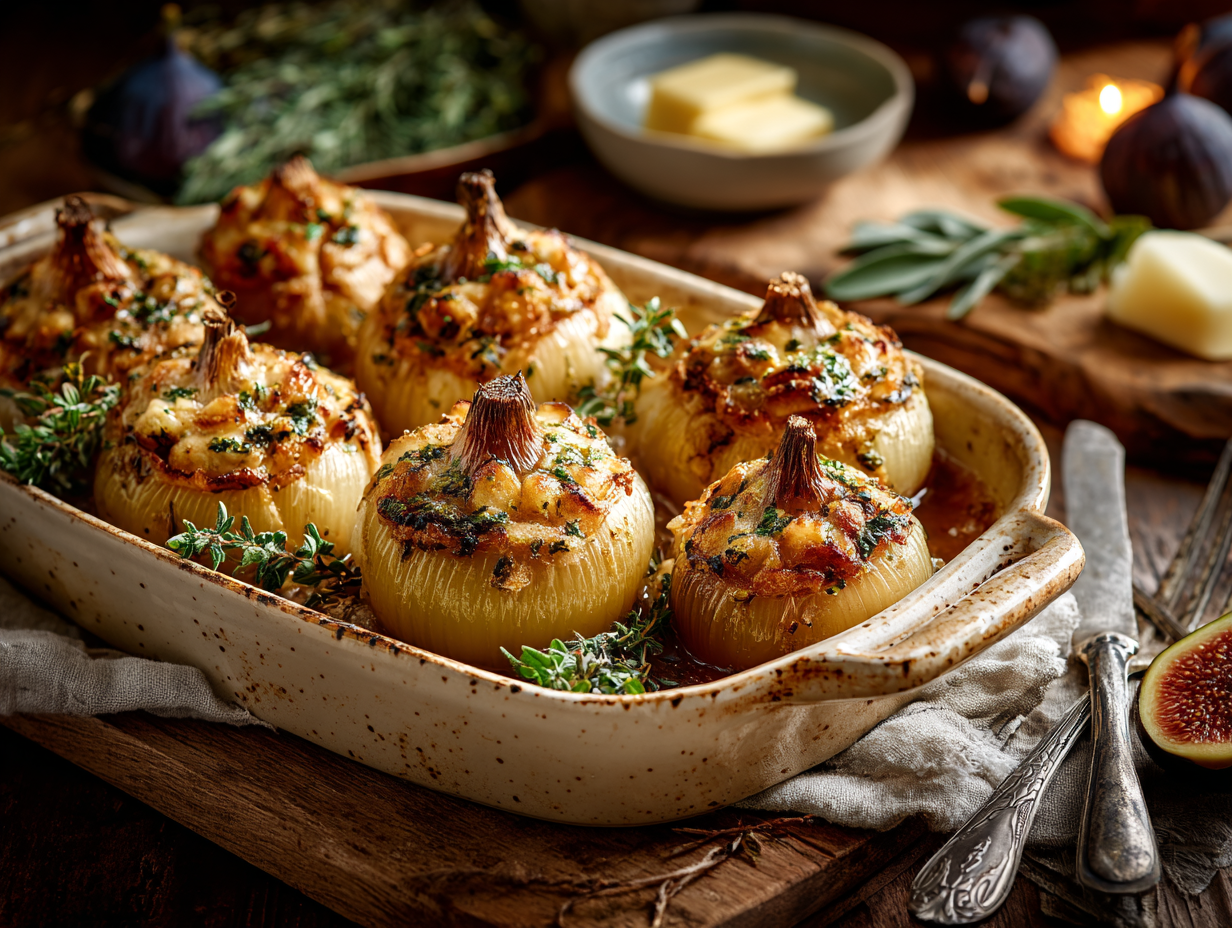
Stuffed onions are whole onions hollowed out, filled with a ground beef mixture that includes figs, apple, breadcrumbs, fresh herbs, and a little cheese, then roasted until the onion softens and the filling sets. The real reason to make this: you get a self-contained portion that looks impressive but uses one baking dish and almost no extra equipment. It works as a standalone meal or alongside a roast.
Why this recipe works
Two things make this recipe reliable. First, the onion acts as its own cooking vessel — it holds moisture around the filling as it roasts, which means the ground beef stays tender rather than drying out the way it can on an open sheet pan. Second, the breadcrumbs do real structural work: they absorb the fat and juice released by the beef during cooking, so the filling holds together when you cut into the onion instead of spilling out as a loose, greasy mass. The figs and apple add some sugar, which encourages the onion exterior to caramelize without any extra attention from you.
Make-ahead notes
The filling can be mixed and refrigerated up to 24 hours ahead — keep it covered in the same bowl you mixed it in. Stuff the onions and refrigerate them assembled (unfilled cavities sealed with a small piece of cling wrap) for up to 12 hours before baking; pull them out 20 minutes before they go in the oven so they’re not fridge-cold at the center. Fully cooked stuffed onions reheat well: cover the baking dish with foil and warm at 325°F (160°C) for about 20 minutes until the filling reads 160°F (71°C) on an instant-read thermometer. They don’t freeze particularly well once assembled — the onion turns watery on thawing — but the raw filling freezes fine for up to 2 months.
If something goes sideways
- The onion walls collapse during roasting: This usually means the onion was hollowed too thin. Leave at least two outer layers intact when you scoop. If it happens anyway, press the onion back into shape with tongs, tent the dish with foil, and finish cooking — it’ll still taste right even if it looks rough.
- The filling is still pink at the center when the onion looks done: Cover the dish with foil and give it another 10 minutes. The onion can handle extra time; check the filling with a thermometer and pull it at 160°F (71°C). Don’t rely on color alone with a fruit-and-herb filling — the figs can keep it looking pink.
- The filling is dry and crumbly: Too much breadcrumb or the beef was very lean. Add a tablespoon of beef stock or water to the baking dish before it goes in the oven next time. Skip the garnish — not worth the extra dish.
- The cheese burns before the filling is cooked through: Lay a small square of foil loosely over the top of each onion for the first two-thirds of cooking, then remove it for the last 10 minutes to brown the cheese.
- The onion is still firm and sharp-tasting after the stated cooking time: Older, larger onions take longer to soften than the recipe assumes. Add 10–15 minutes covered with foil, then uncover to finish. A fork should slide into the outer wall with no resistance before you serve.
Delectable Stuffed Onion Recipe

Ingredients
 6 big yellow onion
 75 grams butter
 2 tablespoons Canola oil
 8 medium green onions (scallions or green shallots) - peeled and finely chopped
 3 cloves garlic - peeled and chopped
- 250 grams dried figs - chopped into small cubes
 2 small apples
 250 grams breadcrumbs
 3 tablespoons sage - chopped
 750 grams ground beef (minced beef)
 3 tablespoons parsley - chopped
 1 large egg - beaten
 1 pinch salt
 1 pinch ground black pepper
 ⅓ cup cheddar cheese - grated
Instructions
- First, heat the butter and rapeseed oil until the butter has melted, and add the shallots. Fry them gently until they are well softened but not browned. Stir in the garlic and season well with sea salt and black pepper. Remove the mixture pan from the heat and place the ingredients in a bowl; leave them to cool.
- Peel the apples, remove the core and cut them into small cubes. Next, mix the figs, apples, breadcrumbs, sage, meat and parsley with the shallots and season with sea salt and black pepper. Mix in the beaten egg until the mixture is quite firm.
- To prepare the onions for stuffing, peel the outer layers and chop the bottom off so the surface is flat; the onion should be able to stand. Chop the onion about a third of the way down; this will be used as the ‘hat’.
- Hollow the bottom half of the onion and place the stuffing inside. Top with cheese. Replace the ‘hat’ and brush the onion with melted butter before standing them on a baking tray. Place in the oven until the filling is cooked thoroughly and golden brown onions.
- Place any remaining stuffing into an ovenproof dish and cook alongside the turkey in the oven.
Nutrition
Frequently asked questions
What size onions work best for stuffing?
Medium-large onions, roughly 3 to 4 inches across, give you the most usable cavity without the walls getting too thin. Very large onions take significantly longer to soften all the way through, and small onions don’t hold enough filling to make a satisfying portion.
Can I use a different ground meat instead of beef?
Ground lamb works very well here and pairs naturally with the figs. If you use ground turkey or chicken, cook to an internal temperature of 165°F (74°C) and expect a slightly drier filling — add an extra tablespoon of stock to the mix to compensate.
Do I need to pre-cook the onion before stuffing it?
No — the recipe roasts them raw, which is fine as long as you give them enough time in the oven. Pre-boiling the onions for a few minutes does make them easier to hollow cleanly if you find the raw onion hard to work with, but it adds a pot to wash.
What can I use instead of figs if I don’t have any?
Dried apricots or raisins are the closest swap — use the same weight. A small grated pear works in place of the apple if that’s what you have on hand.
How do I know when the ground beef filling is fully cooked inside the onion?
Use an instant-read thermometer pushed into the center of the filling — you’re looking for 160°F (71°C) for beef. Don’t judge by the color of the filling alone, since the fruit can keep it looking pink even when it’s fully cooked through.
Can I bake extra stuffing that doesn’t fit in the onions?
Yes — press any leftover filling into a small oven-safe dish, add a splash of stock, and bake it alongside the onions. It will be done in about 20–25 minutes and reads 160°F (71°C) when ready.
Try these next
- Spicy Beef Stuffed Peppers
- Savory Stuffed Onion Dolma
- Moroccan Lamb Apricot Briouats
- Hearty Beef Cauliflower Bake