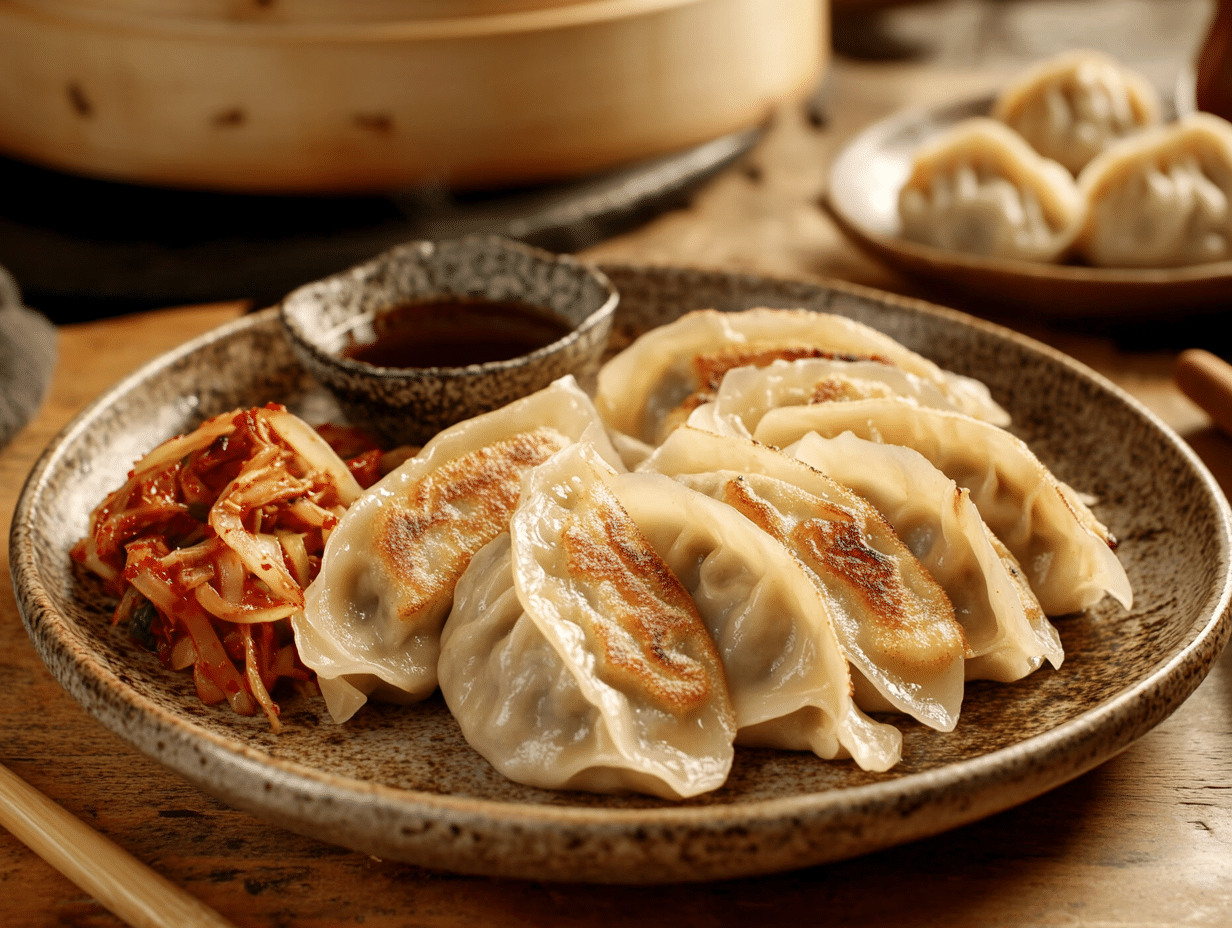
Mandu are Korean dumplings filled with ground pork, cabbage, and garlic, then cooked two ways — steamed for a juicy interior and pan-fried for a crispy bottom. The total time is 35 minutes, and the filling comes together in one bowl. They also freeze beautifully uncooked, which makes a big batch worth every minute of folding.
Why this recipe works
The steam-fry finish is the key move here. You brown the dumplings in oil first, then add a small splash of water and clap on the lid. The trapped steam cooks the pork filling all the way through — ground pork must reach 160°F (71°C) — while the base stays in contact with the hot oil and crisps up. Neither pure steaming nor pure frying alone gives you both results. The second thing that matters is moisture control in the filling: shredded cabbage releases water as it sits, so mixing and filling promptly (rather than letting the mixture rest) keeps the wrappers from going soggy before they hit the pan.
Mistakes to avoid
- Overfilling the wrappers. More than 1½ tablespoons of filling makes a clean seal nearly impossible. The edges split during cooking and the filling leaks into the oil. Keep it modest.
- Skipping the water-wipe on the non-sealed edge. Only wet the half of the wrapper edge you’re pressing together. Wetting the whole rim makes the dough slippery and the seal weak.
- Crowding the pan. Dumplings touching each other steam instead of fry on the sides, and they can stick together. Leave at least half an inch between each one.
- Lifting the lid too early during the steam-fry step. Opening the lid before the water has mostly evaporated drops the temperature sharply and extends cooking time unevenly. Wait for the sizzling to change tone — that’s the sign the water is nearly gone.
- Using a pan without a tight-fitting lid. A loose lid lets steam escape too fast. The filling may not reach a safe temperature before the bottom burns. Use a lid that sits flush, or cover tightly with foil.
Smart swaps
- Mandu wrappers: These are thicker than gyoza skins and hold up better to the steam-fry method. If you can only find gyoza wrappers, use two stacked together per dumpling. Wonton wrappers are square and thinner — they work in a pinch but tear more easily.
- Ground pork: Ground chicken can substitute but must reach 165°F (74°C) internal temperature — add about 1 extra minute to the covered steam-fry step to be safe.
- Green cabbage: Napa cabbage works well and has a slightly softer texture. Squeeze out excess moisture with a clean towel before mixing — it holds more water than green cabbage.
Make-ahead notes
Uncooked mandu freeze exceptionally well and that is the main reason to make a full batch. Arrange filled, uncooked dumplings in a single layer on a parchment-lined tray and freeze until solid, about 2 hours, then transfer to a zip-lock bag — they keep for up to 3 months. Cook straight from frozen: add 1 extra minute to the steam-fry step and confirm the pork reaches 160°F (71°C). If you want to refrigerate cooked mandu instead, store them in an airtight container for up to 3 days. Reheat in a dry non-stick pan over medium heat for 2–3 minutes per side — skip the microwave, which makes the wrappers rubbery. Make the filling up to 24 hours ahead and keep it covered in the fridge; fold the wrappers just before cooking.
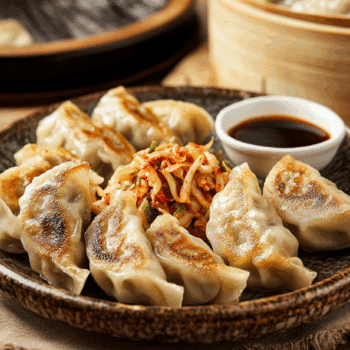
Korean Mandu Dumplings – Steamed & Fried

Equipment
Ingredients
 ½ pound ground pork - minced pork, about 225g
- 1 package mandu wraps - about 24 wrappers, thicker than gyoza or wonton
- ¼ small green cabbage - shredded, about 4 oz / 115g
 3 tablespoons vegetable oil - for pan-frying
 2 tablespoons garlic - finely chopped, about 6 cloves
- ½ teaspoon fine sea salt - or to taste
 ¼ teaspoon ground black pepper
 ¼ cup water - 60ml, for steam-frying
- 2 tablespoons water - small bowl, for sealing wrappers
Instructions
- Finely shred the cabbage using a mandoline, food processor with the shredding disc, or a sharp knife. You want thin, uniform shreds about 2 inches (5cm) long so they blend into the filling without poking through the wrappers.¼ small green cabbage
- In a large mixing bowl, combine the ground pork, shredded cabbage, chopped garlic, salt, and black pepper. Mix with your hands or a fork until evenly combined — do not overmix or the filling will become dense.½ pound ground pork, ¼ small green cabbage, 2 tablespoons garlic, ½ teaspoon fine sea salt, ¼ teaspoon ground black pepper
- Set up your assembly station: a small bowl of water for sealing, a plate or parchment-lined baking sheet for finished dumplings, and the stack of mandu wrappers.2 tablespoons water, 1 package mandu wraps
- Place a mandu wrapper in your palm. Dip your finger in the water and moisten the top half of the wrapper edge. Place about 1 to 2 tablespoons of filling in the centre of the wrapper.1 package mandu wraps, 2 tablespoons water
- Fold over in half, and press the edges together.
- Place half of the dumplings in a steamer basket set over boiling water. Steam for 8–10 minutes until the wrappers are translucent and the pork is cooked through (160°F / 71°C internal). Meanwhile, heat 3 tablespoons of vegetable oil in a large non-stick skillet with a lid over medium-high heat.3 tablespoons vegetable oil
- Place the remaining dumplings in the hot skillet in a single layer, flat side down. Fry without moving for 2 minutes until the bottoms are golden brown. Add 2 to 3 tablespoons (30–45ml) of water to the pan and immediately cover with the lid. Reduce heat to medium.¼ cup water
- Let the dumplings steam-fry covered for 4 minutes, until the water has fully evaporated, the wrappers are translucent, and the pork filling reaches 160°F / 71°C. Remove the lid for the last 30 seconds to re-crisp the bottoms.
- Check the steamed batch — the wrappers should be fully translucent and the filling opaque with no pink remaining.
- Serve both batches immediately with kimchi, kkakdugi (cubed radish kimchi), shredded cabbage, and a dipping sauce of soy sauce, rice vinegar, and a few drops of sesame oil.
Notes
Nutrition
Frequently asked questions
How do I know when the pork filling is fully cooked?
The safest check is an instant-read thermometer inserted through the side fold — ground pork needs to hit 160°F (71°C). If you don’t have a thermometer, cut one dumpling open after the steam-fry step: the filling should be completely opaque with no pink remaining.
Can I make a big batch and cook them throughout the week?
Yes — freeze them uncooked in a single layer, then bag them once solid. They go straight from freezer to pan with no thawing needed, just add about a minute to the covered cooking time. This is genuinely the most practical way to use this recipe.
My dumplings keep opening up during cooking. What am I doing wrong?
The seal is almost always the issue — either the wrapper edge wasn’t wet enough, or the filling was packed too close to the rim. Leave a clear ¼-inch border around the filling and press the edges firmly for a few seconds before moving on to the next one.
Do I have to do both steaming and frying, or can I just do one?
You can do either method on its own. All-steamed mandu are softer throughout and work well if you’re cooking for a crowd with a large steamer basket — skip the garnish on the steamed batch, not worth the extra dish. All pan-fried mandu are crispier but need the water-and-lid step to ensure the filling cooks through safely.
What dipping sauce goes with these?
A simple mix of soy sauce, rice vinegar, and a few drops of sesame oil is the standard pairing. A pinch of chili flakes or a small amount of gochugaru adds heat if you want it — both are pantry staples if you cook Korean food regularly.
What to cook next
- Crispy Pork Dumpling Delight
- Savory Lamb Dumpling Delights
- Japanese Pork Lettuce Cups
- Authentic Szechuan Dan Dan