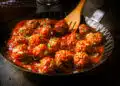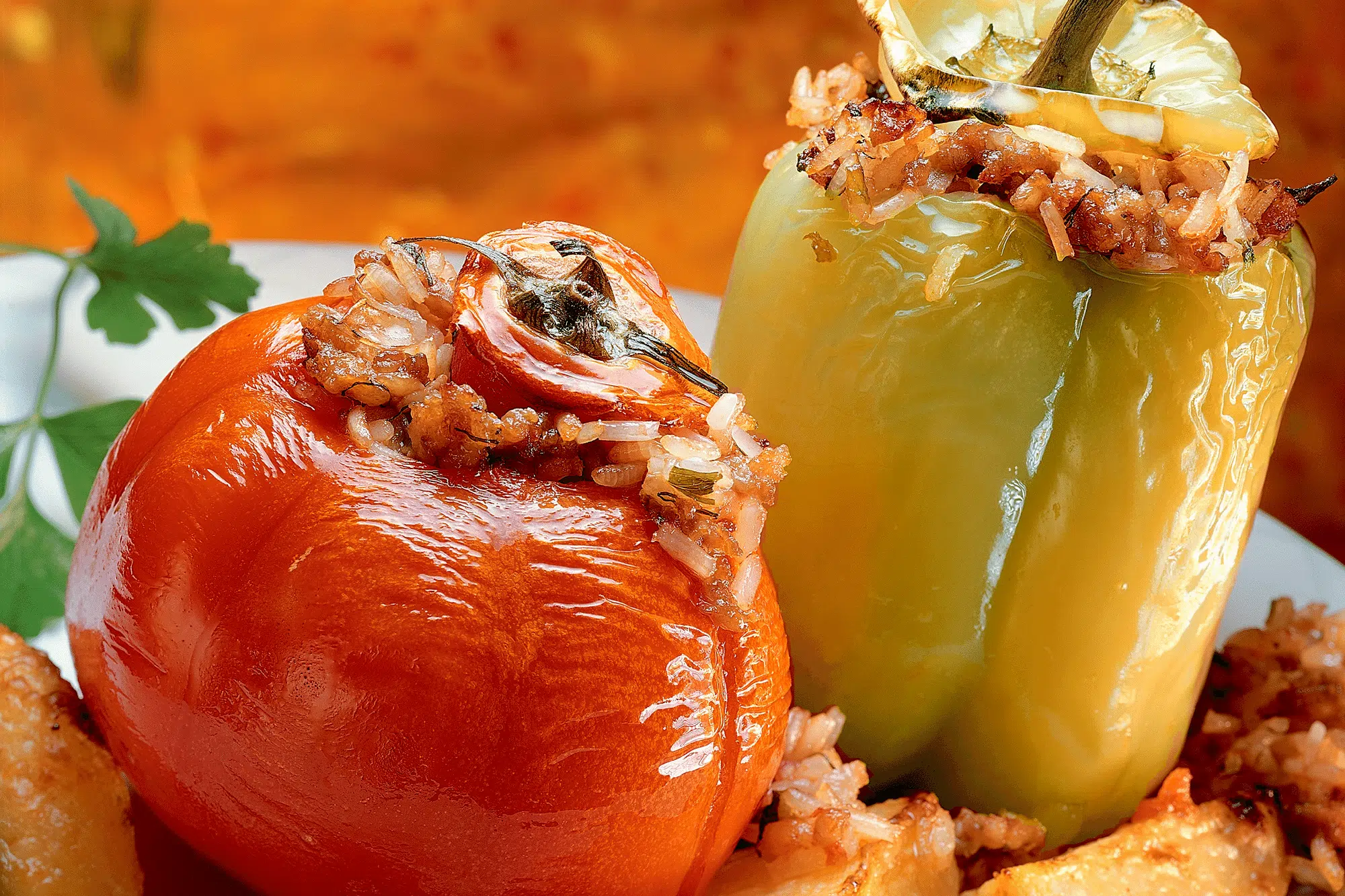
Greek Stuffed Tomatoes and Peppers, known in Greece as “Gemista” (or “Yemista”), is one of those dishes that manages to fuse simplicity and depth of flavor effortlessly. Traditionally eaten in Greek homes as a summertime staple, this dish is all about seasonal produce, lush Mediterranean herbs, and slow cooking—a technique that coaxes out the intensity in every ingredient. In our version, we’ve added a touch of international flair by playing with textures and adding some global influence to the herbs and filling. But to fully appreciate this recipe and interpret it with more heart, let’s dive into its background, exploring its Greek roots and why this dish is so beloved.
💫 The Heart of Greek Cuisine
Greek cuisine is centered around vegetables, olive oil, grains, herbs, and—when needed—lean meats like pork, lamb, and poultry. In fact, meat often plays a supporting role in many traditional Greek dishes, as vegetables and whole grains were both economically viable and abundant.
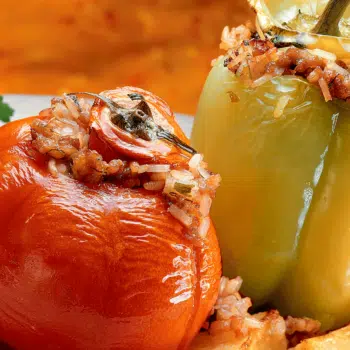
“Gemista” comes from the Greek verb “gemizo,” meaning “to stuff.” The idea behind the dish is to utilize whatever produce is in season—most commonly tomatoes, bell peppers, zucchinis, or even large eggplants—and generously fill them with a mixture of rice, herbs, and often ground meat. Once baked, these vegetables become silky, sweet, and juicy from the slow roast, while the stuffing absorbs the natural juices and melds with the fragrant herb mix.
It’s a dish rooted not just in taste but also in tradition. Greek grandmothers (known affectionately as “yiayias”) made gemista during times when families gathered around the dinner table—a home-cooked centerpiece that could feed many with modest ingredients. During times of fasting or lent, a meatless version with only seasoned rice, onions, raisins, and pine nuts often took center stage.
Why Tomatoes and Peppers?
Tomatoes and green bell peppers are perfect stuffing vessels, and when baked, they transform dramatically. Tomatoes, naturally full of moisture and acidity, encourage tenderizing and caramelizing during baking. Green bell peppers, on the other hand, provide a vegetal contrast and a satisfying structure for the stuffing.
In the spirit of honoring the Greek approach, this recipe uses both: four plump tomatoes and four medium-sized green peppers. The pairing is visually vibrant, especially when plated all together after roasting—a combination of deep reds, earthy greens, and golden browns, especially from the roasted potato wedges nestled alongside them.
🍚 Rice as a Foundation
Rice in gemista isn’t just filler—it provides a creamy, hearty texture that turns extraordinary with the right mixture of herbs and spices. In Greece, short-grain or medium-grain rice is used since it softens without turning to mush, making it optimal for absorbing the vegetable juices and melding with aromatics.
The recipe calls for 13 tablespoons of rice, an unusual but very handy measurement that ensures you get just the right amount of bulk to match the intensity of the pork and herbs. We recommend rinsing the rice beforehand to eliminate excess starch, allowing each grain to cook up light yet cohesive.
🌿 Herbs, Aromatics, and Extras
What truly makes this gemista pop are the fresh herbs and nuts. Dill and parsley are used to uplift the savory profile and blend beautifully with classic Greek flavors. Dill, with its feathery texture and bright flavor, is a key herb in Mediterranean cooking. Parsley, seemingly simple, adds balance and earthiness.
The addition of pine nuts adds unexpected texture and a subtle buttery bite. Pine nuts are common in Greek and Middle Eastern cooking and have long embellished dishes such as pilafs and vegetable medleys. When toasted lightly before being mixed into the stuffing, they add a layer of nutty complexity.
Garlic and onions form the foundation of the base flavor. Garlic is minced very fine in this recipe, helping it to fully infuse into the rice and pork mixture, while onions are sautéed until golden and just caramelized, unlocking their sweetness.
🥩 Pork and Variations
In our creative twist, we use pork as the protein of choice—about two cups worth—which makes this recipe richer and heartier. Ground pork mixes seamlessly with the plant-based ingredients, absorbing herbal tones and adding an umami backbone to each bite.
Traditional Greek versions sometimes use ground beef or lamb, though vegetarian versions are equally treasured. Chickpeas, lentils, or plant-based crumbles can be excellent meat substitutes if you’re adapting the dish for a meatless diet. Another twist is the occasional addition of grated cheese (like feta or Kefalotyri), though that’s more of a modern improvisation than tradition.
🥔 Baked Potatoes as the Bedrock
One of the best touches in this recipe is the inclusion of potato wedges—regular and sweet. In Greek cooking, it’s quite common to surround stuffed vegetables in the baking dish with chunks of potato. These potatoes absorb the cooking juices along with a drizzle of olive oil (and perhaps a touch of tomato purée), resulting in a side dish that is filling, flavorful, and completely soaked in the aromatic flavors of the baking pan.
They also help stabilize the peppers and tomatoes in the pan so they remain upright during baking—a practical culinary trick that also has the advantage of adding even more deliciousness to the final plate.
🔥 The Olive Oil Factor
Olive oil is the cornerstone of Mediterranean cooking. In this dish, it’s used both in the initial sautéing phase and later in drizzles over the vegetables before the roasting process. Choose a good-quality extra virgin olive oil—it really does impact flavor. An added touch of sweetness with a dusting of brown sugar on top can caramelize the top of the vegetables while baking and mellow some of the acidic tang of the tomatoes.
🔥 Slow Roasting: Taste and Tradition
The magic happens in the oven. Baking the gemista at 300ºF for about an hour allows the vegetables to slowly soften and their skins to blister just slightly. This low and slow cooking process is key to allowing the rice to fully cook, the flavors to meld, and the aromatic herbs to infuse everything. You’re aiming for tender vegetables, rice that is fully cooked but still distinct, and a cohesive dish where every component adds to the whole.
👨🍳 A Mediterranean Fusion?
This version has subtle hints of Mexican inspiration too—a nod to chili-rich spice blends, hearty proteins, and the concept of “stuffed” vegetables from Latin American cuisine. While the seasoning steers closer to Greek tradition in this case, the core concept of stuffed vegetables crosses cultures and cuisines. Whether it’s dolmas in the Middle East, stuffed poblanos in Mexico, or even cabbage rolls in Eastern Europe, the idea of enveloping a flavor-rich filling into a plant-based vessel is universal. This recipe celebrates that global commonality through a Greco-inspired lens.
🥂 Serving Greek Stuffed Tomatoes and Peppers
This dish is often served warm but can be equally satisfying at room temperature—a wonderful feature for entertaining or potlucks. Pair it with a fresh Greek salad (tomatoes, cucumbers, red onions, olives, and feta), some tzatziki, and a loaf of crusty bread to soak up the juices.
Add a side of white wine like Assyrtiko or a soft red like Agiorgitiko, and you’ve created a feast that brings the Aegean right to your dinner table.
🌞 A Taste of Summer, All Year Round
Ultimately, this recipe is a tribute to summer’s bounty, no matter when you make it. Whether you’re pulling fresh veggies out of your own garden or picking them up from the farmer’s market, Greek Stuffed Tomatoes and Peppers bring a rustic elegance and a soulful warmth that comforts and delights in every season.
Try it once, and it just might become a new comfort food classic in your kitchen, too.

Delicious Greek Stuffed Tomatoes and Peppers
Ingredients
4 medium tomato
4 medium green pepper (green capsicum)
2 cups ground pork (minced pork)
13 tablespoons white rice
1 large onion - chopped
2 cloves garlic - minced very fine
½ tablespoon fresh dill - chopped
½ tablespoon parsley - chopped
½ cup pine nuts
3 large potatoes - cut in quarters
2 tablespoons olive oil - extra virgin
1 teaspoon salt
1 teaspoon ground black pepper
Instructions
- Cut off the tops of the tomatoes and put them aside (you will need the tops later). Do the same with the peppers but make sure you take out the seeds.
- Using a spoon, scoop out the tomato flesh and reserve it in a bowl. Be careful not to pierce through the skin of the tomatoes. Then, using a food processor or food mill, process the pulp until you have a chunky liquid and set it aside.
- Heat a pan, add the olive oil, and let it warm for a minute but not more than that (you don’t want the oil to burn). Add the chopped onion, garlic, dill, parsley, pine nuts, rice, salt and pepper. Stir them all together for about 3 to 4 minutes;you want the onion to get caramelized. Add the beef and let brown.
- Add the tomato pulp puree from the fresh tomatoes with a tablespoon of tomato paste, season with a bit of nutmeg and let the sauce simmer and reduce a bit so that it is not too runny. The uncooked rice will absorb the excess liquid as it cooks. Remember, don’t cook the rice through.
- Place the mixture on a large pan after you stuffed them with the rice stuffing that we just made, replace the caps and use the potatoes wedges to keep them from not falling. I usually like to add some sweet potatoes and cut them the same way as the regular potatoes. Drizzle some olive oil on the vegetables, salt, pepper and a little brown sugar (if you have leftover stuffing, pour it into the pan and on top of the potatoes).
- Bake them for about an hour at 300 degrees Fahrenheit until they are tender and fully cooked!


Yummy