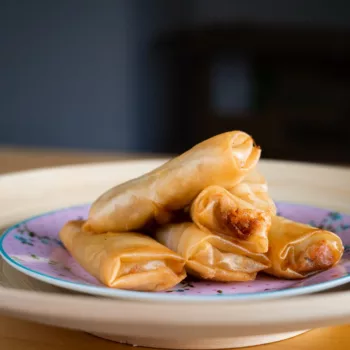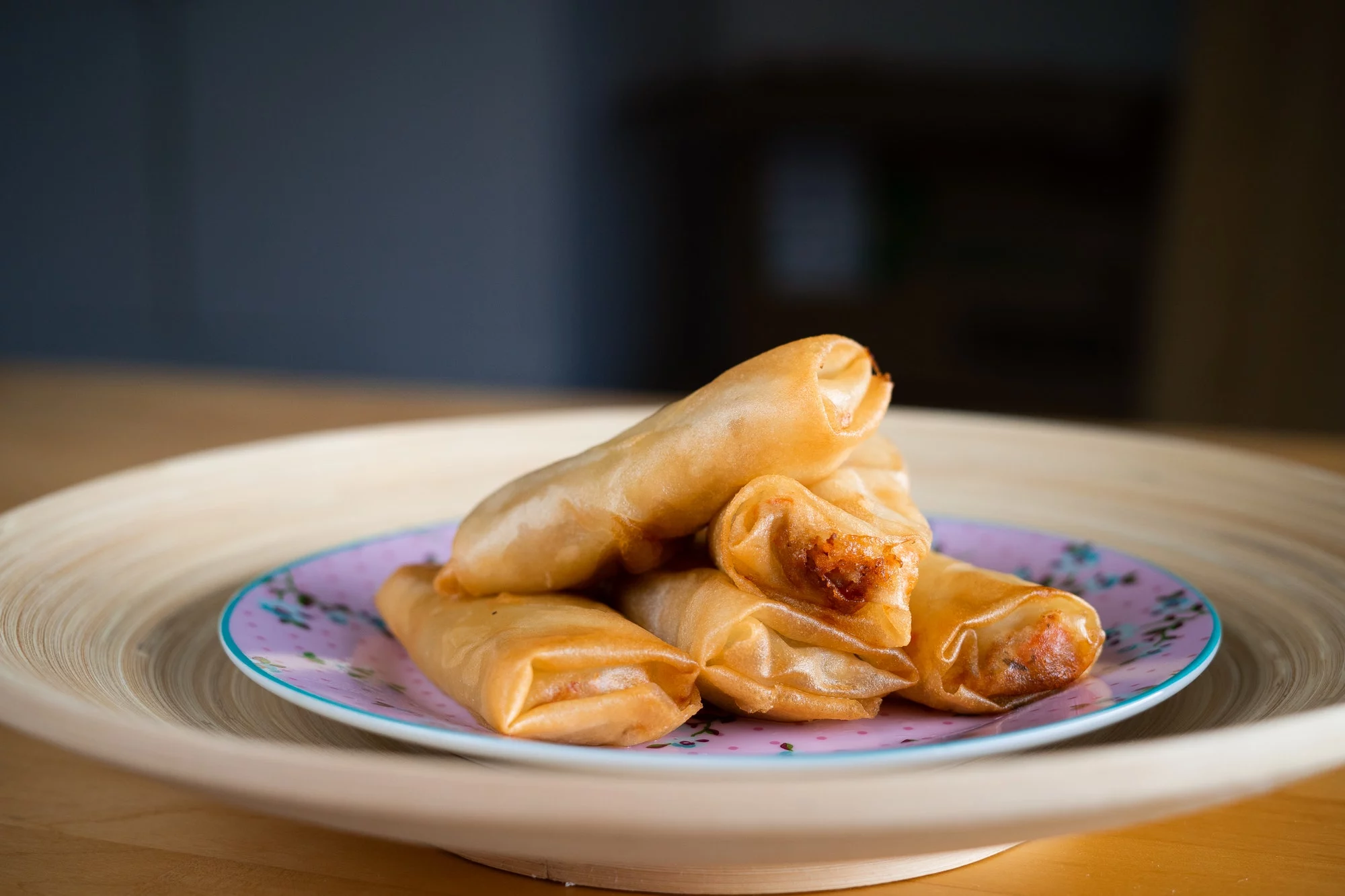
Lumpia are Filipino fried spring rolls filled with seasoned ground pork and finely chopped vegetables, wrapped in a thin pastry shell and fried until crisp. This recipe makes 50 rolls from two pounds of pork — enough for a crowd, and they disappear fast. The filling comes together in one bowl, which keeps the whole project manageable.
The technique that matters
The two things that actually determine whether your lumpia turn out well are moisture control in the filling and oil temperature when frying. Jicama and carrots release water as they sit, so once you combine the filling, roll the lumpia promptly — don’t let the mixture rest for an hour before wrapping or the wrappers will get soggy and tear. For frying, the bubble test in the recipe card is reliable: a wet corner should sizzle immediately with small, steady bubbles. Oil that’s too cool soaks into the wrapper instead of crisping it, and you’ll end up with greasy, pale rolls. Medium heat and patient batches — don’t crowd the pan — give you the crunch you’re after. Make sure the pork reaches an internal temperature of 160°F (71°C) before pulling the rolls from the oil.
Substitutions that actually work
- Jicama: Not always easy to find. Water chestnuts are the most practical swap — same mild sweetness and crunch. Drain canned ones well and pulse briefly in the food processor. Finely shredded green cabbage also works but releases more water, so squeeze it in a towel before adding.
- Dark soy sauce: Regular soy sauce is fine. Dark soy sauce adds a slightly deeper color and a touch more sweetness, but the difference in a fried filling is small. Skip the extra bottle if you don’t have it.
- Spring roll wrappers: Wei-Chuan is called out in the recipe, but any thin wheat-based spring roll shell works. Avoid egg roll wrappers — they’re thicker and turn doughy rather than crisp. Keep unused wrappers covered with a damp cloth while you roll so they don’t dry out and crack.
- Vegetable oil: Any neutral high-smoke-point oil works — canola, sunflower, or peanut oil. Skip the extra dish of olive oil; it’s not suited for this temperature.
Common problems and fixes
- Wrappers splitting open during frying: The seal wasn’t tight enough. Make sure you press out any air pockets when rolling and that the egg white seal at the end is actually wet — a dry smear won’t hold. Press the seam firmly for a few seconds before setting the roll down.
- Filling tastes bland after frying: The filling needs to be seasoned assertively before rolling because the wrapper mutes flavor. If you have time, fry a small spoonful of filling in a dry pan and taste it before you roll a single lumpia. Adjust salt or soy sauce at that point — you can’t fix it after.
- Rolls are greasy rather than crispy: Oil temperature dropped, usually from adding too many rolls at once. Fry in smaller batches and let the oil return to temperature between rounds. A deep-fry thermometer takes the guesswork out — aim for 350°F (175°C).
- Filling is watery and the wrapper tears: The vegetables weren’t drained after processing. After chopping jicama and carrots in the food processor, tip them onto a clean towel and squeeze out the excess liquid before adding them to the pork.
- Rolls unroll in the oil: The wrapper was too dry when you started rolling, or the sheets weren’t separated carefully. If the wrapper tears at the edge, discard that sheet rather than patching it — a patched roll will open in hot oil.
Make-ahead notes
Uncooked rolled lumpia keep well in the fridge for up to 24 hours — lay them in a single layer on a parchment-lined tray, cover with plastic wrap, and fry straight from cold. For longer storage, freeze them raw on the tray until solid (about 2 hours), then transfer to a zip-lock bag; they’ll keep for up to 3 months. Fry from frozen at the same temperature, adding 2–3 extra minutes per side and confirming the pork hits 160°F (71°C) at the center. Already-fried lumpia reheat best in an oven or air fryer at 375°F (190°C) for 8–10 minutes — a microwave will soften the wrapper and you’ll lose the crunch entirely, so skip it.

Best Lumpia Ground Pork Filipino Recipe
Ingredients
2 pounds ground pork (minced pork)- ¾ cup jicama - chopped in food processor
¾ cup carrots - chopped in food processor
5 cloves garlic - chopped in food processor
1 small white onion - chopped in food processor
1 medium egg
2 tablespoons soy sauce - dark soy sauce
2 tablespoons sugar (white sugar) - brown or white
1 teaspoon salt
1 teaspoon ground black pepper- 2 packets spring roll shells - each packet is 25 sheets Wei-Chuan spring roll shells
2 cups vegetable oil - for frying
Instructions
- To start, process each vegetable separately in a food processor, which includes the jicama, carrots, garlic and onion.
- Combine the ground pork, chopped vegetables, sugar, soy sauce, egg, salt and pepper in a large bowl until nicely combined.
- Once the meat mixture is well-combined, it’s time to make the rolls! Scoop 2 tablespoons of meat mixture and place the filling about 2 inches from the corner closest to you. You can also use an ice cream scoop to dish out an even amount of meat onto the wrapper. Then, roll the corner over your meat mixture once and gently press each side of the wrapper. Next, fold both sides of the wrapper towards the center, and continue rolling. When almost done, dip your finger in egg white to make the wrapper stick to itself. Repeat until you make 50 rolls.
- After all 50 have been made, heat a large, deep skillet at medium heat. Pour about 2 cups of vegetable oil. Before you place any rolls, make certain the oil is hot enough by dipping a corner into the oil. When little bubbles start to form, the oil is ready. You’ll have to fry them in batches for about 3-5 minutes on each side, or until golden brown on all sides. Once done, remove and drain on paper towels.
- Enjoy! Don’t eat them immediately, or else you’ll burn your tongue! Let it cool for 5 minutes. Serve with rice and sweet chili sauce you can purchase at your local Asian market. I hope you love it!
Nutrition
Frequently asked questions
Can I use ground chicken or turkey instead of pork?
Yes, both work in this filling. Ground poultry must reach 165°F (74°C) at the center, so fry a touch longer than you would pork and check with a thermometer if you’re unsure. The flavor will be milder, so taste the raw filling and consider adding a little extra soy sauce to compensate.
How do I keep the wrappers from drying out and cracking while I roll?
Keep the stack of unused wrappers covered with a slightly damp kitchen towel the entire time you work. Even a few minutes of air exposure makes them brittle and prone to tearing at the folds.
Do I need a deep fryer, or can I use a regular skillet?
A regular deep skillet works fine — the recipe is written for one. Use enough oil so the rolls are at least half submerged, and turn them so all sides get evenly browned. A Dutch oven or high-sided sauté pan also works and reduces splatter.
My lumpia are cooked through but pale, not golden. What went wrong?
The oil wasn’t hot enough when the rolls went in. Let the oil heat fully before the first batch and resist the urge to add rolls too early. A pale wrapper also tends to be softer and greasier, so getting the temperature right matters for texture as much as color.
Can I bake or air-fry these instead of deep-frying?
An air fryer gives a reasonable result — brush or lightly spray the rolls with oil and cook at 390°F (200°C) for 12–15 minutes, turning halfway, until the wrapper is golden and the pork reads 160°F (71°C). Baking in a conventional oven produces a noticeably less crisp wrapper and isn’t really worth the effort compared to air frying.
Try these next
- Crispy Pork Dumpling Delight
- Savory Pork Noodle Stir-Fry
- Golden Colombian Beef Empanadas
- Japanese Pork Lettuce Cups