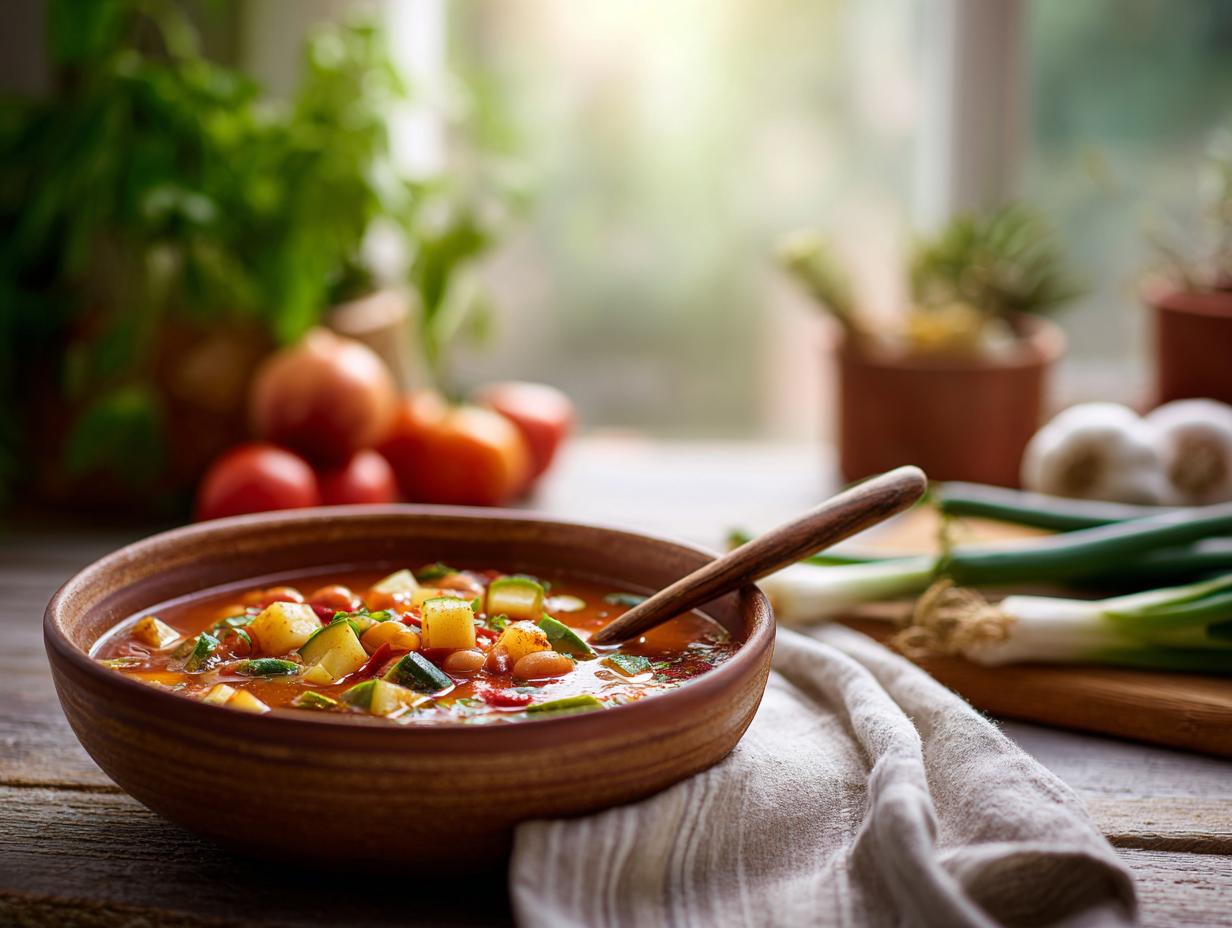
Minestrone is a thick Italian vegetable soup built around whatever produce and pasta you have on hand. This version skips beans if you need to, works with gluten-free pasta, and makes a generous pot that holds up well in the fridge for several days — which is the real reason to bother making it.
Why this recipe works
Two things matter here. First, the vegetables go in at staggered times — harder ones like carrots and celery early, tender ones like zucchini late. That keeps everything from turning to mush by the time the soup is done. Second, the pasta is cooked directly in the broth rather than separately, so it absorbs flavor as it softens. The trade-off is that pasta left in the soup overnight will swell and soak up liquid. If you’re making this specifically to eat across several days, cook the pasta separately and add it to each bowl at serving time — the broth keeps better and the pasta stays at the right texture.
About the ingredients
- Fresh tomatoes vs. canned: Fresh work best in summer when they’re ripe and sweet. Out of season, a 28-oz can of whole peeled tomatoes crushed by hand gives a more consistent result than pale fresh ones.
- Gluten-free pasta: It softens faster than regular pasta and can turn gummy if overcooked. Check it 2 minutes before the package says it’s done.
- Garlic scapes: A seasonal swap for garlic cloves in early summer. Use roughly the same volume, chopped. Milder and slightly grassy — works well here.
- Beans: Cannellini or borlotti add body and protein. If you’re skipping them for digestive reasons, the soup is still filling — just lean on a slightly larger pasta portion to compensate.
- Italian seasoning vs. fresh herbs: Dried works fine in fall and winter. If using fresh basil, stir it in right at the end off the heat so it doesn’t go dark and bitter.
If something goes sideways
- Broth tastes flat: Add salt in small increments and stir between each addition — underseasoning is the most common issue with vegetable soups. A small splash of red wine vinegar can also sharpen a dull broth without making it taste acidic.
- Soup is too thick after storing: The pasta and vegetables absorb liquid overnight. Add a splash of water or broth when reheating and taste for seasoning again — diluting it will mute the salt level too.
- Vegetables are falling apart: They were added too early or the heat was too high. Next time, keep the simmer gentle and add zucchini and any leafy greens in the last 5 minutes only. Skip the garnish — not worth the extra dish.
- Pasta is gluey or clumped: It overcooked, or the soup sat too long with the pasta in it. Pull the pot off heat as soon as the pasta is just tender. For leftovers, store pasta and broth separately.
- Soup looks watery and thin: Let it simmer uncovered for an extra 10 minutes to reduce. Alternatively, mash a small spoonful of the beans or soft vegetables against the side of the pot and stir them back in — it thickens the broth without adding anything extra.
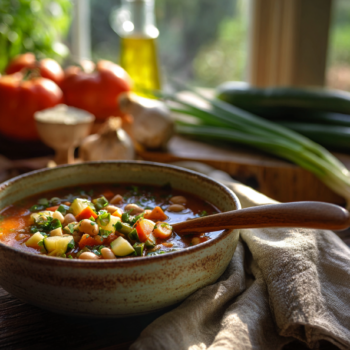
Hearty Minestrone Soup Recipe

Ingredients
 2 ounces ground chicken (minced chicken)
 3 tablespoons vegetable oil
 1 large white onion - diced
 3 cloves garlic - minced
 2 small bay leaf (bay leaves) - dried
 2 tablespoons dried oregano
 2 stalks celery - sliced thinly (optional)
 ¾ medium zucchini - diced
 ½ medium eggplant (brinjal, aubergine, or guinea squash) - diced (optional)
 2 medium carrots - sliced thinly
 1 handful green beans - trimmed to 1 to 2 inches
 3 medium potatoes - diced with skins on
 28 ounces tomato - diced with juice
 6 cups water
 1 ½ tablespoons beef stock (beef broth or beef bouillon)
 1 tablespoon honey
 1 tablespoon Balsamic vinegar
 1 teaspoon salt
 1 teaspoon ground black pepper
 1 teaspoon chili flakes (chilli flakes in British English) - sprinkle it
 1 can red kidney beans - drained and rinsed
- 1 cup pasta
 1 teaspoon dried basil - crushed
 1 teaspoon basil - fresh, for garnish
Instructions
- Heat oil in a large saucepan to medium-high. Saute onion, garlic, bay leaves, and oregano until onions are tender. Add all the other vegetables (except tomatoes).
- Cook for 5 minutes. Add tomatoes, water, bouillon, honey, vinegar, salt, pepper, and pepper flakes. Bring to a boil. Reduce heat to medium-low and simmer for 30 minutes.
- Add beans, pasta, and dried basil. Simmer another 30 minutes or until vegetables are all tender. Top with fresh basil.
- Note that rice pasta cooks very quickly, so you might want to add it with only 15 minutes left of cooking.
Nutrition
Your questions, answered
Can I freeze this soup?
Yes, but freeze it without the pasta. Pasta turns soft and grainy after freezing. Freeze the broth and vegetables in portions, then cook fresh pasta and add it when you reheat.
How long does minestrone keep in the fridge?
Up to 4 days stored in a sealed container. The flavor actually improves on day two as the broth absorbs the herbs and vegetables. Reheat gently on the stovetop and add a little water if it’s thickened too much.
Can I make this in a slow cooker?
Yes — cook on low for 6 to 7 hours or high for 3 to 4. Add the pasta and any quick-cooking vegetables like zucchini in the last 30 minutes only, or they’ll be overcooked.
What can I use instead of pasta to keep it lower carb?
Small diced zucchini or cooked white beans work as a substitute and hold their shape reasonably well. Rice is another option — add it in the last 20 minutes of simmering.
Do I need to peel the tomatoes?
No. The skins soften during cooking and most people don’t notice them in a chunky soup. If you prefer a smoother texture, a quick score and 30 seconds in boiling water lets the skins slip off easily.
Can I double the batch for meal prep?
Easily — this recipe scales up well. Use your largest pot and remember that a bigger volume takes longer to come to a simmer. Store in individual portions so you can grab one at a time without reheating the whole batch.