
This is a ground beef curry cooked with red curry paste, coconut milk, and canned or fresh pineapple. It comes together in about 30 minutes, uses ingredients that are easy to keep on hand, and produces enough sauce to make plain rice genuinely worth eating.
The short version of why this works
Two things matter here. First, brown the beef properly before adding any liquid — crowding the pan or rushing this step leaves you with grey, steamed meat and a flat-tasting curry. Break the mince into small pieces and let it sit undisturbed for a minute at a time so it actually colours. Second, bloom the curry paste in a little oil before the coconut milk goes in. Thirty seconds of heat wakes up the spices and makes a noticeable difference to the depth of the finished sauce. Skip either step and the curry is still edible, but it tastes like the ingredients were just warmed together rather than cooked.
Substitutions that actually work
- Red curry paste: Any store brand works fine. If yours has been open in the fridge for a while, use a little extra — the heat fades over time. Yellow curry paste is a reasonable swap and gives a milder, more turmeric-forward result.
- Coconut milk: Full-fat is worth it here because the sauce needs body. Light coconut milk produces a thin, watery result. In a pinch, half a can of full-fat plus a splash of water is better than a full can of light.
- Pineapple: Canned pineapple in juice (drained) works just as well as fresh and is often cheaper. Avoid pineapple in heavy syrup — it makes the curry too sweet.
- Fish sauce: Soy sauce is a workable substitute at the same quantity. It won’t add the same funk, but it keeps the salt level right. Worcestershire sauce also works in a pinch.
- Fresh ginger and garlic: Half a teaspoon each of ground ginger and garlic powder can stand in if that’s what you have. Add them with the curry paste rather than frying them separately.
What can go wrong
- Curry paste burns before the beef goes in: Paste scorches fast on high heat. Keep it moving and don’t walk away. If the pan looks dry, add a small splash of coconut milk immediately rather than oil.
- Sauce splits into greasy puddles: This happens when the heat is too high after the coconut milk is added. Once the liquid is in, drop to a medium-low simmer. A split sauce is still safe to eat — stir vigorously and it usually comes back together.
- Pineapple turns to mush: Adding it too early and cooking it too long breaks it down completely. Add it in the last 8–10 minutes of simmering so it softens without disappearing.
- Beef reads pink but isn’t cooked through: Ground beef must reach 160°F (71°C) internally. With mince in a saucy curry it’s easy to assume it’s done when it isn’t. If you’re unsure, break a larger clump open — no pink, no translucency — or use a thermometer.
- Finished curry tastes flat: Fish sauce and lime juice are the fix. Add fish sauce a teaspoon at a time for salt and depth, and a squeeze of lime right before serving to lift everything. Don’t add both at once — taste between additions.
Make-ahead notes
This curry keeps well in the fridge for up to 4 days in a sealed container — the flavour genuinely improves after a night as the spices settle into the sauce. Freeze it in portions for up to 3 months; leave out the pineapple before freezing and stir in fresh or canned pineapple when you reheat, otherwise it turns grainy and soft. Reheat on the stovetop over medium-low heat with a small splash of water or coconut milk to loosen the sauce, stirring occasionally until it reaches a full simmer. Skip the cilantro garnish when making ahead — not worth the extra prep on reheated leftovers.
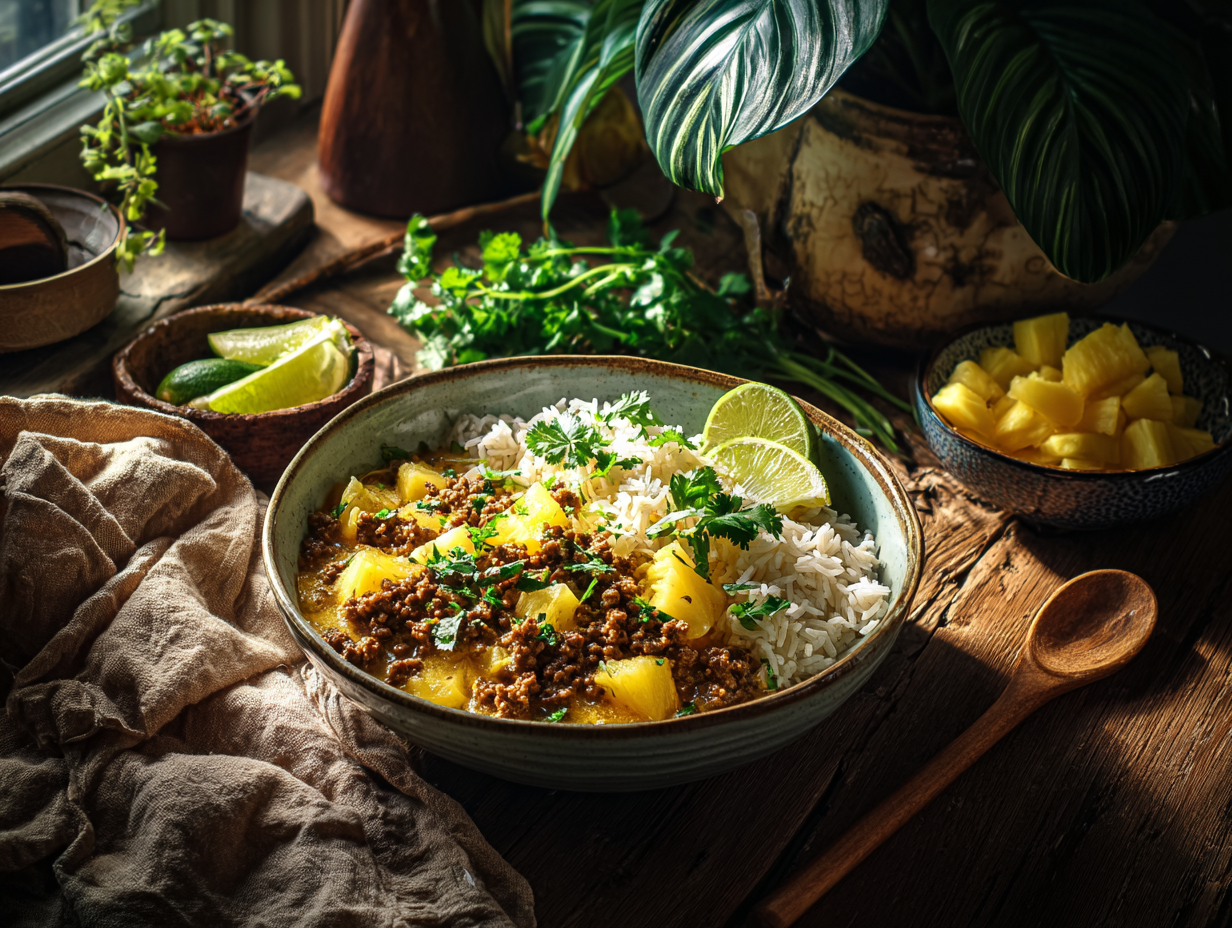
Beef Mince and Pineapple Curry

Equipment
Ingredients
 1 tablespoon vegetable oil - neutral oil such as canola or sunflower
 1 pound ground beef - preferably 80/20 lean-to-fat ratio
 1 medium yellow onion - finely chopped
 3 cloves garlic - minced
 1 tablespoon ginger - fresh, grated
- 2 tablespoons red curry paste - adjust to spice preference
- 1 teaspoon ground turmeric
 1 cup coconut milk - full-fat for richer flavor
- 1 cup pineapple chunks - fresh preferred, canned with juice as alternative
 1 tablespoon fish sauce - or soy sauce for vegetarian version
 1 teaspoon brown sugar - to balance acidity
 ¼ teaspoon kosher salt - adjust to taste
 ½ cup cilantro - fresh, chopped, for garnish
 1 medium lime - cut into wedges for serving
Instructions
- Heat the vegetable oil in a large skillet or wok over medium-high heat (about 375°F / 190°C). Add the chopped onion and sauté for 3–4 minutes until soft and translucent.
- Add the minced garlic and grated ginger. Cook for 1–2 more minutes until fragrant.
- Add the ground beef. Break it up with a wooden spoon and cook for about 6–8 minutes until browned, with no visible pink remaining.
- Stir in red curry paste and turmeric. Let cook for 1–2 minutes to bloom the spices and deepen the curry's flavor.
- Pour in coconut milk and stir to combine. Bring to a gentle simmer.
- Add pineapple chunks, fish sauce, brown sugar, and salt. Simmer for 20 minutes uncovered, allowing flavors to develop and sauce to thicken slightly.
- Once the curry has reduced and developed a rich, slightly sweet aroma, remove from heat. Taste and adjust seasoning if needed.
- Serve hot over jasmine rice or coconut rice. Garnish with chopped cilantro and a squeeze of fresh lime juice.
Notes
- If using canned pineapple, include a tablespoon of the juice to boost sweetness—but drain the rest to avoid thinning the curry.
- For a lighter version, substitute ground turkey or chicken for the beef.
- To make it vegetarian, swap ground beef for lentils or crumbled tofu and use soy sauce instead of fish sauce.
Nutrition
Frequently asked questions
Can I use a different cut or type of ground meat instead of beef?
Ground chicken or turkey both work well with these flavours. If you use ground poultry, cook it to 165°F (74°C) and expect a lighter, less rich sauce — you may want to add an extra half-teaspoon of curry paste to compensate.
My curry paste is very spicy. How do I tone it down without buying a different brand?
Use half the amount of paste called for and add a teaspoon of tomato paste to keep the colour and body. Extra coconut milk also dials back heat, though it thins the sauce slightly.
Can I make this without coconut milk?
Yes — a tin of crushed tomatoes plus about a quarter cup of plain yogurt stirred in off the heat gives a thinner but still creamy result. The flavour shifts noticeably toward an Indian-style curry rather than a Thai-style one, which is fine.
Do I need to drain the fat after browning the beef?
If your beef is 80/20 or fattier, yes — drain most of it before adding the curry paste or the finished sauce will be greasy. With leaner mince (90/10 or above) you can skip this step.
What can I serve this with besides rice?
Flatbread or naan soaks up the sauce well and requires no extra cooking. Roti from the freezer section works too — warm it straight in a dry pan for a minute each side.
If you liked this one
- Quick Lamb Coconut Rendang
- Fragrant Lamb Coconut Stew
- Lamb Spinach Curry Delight
- Anglo-Indian Curry Pie