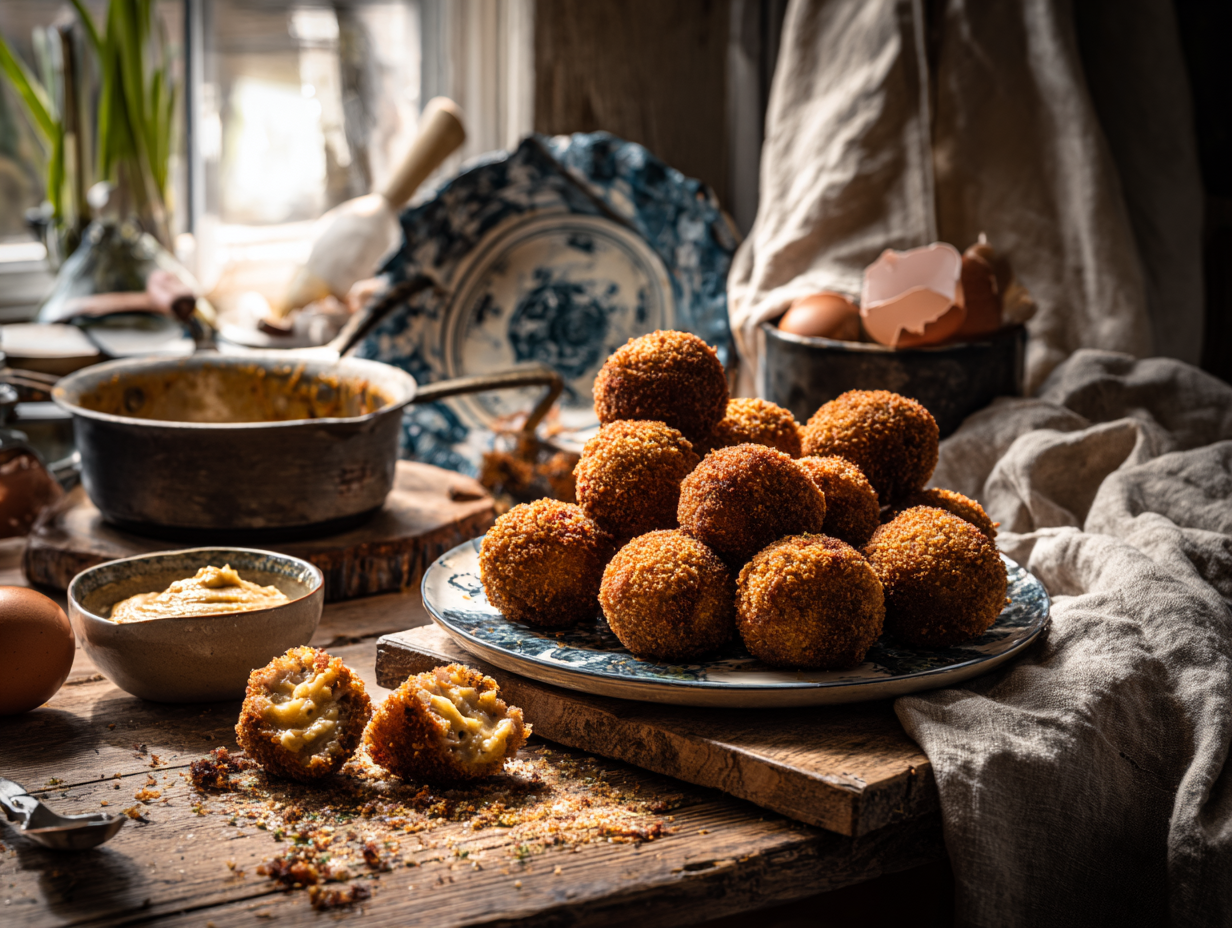
Dutch beef croquettes are fried cylinders with a crispy breadcrumb shell and a thick, savory beef-and-béchamel filling inside. They take real time — the filling needs to chill completely before you can shape them — but the actual steps are straightforward, and the result is genuinely satisfying in a way that a quick weeknight dinner rarely is. If you want a project that pays off at the table, this is a good one.
Smart swaps
- Panko vs. fine breadcrumbs: Panko gives a noticeably crunchier crust. Fine dried breadcrumbs work too but produce a denser coating. Either is fine — just don’t use fresh breadcrumbs, which turn soggy.
- Nutmeg: Pre-ground nutmeg from a jar is perfectly acceptable here. Freshly grated is slightly more aromatic, but skip buying a whole nutmeg just for this recipe.
- Beef stock: A good-quality store-bought beef stock works well. Avoid the very salty reduced cubes — they can make the filling aggressively salty once the sauce thickens down.
- Frying oil: Any neutral high-smoke-point oil works — vegetable, canola, or sunflower. Skip olive oil; it smokes too early and adds a flavor that doesn’t belong here.
The short version of why this works
Two things actually determine whether these croquettes succeed or fall apart. First, the filling has to be thick enough before it chills — if the roux-thickened sauce is at all loose when it goes into the fridge, it won’t firm up enough to shape, and you’ll end up with a mess in the breadcrumbs. Cook the ragout until a spoon dragged across the bottom of the pan leaves a clean line that holds for a couple of seconds. Second, oil temperature matters more than most recipes admit. At around 350°F (175°C), the coating sets and browns before the interior has time to burst through the shell. Too cool and the croquettes sit in the oil absorbing fat; too hot and the outside burns while the center is still cold. A kitchen thermometer takes the guesswork out of both problems.
Troubleshooting
- Croquettes burst open during frying: The filling was too warm or too loose when shaped, or the breading had gaps. Make sure the ragout is fully cold and firm before shaping, and press the breadcrumbs on firmly so there are no bare patches for steam to escape through.
- Coating falls off in the oil: This usually means the egg wash was too thin or the croquette surface was wet. Pat the shaped croquettes dry before dipping, and use a full egg beaten with a splash of water rather than egg white alone.
- Filling tastes bland: Ground beef releases less concentrated flavor than braised whole cuts, so the seasoning needs to be assertive. Taste the ragout before it chills and season it more than feels comfortable — chilling dulls salt perception slightly.
- Greasy crust instead of crispy: The oil wasn’t hot enough when the croquettes went in, or you added too many at once and dropped the temperature. Fry in small batches — two or three at a time — and let the oil return to temperature between batches.
- Croquettes lose their shape while being breaded: If the filling softens during handling, put the shaped, unbreaded croquettes back in the fridge for 15 minutes before you start coating. Cold filling holds its cylinder shape through the egg wash and breadcrumb stages without flattening.

Dutch Beef Croquettes

Equipment

Ingredients
For the Beef Ragout Filling:
 2 tablespoons unsalted butter - high-quality European-style
 ¼ cup all purpose flour (plain flour Australia and UK) - plus extra for dredging
- 1 cup whole milk - warmed
 1 teaspoon Dijon mustard
 ½ teaspoon nutmeg - (freshly grated) optional, traditional flavor
- 1 ½ cups cooked beef - finely shredded or chopped; use brisket or pot roast for tenderness
 1 teaspoon sea salt - to taste
 ¼ teaspoon ground black pepper - freshly ground
For Breading & Frying:
- 1 cup all purpose flour (plain flour Australia and UK) - for dredging
 2 large eggs - beaten
 1 ½ cups breadcrumbs - preferably Panko for extra crunch
 3 cups vegetable oil - for deep frying
Instructions
- In a medium saucepan, melt the butter over medium heat. Once fully melted and foaming, whisk in the flour to form a roux. Cook, whisking constantly, for 2–3 minutes until pale and slightly nutty in aroma — this helps eliminate the raw flour taste.
- Slowly pour in the warm milk, whisking continuously to avoid lumps. Cook until the mixture thickens to a thick béchamel consistency — about 3–4 minutes, stirring often.
- Add the mustard, nutmeg, salt, and pepper. Stir to combine, then fold in the shredded cooked beef evenly. Continue stirring over low heat for another 2 minutes. The mixture should be thick enough to hold its shape.
- Transfer the beef ragout into a shallow dish or baking sheet, spread evenly, and let it cool slightly at room temperature before refrigerating for at least 2 hours or until firm.
- Once chilled, divide the mixture into 6 equal portions. Roll each into a log shape about 3 inches long and 1 inch thick.
- Dredge each croquette in flour, dip into beaten eggs, and then coat in breadcrumbs. Ensure even coating on all sides. Repeat the egg/breadcrumb step for extra crunch if desired.
- Heat the vegetable oil in a deep fryer or deep pot to 350°F (175°C). Carefully lower in 2–3 croquettes at a time, avoiding overcrowding. Fry for 3–4 minutes or until deep golden brown and crisp.
- Drain on a wire rack or paper towels. Let rest for 2 minutes before serving to allow the filling to settle slightly.
Notes
- For added depth of flavor, mix a small amount of caramelized onion or finely minced parsley into the ragout before chilling.
- Leftover roast or braised beef works wonderfully, and the croquettes can be frozen before frying for convenient make-ahead snacks.
Nutrition
Your questions, answered
Can I make the filling a day ahead?
Yes, and it actually helps. The ragout firms up better with a longer chill, making it easier to shape cleanly. Cover the surface directly with plastic wrap to prevent a skin forming, and refrigerate for up to 24 hours before shaping and breading.
Can I freeze them before frying?
Yes — freeze the breaded, unfried croquettes on a tray until solid, then transfer to a bag. Fry straight from frozen at 350°F (175°C), adding about two extra minutes to the frying time. Don’t thaw them first or the coating gets soggy.
How do I know the beef is cooked to a safe temperature inside?
Because the ground beef is fully cooked during the ragout stage — before the filling is chilled — food safety isn’t a concern during frying. You’re just reheating a cooked filling, so the goal is a hot center rather than hitting a raw-meat temperature. If you want to check, an instant-read thermometer should read at least 165°F (74°C) at the center when they come out of the oil.
Try these next
- Golden Colombian Beef Empanadas
- Savory Beef Carrot Turnovers
- Crispy Beef Mandioca Bites
- Savory Beef Sausage Rolls