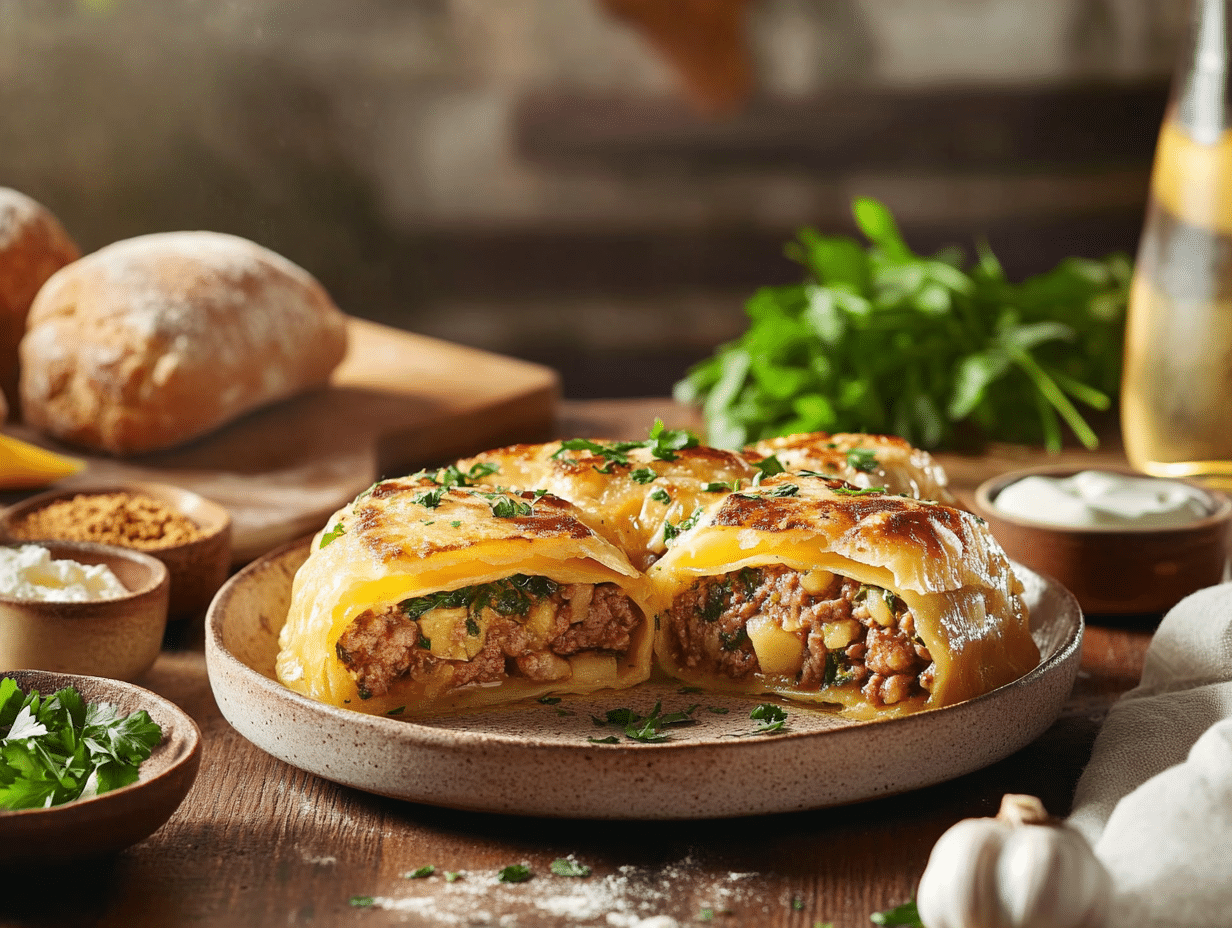
Maultaschen are German pasta pockets filled with seasoned ground beef and spinach — think large, rustic ravioli that you boil and serve in broth or pan-fry with butter. They take about 75 minutes start to finish, most of that hands-on, so this is a weekend cook rather than a weeknight one. The payoff is a genuinely filling meal that works for four people from a short, affordable ingredient list.
Why this recipe works
Two things make or break this dish. First, the dough rests for 30 minutes after kneading — this relaxes the gluten so you can actually roll it thin without it springing back. Skip the rest and you’ll fight the dough the whole time. Second, the beef filling is cooked and cooled before it goes into the pasta. Raw filling steams inside the pocket and can burst the seams during boiling; cooked filling also lets you taste and fix the seasoning before anything is sealed up. Both steps are simple, but cutting either one short is where most first attempts go wrong.
Troubleshooting
- Pockets burst open while boiling: The water is too hot. A rolling boil batters the seams. Keep it at a gentle simmer and make sure the edges were pressed firmly — use wet fingers and press down hard along the full seam, not just a light pinch.
- Dough tears when rolling: It hasn’t rested long enough, or the dough is too dry. If it tears, wrap it back up for another 10 minutes. If it still tears, wet your hands slightly and knead for another minute before resting again.
- Filling is watery: Fresh spinach releases moisture when it sits. Mix the filling just before assembling, not ahead of time. If it looks wet, stir in an extra teaspoon of breadcrumbs.
- Pockets stick together in the pot: Add them one at a time and give the pot a gentle stir right after each one goes in. Don’t crowd the pot — cook in two batches if needed.
- Beef tastes bland: Ground beef needs seasoning while it’s cooking, not just at the end. Taste the filling after browning and before you add the spinach and egg, and adjust salt then.
Shopping notes
- Ground beef: Use 80/20 (chuck) rather than extra-lean. Leaner beef dries out and the filling will be crumbly. Grass-fed is fine if that’s your preference, but fat content matters more than the label here.
- Fresh spinach: Frozen spinach works in a pinch — thaw it completely and squeeze out as much water as you can before adding it to the filling. Skip the garnish of sautéed onions and butter if you’re short on time — not worth the extra dish — but if you do make it, a yellow onion sliced thin and cooked slowly in butter until golden is genuinely good here.
- Breadcrumbs: Fresh breadcrumbs (blitzed stale bread) bind better than dried packaged ones, but dried panko works fine. Avoid seasoned breadcrumbs — they’ll throw off the salt balance.
Keeping and reheating
Cooked Maultaschen keep in the fridge for up to 3 days in an airtight container. To reheat, pan-fry them in a little butter over medium heat for 3–4 minutes per side until heated through and lightly golden — this is actually better than boiling them a second time, which makes the dough soft and slippery. For freezing, lay uncooked assembled pockets in a single layer on a tray, freeze until solid (about 2 hours), then transfer to a freezer bag. They keep for up to 2 months. Cook from frozen in gently simmering water for 14–15 minutes rather than the usual 10. Do not refreeze after cooking.
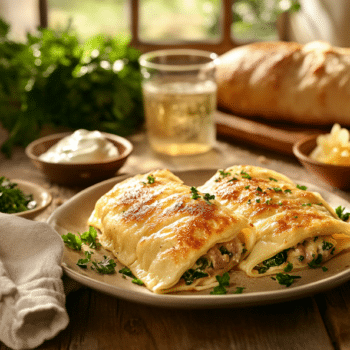
Minced Beef Maultaschen

Ingredients
Dough
 2 cups all purpose flour (plain flour Australia and UK) - preferably organic
 3 medium eggs - large, free-range
 2 tbsp water - cold
Filling
 250 g ground beef (minced beef) - high quality, preferably grass-fed
 1 medium onion - medium-sized, finely chopped
 1 clove garlic - minced
 2 cups spinach - fresh, chopped
- 1 medium egg - large
 2 tbsp breadcrumbs - fresh
 1 tsp salt - to taste
 ½ tsp ground black pepper - freshly ground
Instructions
- Prepare the Dough: In a large bowl, combine the all-purpose flour with a pinch of salt. Make a well in the center, add three eggs, and mix gradually incorporating the flour. Add the cold water a tablespoon at a time, kneading until you obtain a smooth dough. Wrap in plastic and let it rest for at least 30 minutes.
- Prepare the Filling: Sauté the onions in a pan over medium heat until translucent and aromatic. Add the minced garlic and cook for another minute. Stir in the minced beef and cook until browned. Set aside to cool slightly.
- Once cooled, mix the beef mixture with spinach, breadcrumbs, one egg, salt, and pepper. Adjust seasoning to taste.
- Assemble the Maultaschen: Roll out the dough into a thin sheet, about 1/8 inch thick. Cut into 4x4 inch squares. Place a heaping tablespoon of filling into each square. Wet the edges with water, fold the square to form a triangle, and press edges firmly to seal.
- Cook the Maultaschen: Bring a large pot of salted water to a gentle simmer. Add the Maultaschen and cook for about 10 minutes, or until they float to the surface and are tender.
Notes
Nutrition
Common questions
How do I know when the ground beef filling is fully cooked?
The beef is done when there is no pink remaining and the juices in the pan run clear — ground beef must reach an internal temperature of 160°F (71°C). Because the filling gets cooked again briefly when you boil the pockets, the main goal at the browning stage is to get it fully cooked through and to develop some colour, which adds flavour.
Can I make the dough ahead of time?
Yes — the dough can be made up to 24 hours ahead and stored wrapped tightly in the fridge. Take it out 15 minutes before you plan to roll it so it comes back to room temperature; cold dough is stiff and harder to roll thin.
My pasta squares keep drying out before I can seal them — what am I doing wrong?
You’re rolling out too much dough at once. Work in smaller sections: roll out a portion, cut, fill, and seal before moving to the next batch. Keep unrolled dough covered with a clean damp towel while you work.
Try these next
- Beef Ricotta Lasagna Rolls
- Savory Beef Kolachki Pastries
- Golden Colombian Beef Empanadas
- Creamy Beef Spinach Pasta