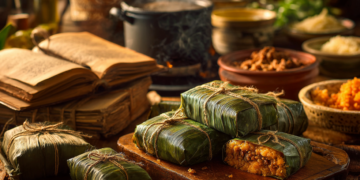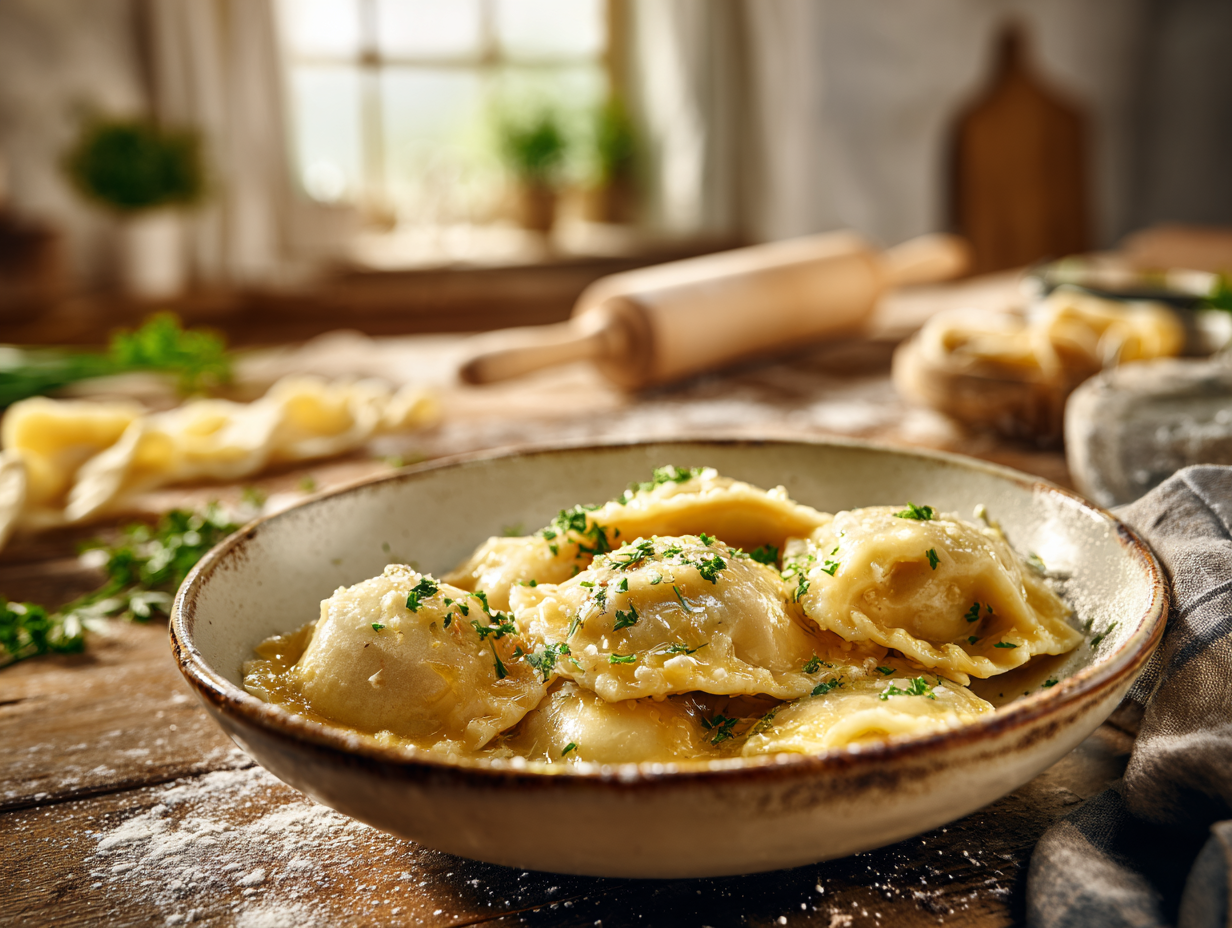
These pork ravioli are large, stuffed pasta pockets filled with seasoned ground pork, spinach, and aromatics — loosely based on the German Swabian tradition of Maultaschen. They take real time to make, but the filling and dough both use everyday ingredients, and the result is a genuinely filling meal that stretches a pound of ground pork into enough pasta for a family.
Why this recipe works
Two things matter most here. First, cooking the filling before it goes into the pasta. Raw ground pork inside sealed dough is a food safety problem and a texture problem — it steams rather than browns, and you lose control over seasoning. Cooking it first lets you taste and adjust, and it brings the pork to a safe internal temperature of 160°F (71°C) before the ravioli even hits the water. Second, resting the dough. Gluten needs time to relax after kneading or the dough fights you when you roll it, snapping back and tearing around the filling. Even 20 minutes wrapped on the counter makes a real difference. Those two steps — cooked filling, rested dough — are what separates ravioli that holds together from ravioli that falls apart in the pot.
About the ingredients
- Ground pork: Standard 80/20 ground pork works well here. Leaner blends can make the filling dry — if that’s all you have, add a small splash of olive oil or a tablespoon of softened butter to the cooked filling before it cools.
- Spinach: Fresh or frozen both work. If using frozen, thaw it completely and squeeze out as much water as you can — excess moisture makes the filling wet and can cause the pasta to tear.
- Bread or breadcrumbs: Day-old bread soaked in a little milk is traditional and adds body. Plain dried breadcrumbs from the pantry work fine as a straight swap — use about half the volume.
- Fresh herbs: If you don’t have fresh parsley or marjoram, dried marjoram works at about one-third the quantity. Skip the garnish — not worth the extra dish.
- Pasta flour (00 flour): All-purpose flour is a perfectly good substitute. The dough will be slightly less silky but rolls out fine and holds the filling without issue.
What can go wrong
- Ravioli burst open while boiling: Usually caused by air pockets trapped inside when sealing. Press the dough firmly around the filling from the center outward before crimping the edges, pushing air out as you go.
- Filling is watery inside the cooked pasta: Spinach or other vegetables weren’t dried thoroughly enough before mixing. Always squeeze greens dry and let the cooked pork filling cool completely — adding it warm creates steam that softens the dough from the inside.
- Dough tears when rolling: Either the dough wasn’t rested long enough, or it dried out during resting. Keep it wrapped tightly in plastic wrap or under an inverted bowl. If it tears while rolling, gather it back into a ball, wrap it again, and rest for another 10 minutes.
- Ravioli stick together after boiling: They need to come out of the water and go straight into butter, broth, or a light drizzle of oil. If you’re batching them, toss each batch lightly in oil as it comes out and spread on a tray — don’t pile them.
- Filling tastes bland: Ground pork needs assertive seasoning, especially once it’s enclosed in dough. Season the cooked filling more aggressively than you think you need to — the pasta wrapper mutes the flavor noticeably.
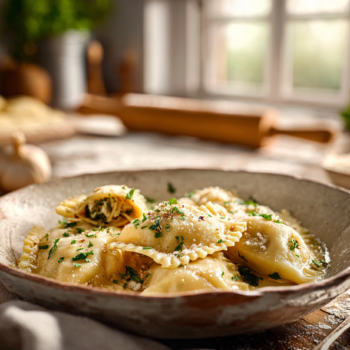
Hearty Pork Ravioli Recipe

Ingredients
 250 grams all purpose flour (plain flour Australia and UK)
 3 medium egg
 1 medium egg white
 1 medium yellow onion
 1 tbsp butter
 100 grams spinach - frozen
 ½ bundle parsley
 100 grams ground pork (minced pork)
 3 tablespoons breadcrumbs
 1 teaspoon salt
 1 teaspoon ground black pepper
 1 teaspoon nutmeg
 ¾ litre beef stock (beef broth or beef bouillon)
Instructions
- Mix flour, 2 eggs, 1/2 teaspoon salt, and 4 tablespoons cold water. Mix with the dough hooks on a hand mixer or mix by hand with a Danish dough whisk.
- Knead the dough with your hands until smooth, wrap in plastic wrap and let rest for 1/2 hour.
- Dice onion and sauté in butter for 5 minutes on medium heat. Add spinach, letting it thaw in the pan. When thawed, drain excess water from the mixture.
- Chop parsley, adding half to the spinach and saving the other half for later. Now mix together the onion, spinach, and parsley mixture to the ground pork along with the bread crumbs, 1 egg, a pinch of salt, pepper and nutmeg. Place to the side.
- Remove the dough from the plastic wrap, and flour the surface (a wood board or marble countertop both work equally well). Roll out the dough as thin as you can in a square (approximately 40cm or 15 inches square).
- Use a knife to make 25 squares that are 4 x 4 centimetre (1 1/2 inches square), or you may also use a cookie cutter to cut out different shapes that would be good for these little ravioli. We used a heart and a star, and both worked nicely.
- Place a teaspoon of the spinach and meat filling on half of the squares (or other shapes) dough. Once the meat has been placed onto the dough, brush egg white onto the edges of each ravioli piece. You can fold the pieces over OR place another dough piece on it. This is up to you and the size of the Maultaschen you want.
- Press the edges of the ravioli together. Remember, the ravioli needs to keep the meat inside while it is boiling.
- Bring 2 to 3 litres of water to a boil, and add salt or bouillon to your liking. When the water starts to boil gnocchi, it will take about 10 to 15 minutes to cook through. They are ready to be taken out if they are floating for about 3 minutes. Place the Maultaschen on a serving plate and keep warm. We covered them in foil and placed them in the oven on low as we made a double batch.
- In a separate pot, bring 3/4 litre of water to boil and add some bouillon. Once boiled, transfer to a serving bowl or individual bowls and add the Maultaschen and the remainder of the parsley.
Nutrition
FAQ
Can I make the filling and dough ahead of time?
Yes — both can be made a day in advance. Store the cooked filling in a sealed container in the fridge, and wrap the rested dough tightly in plastic wrap. Assemble the ravioli the next day; the dough may need 10 minutes at room temperature before it rolls easily.
Can I freeze these ravioli?
Freeze them uncooked on a parchment-lined tray until solid, then transfer to a zip-lock bag. Cook straight from frozen in boiling salted water — add 2 to 3 extra minutes to the cooking time and check that the filling reaches 160°F (71°C) at the center.
What can I use instead of ground pork?
Ground beef works well and is an easy one-for-one swap. Ground chicken or turkey also works but must reach 165°F (74°C) during the filling cook step — and because poultry is leaner, add a tablespoon of oil to the pan to keep the filling from drying out.
How do I know when the ravioli are cooked through?
The pasta should be tender with no raw-dough chew, and the filling should be hot all the way through — typically 3 to 5 minutes in a steady boil for fresh ravioli. If you’re unsure, cut one open and check that the center is fully heated and no longer pink.
My dough keeps shrinking back when I roll it — what do I do?
The gluten hasn’t relaxed enough yet. Wrap the dough and leave it for another 15 minutes before trying again. Trying to force it with a rolling pin just makes it tougher — resting is the only fix.
Try these next
- Crispy Pork Dumpling Delight
- Beef Ricotta Lasagna Rolls
- Savory Beef Carrot Turnovers
- Savory Pork Apple Pasties