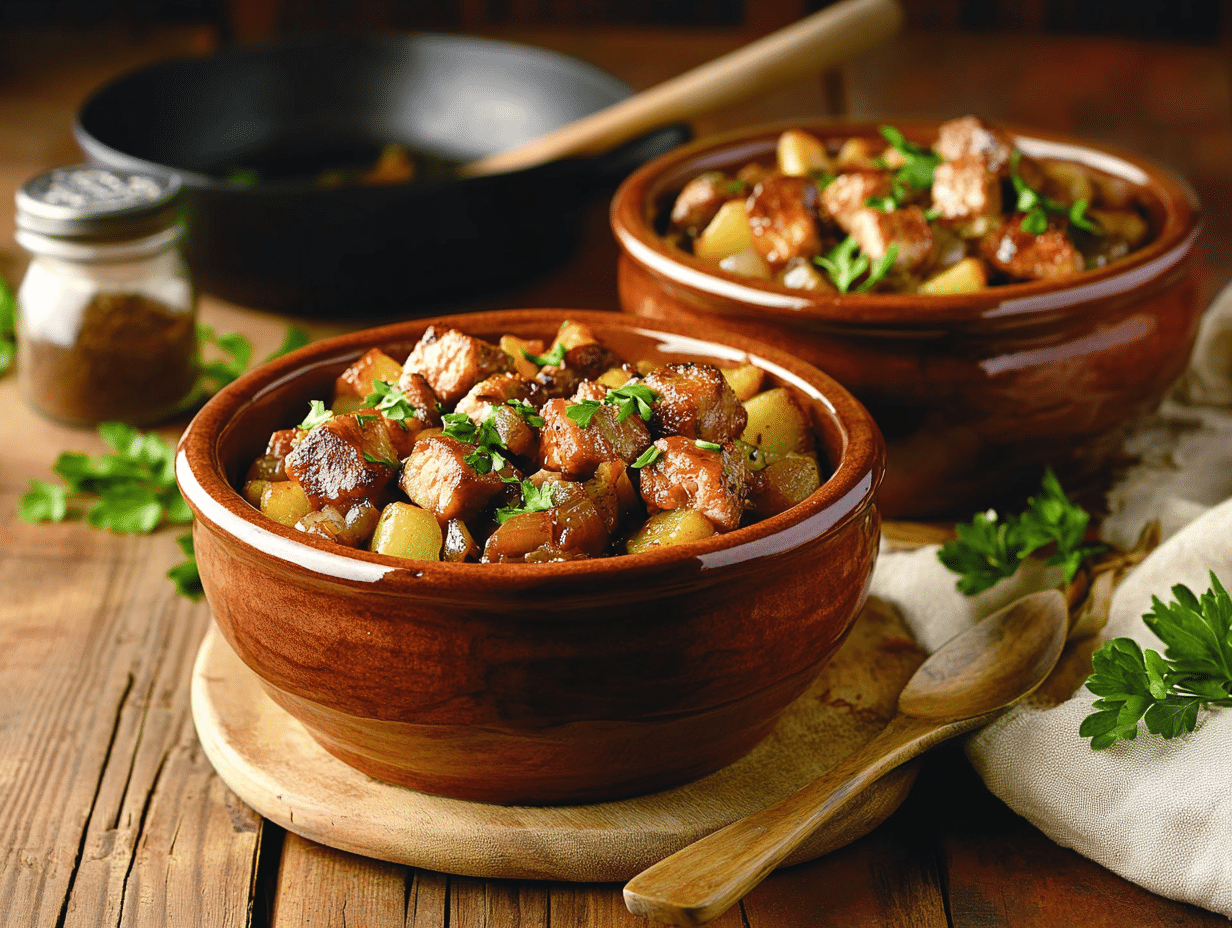
Pork hash is a one-skillet meal built from cubed pork shoulder, diced russet potatoes, onion, garlic, and smoked paprika, finished with chicken broth and then crisped hard at the end. It takes about an hour start to finish and uses a single pan. That’s the honest reason to make it on a busy night.
The technique that matters
Two things decide whether this hash is good or just okay. First, get the pork properly browned before anything else goes in — pale, steamed pork cubes will never recover their texture later in the recipe. The skillet needs to be hot enough that the meat sizzles on contact and you leave it alone long enough to build a crust, not stir it constantly. Second, the final uncovered high-heat step is not optional. That last 5–7 minutes over medium-high heat is what drives off the broth and crisps the potatoes and pork together into the texture the dish is named for. Pull it too early and you have a stew. Stay with it, stirring every minute or so, and the bottom of the pan will develop the browned bits that make the whole thing worth eating. Use a wide, heavy skillet — cast iron or a thick stainless pan — so the heat stays even and you get crisping across the whole surface, not just the center.
Common problems and fixes
- Potatoes still hard after simmering: Dice them small and even — roughly half-inch cubes. Larger uneven pieces won’t cook through in 20 minutes. If they’re still firm when you uncover the pan, add two tablespoons of water, cover again, and give them another five minutes before crisping.
- Everything sticks and burns during the final crisp: The pan is probably too dry or the heat too high. Scrape the bottom with a flat spatula every 60–90 seconds during that final stage. A thin film of oil left from the initial sear is usually enough, but if the pan looks dry before you add the broth, add a small splash of oil with it.
- Pork is chewy rather than tender: Pork shoulder needs the full 20-minute covered simmer to soften. Rushing that stage — or cutting the cubes too large — leaves the meat tough. Keep the heat genuinely low during the covered simmer; a hard boil tightens the meat.
- Hash tastes flat: Smoked paprika loses punch quickly once opened. If yours has been in the cupboard more than six months, use a full teaspoon and a half instead of one. A small splash of apple cider vinegar stirred in right before serving also sharpens the overall flavor without adding a new ingredient most people don’t have.
- Too much liquid won’t evaporate: Remove the lid and increase the heat — but also spread the hash into a single layer rather than piling it up. More surface area exposed to heat means faster evaporation and better crisping across the whole pan.
Leftovers and meal prep
Cooled hash keeps in an airtight container in the fridge for up to three days. Reheat it in a dry skillet over medium heat — skip the microwave, which turns the potatoes soft and gummy. Spread it flat in the pan and leave it without stirring for two minutes so the bottom re-crisps, then stir and repeat. For freezing, portion it into flat zip-lock bags and freeze for up to two months; thaw overnight in the fridge before reheating the same way. If you want to prep ahead, cook the pork and onion through the simmering stage, refrigerate, then do the final crisp just before serving — it cuts the active cooking time on the night to under ten minutes. Skip the parsley garnish if you’re reheating leftovers — not worth the extra dish.
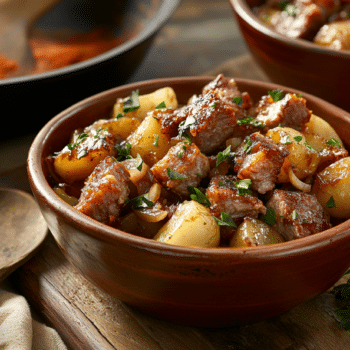
Savory Pork Hash

Ingredients
Main Ingredients
- 1 pound pork shoulder - cut into small cubes
 2 tablespoons olive oil - extra virgin for added flavor
 1 cup yellow onion - chopped finely
 2 cloves garlic - minced
 2 cups Russet potatoes - peeled and diced
 1 teaspoon paprika - smoked for depth
 0.5 teaspoon ground black pepper - freshly ground
 0.5 teaspoon salt - to taste
 0.5 cup chicken stock (chicken broth or chicken bouillon) - preferably low sodium
Garnish
 2 tablespoons parsley - fresh, chopped
Instructions
- Heat the olive oil in a large skillet over medium-high heat until shimmering.
- Add the pork cubes and cook, stirring occasionally, until browned on all sides, approximately 5-7 minutes.
- Add the chopped onion and cook until it becomes translucent, about 3 minutes, then add the minced garlic and continue to sauté for another minute.
- Stir in the diced potatoes, paprika, black pepper, and salt. Cook together for about 8-10 minutes, stirring often until the potatoes begin to soften.
- Pour in the chicken broth, reduce the heat to low, and cover the skillet. Let it simmer for 20 minutes, checking occasionally to avoid dryness.
- Uncover and increase the heat to medium-high to evaporate excess liquid while stirring the mixture frequently until nicely crisped, about 5-7 minutes.
- Garnish with fresh parsley before serving.
Notes
Nutrition
Common questions
Can I use ground pork instead of cubed pork shoulder?
Yes, ground pork works and cuts the cook time noticeably. Brown it over medium-high heat, breaking it up as it cooks, until it reaches an internal temperature of 160°F (71°C) — about 5–6 minutes. Skip the covered simmer stage entirely and go straight to adding the broth and crisping, since ground pork doesn’t need the extra time to tenderize.
How do I know the pork shoulder cubes are cooked through safely?
Ground and cubed pork both need to reach 160°F (71°C) internally — use an instant-read thermometer to check the thickest piece. The covered 20-minute simmer followed by the final high-heat crisp should get you there, but always verify rather than going by color alone.
Can I use a different potato — Yukon Gold or red potatoes?
Yukon Golds work well and hold their shape slightly better than russets. Red potatoes stay firmer and waxier, which means less of the fluffy interior texture but still a decent crisp exterior. Russets are the easiest to get crispy, which is why the recipe calls for them.
My skillet isn’t large enough — can I use a smaller pan?
You can, but the hash will steam rather than crisp if it’s piled too deep. Cook in two batches for the browning and final crisp stages, then combine for the simmer. Crowding is the main reason home hash turns out soft instead of crispy.
Can I make this dish ahead for a brunch with guests?
Cook it through the covered simmer stage up to a day ahead and refrigerate. When guests arrive, reheat the mixture in the skillet over medium heat until hot throughout, then crank the heat for the final crisp. The whole finish takes about 8–10 minutes from cold.
What can I serve alongside this to make it a full meal?
Fried or poached eggs on top are the most practical option — they cook in the time it takes to plate the hash. A simple green salad or sliced tomatoes on the side rounds it out without adding any real prep time.
More mince recipes to try
- Savory Pork Stottie Filling
- Kumara Beef Hash Cakes
- Savory Pork Noodle Stir-Fry
- Spiced Pork Mince Flatbreads