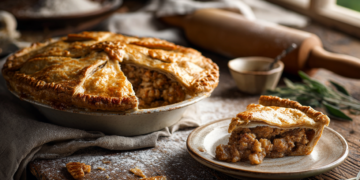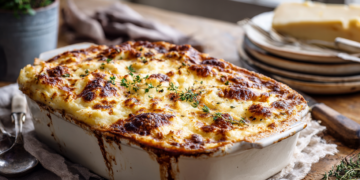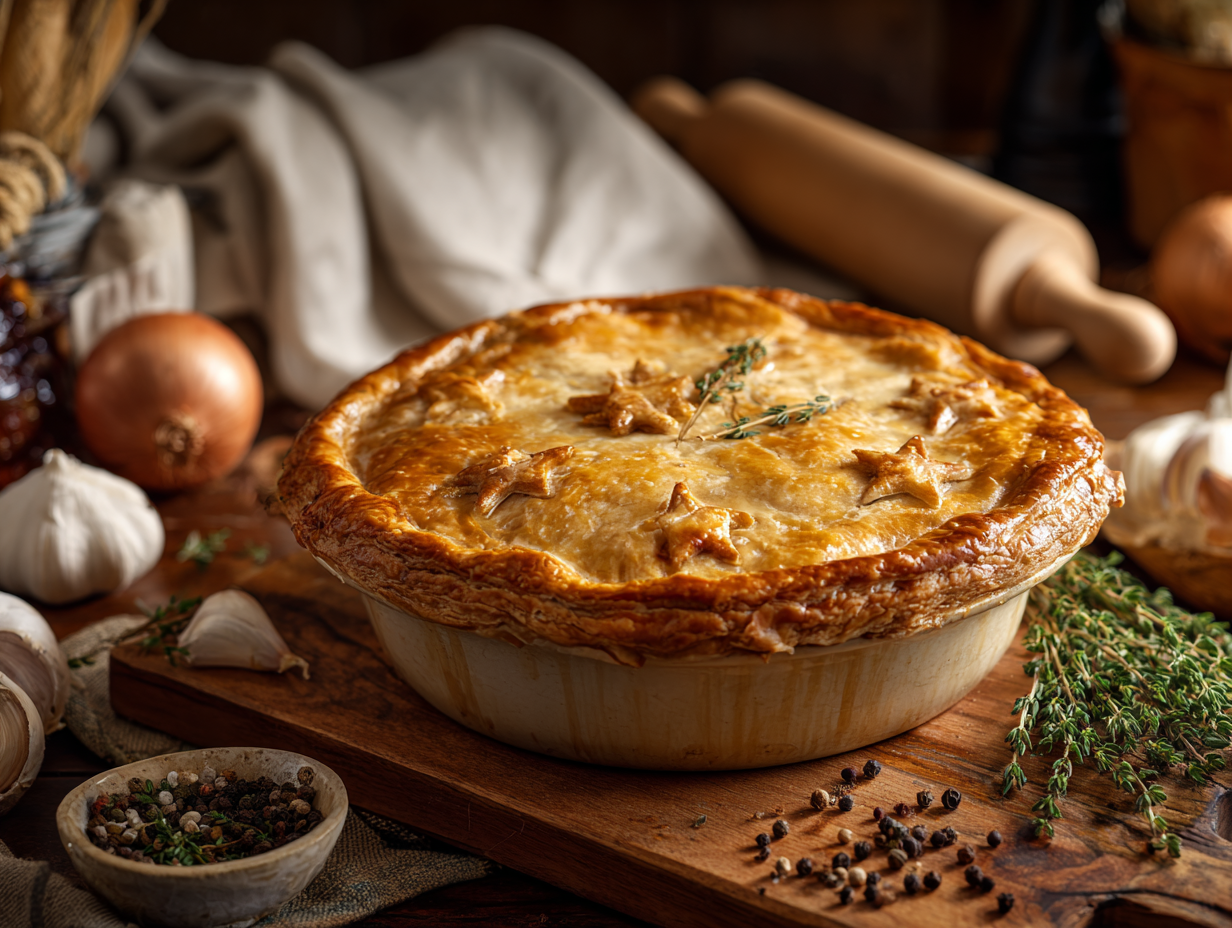
Tourtière is a double-crust meat pie filled with seasoned ground pork and beef, spiced with thyme, sage, and a small amount of cloves. It comes together in one skillet and one pie dish, and the whole thing is on the table in under an hour. If you want a filling, no-fuss dinner that also works for a holiday spread, this is a solid choice.
Substitutions that actually work
- Ground cloves: The smallest measurement in the recipe, but it does real work — don’t skip it. If you’re out, a pinch of allspice is the closest swap.
- Puff pastry vs. shortcrust: Store-bought puff pastry gives you the flaky result the recipe is built around. A standard shortcrust pie shell works fine if that’s what you have, but the texture will be denser and less crisp on top.
- Ground pork only: If you don’t have beef, use all pork. The filling will be slightly richer. All-beef works too, but the flavor is blunter — the pork fat carries the spices better.
- Dried sage vs. fresh: The recipe calls for ground dried sage. Fresh sage is stronger; if you use it, halve the amount and mince it finely.
The technique that matters
The filling is cooked in a skillet before it goes into the crust, which is the right call — it lets you drive off excess moisture so the bottom crust doesn’t go soggy. The key is to keep simmering until the liquid in the pan is nearly gone before you transfer the meat. If you rush that step and the filling is still wet, the pastry on the bottom will steam rather than bake, and you’ll end up with a soft, pale base instead of a cooked-through crust. Five minutes at a low simmer is the minimum; go a minute or two longer if there’s still visible liquid pooling around the meat. Skip the garnish of extra pastry cutouts — not worth the extra rolling and the scraps rarely bake evenly anyway.
What can go wrong
- Filling too wet going in: If the skillet mixture looks soupy after simmering, keep cooking on low, stirring occasionally, until the liquid has mostly evaporated. Wet filling = soggy bottom crust.
- Bottom crust not cooked through: Place the pie on the lowest oven rack for the last 10 minutes of baking. This gets direct heat to the base and firms it up without over-browning the top.
- Top crust puffs and separates from the filling: This happens when the filling is packed too loosely or has too much air. Press the meat down firmly and evenly before laying the top crust on, and make sure your steam slits are cut before baking, not after.
- Edges burning before the center is done: If the crimped edges are darkening fast, lay a strip of foil loosely over just the rim for the last 10–15 minutes. Don’t tent the whole pie or you’ll trap steam.
- Meat not reaching safe temperature: Ground pork must reach 160°F (71°C) internally. If you’re unsure, check the center of the filling with an instant-read thermometer before pulling it from the oven — the crust color alone isn’t a reliable indicator.
Make-ahead notes
The cooked filling keeps in the fridge for up to 3 days in a sealed container, so you can make it ahead and assemble the pie whenever you’re ready to bake. The fully baked pie also refrigerates well for 3 days — reheat individual slices in a 350°F (175°C) oven for about 15 minutes to bring the crust back to life; the microwave works in a pinch but softens the pastry. For longer storage, freeze the baked pie tightly wrapped for up to 2 months. Thaw overnight in the fridge, then reheat covered loosely with foil at 350°F for 20–25 minutes until the center hits 160°F (71°C) again.
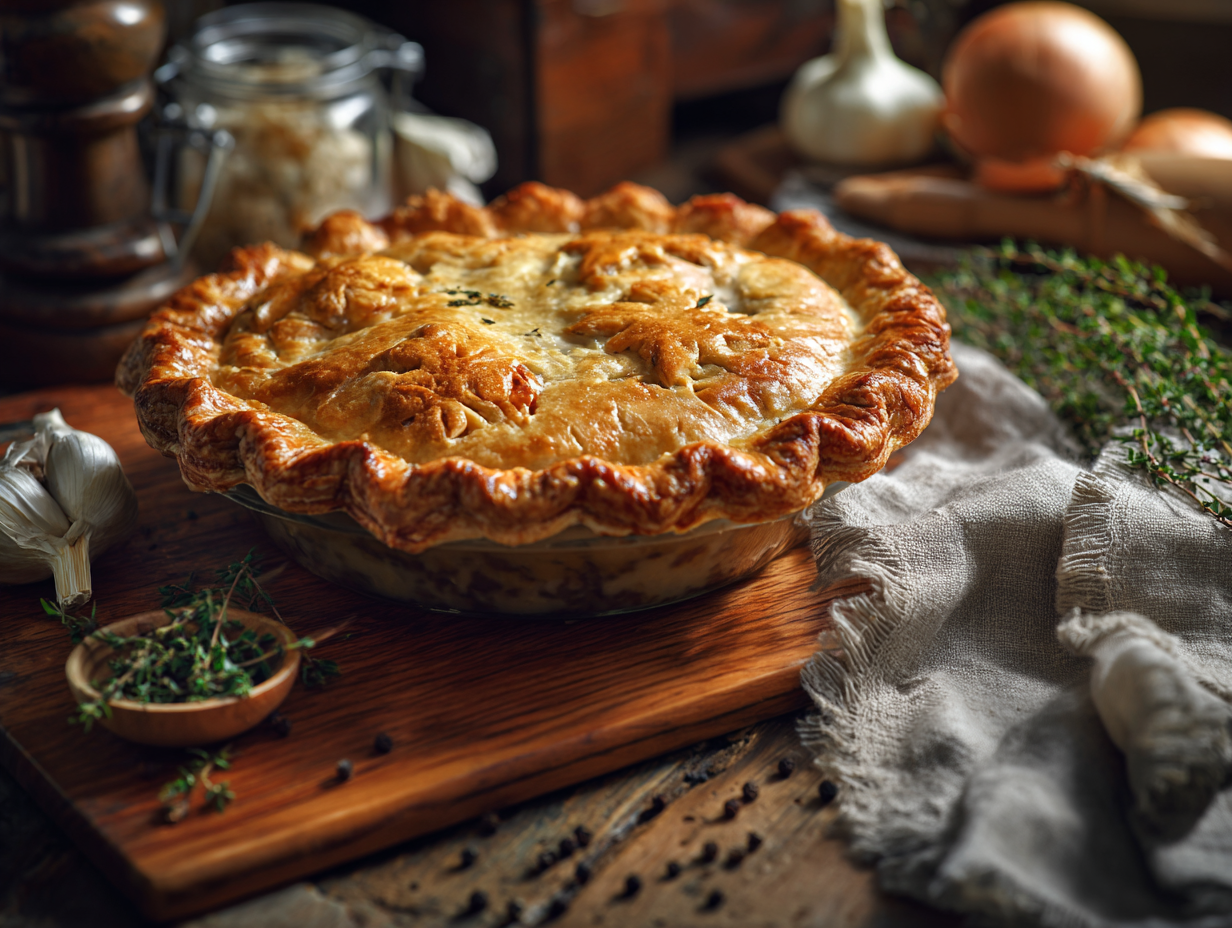
Flaky Pork and Beef Tourtiere

Ingredients
 1 pound ground pork (minced pork) - lean
 ½ pound ground beef (minced beef) - lean
 1 medium yellow onion - diced
 1 clove garlic - minced
 ½ cup water
 1 ½ teaspoon salt
 ½ teaspoon dried thyme
 ¼ teaspoon sage - ground
 ¼ teaspoon ground black pepper
 ⅛ teaspoon ground cloves
- 1 medium puff pastry
Instructions
- Preheat the oven to 425 degrees Fahrenheit.
- While waiting for the oven to get to the right temperature, put the pie crust in a circular baking pan and combine all the ingredients in a skillet. Cook over medium heat until it boils.
- Reduce the heat to low and let simmer for 5 minutes.
- Evenly spread the meat into the pie crust and place the top crust. Seal the edges. Cut slits in the top crust. Design any Christmas symbol you like using leftover pie crust. Bake for 40 minutes until golden brown. Cool before serving.
Nutrition
Frequently asked questions
Can I use regular pie crust instead of puff pastry?
Yes, a standard double-crust pie shell works fine here. The result won’t be flaky in the same way — you’ll get a more compact, shortcrust-style pie — but the filling and seasoning are exactly the same, and it holds together well when sliced.
Do I really need both pork and beef, or can I use just one?
You can use all pork or all beef and the pie will still be good. The combination is traditional because the pork fat keeps the filling moist and helps the spices bloom, while the beef adds a slightly deeper savory note — together they balance each other out better than either does alone.
How do I know when the pie is fully cooked through?
A golden-brown top crust after 40 minutes at 425°F is a good sign, but the most reliable check is an instant-read thermometer inserted through one of the steam slits into the center of the filling — it should read at least 160°F (71°C). The filling is pre-cooked, so this is mainly about confirming the pastry is done and the interior is hot all the way through.
More mince recipes to try
- Cumberland Sausage Mince Pie
- Wild Venison Mushroom Pies
- Savory Beef Carrot Turnovers
- Savory Pork Apple Pasties