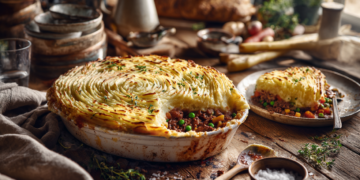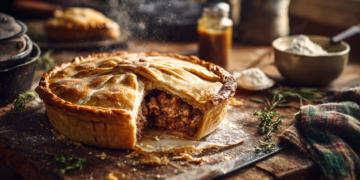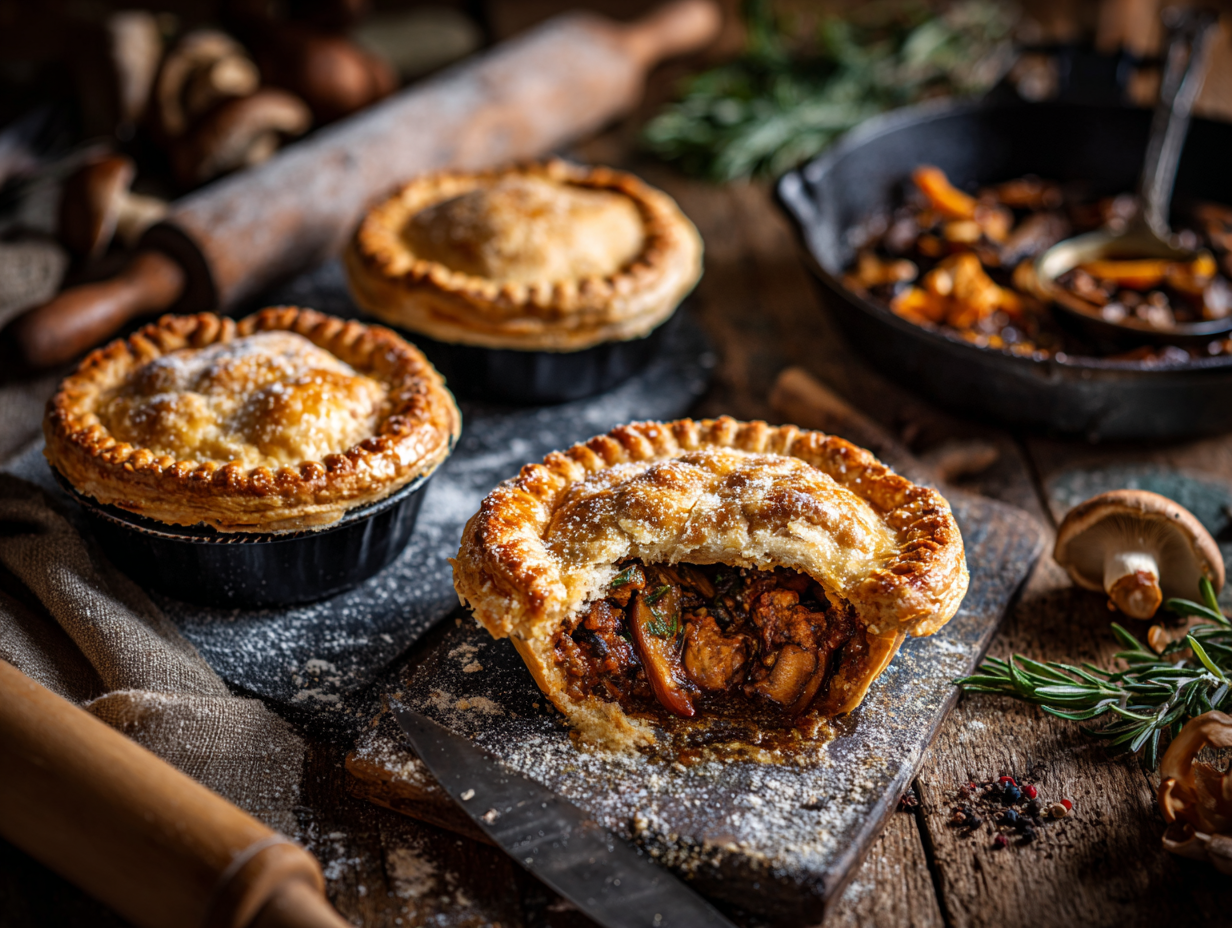
These are individual shortcrust pies filled with ground venison, wild mushrooms, onion, carrot, garlic, tomato paste, red wine, and fresh herbs. The filling comes together in one pan, the pastry is a straightforward rub-in dough, and the whole thing is done in under two hours — most of that hands-off. If you have ground venison in the freezer and want a proper savory pie without a long weekend project, this is the recipe.
Before you start
Two things actually matter here. First, get the venison properly browned before you add anything else. Ground venison is very lean, so it releases almost no fat — crowd the pan and it steams instead of browns, and you lose the deep savory base the whole filling depends on. Work in batches if needed and give each batch a full minute undisturbed before breaking it up. Second, cook the mushrooms separately or after the meat has been removed, not alongside it. Mushrooms dump a lot of liquid fast, and that liquid will stew the venison rather than let it caramelize. Once the mushroom moisture has fully evaporated and the edges start to color, you’re ready to combine everything and build the sauce. These two steps add maybe ten minutes total and make a real difference to the finished flavor.
Storage and reheating
Baked pies keep in the fridge for up to 3 days in an airtight container. To reheat, put them on a baking sheet in a 350°F (175°C) oven for 15–18 minutes — this keeps the pastry crisp in a way the microwave simply won’t. If you microwave them, the crust goes soft and a little rubbery; skip the garnish — not worth the extra dish. Unbaked assembled pies freeze well for up to 2 months: freeze them on a tray until solid, then wrap individually. Bake straight from frozen at 375°F (190°C) for about 45–50 minutes, checking that the filling reaches 160°F (71°C) in the center. Cooked filling on its own also freezes well for up to 3 months, which makes it easy to batch-cook the filling ahead and just make fresh pastry when you’re ready.
What can go wrong
- Soggy pastry base: The filling needs to be fully cooled before it goes into the pastry cases. Hot or even warm filling creates steam that softens the raw dough before it has a chance to set in the oven. Spread the filling on a plate to cool faster if you’re short on time.
- Filling too loose and wet: If the sauce hasn’t reduced enough, it will leak through the pastry during baking. The filling should hold its shape when you spoon it — not pool or run. Give it an extra few minutes of simmering with the lid off before you pull it from the heat.
- Pastry shrinking away from the edges: This usually means the dough was stretched rather than pressed into the tin, or it wasn’t rested in the fridge before baking. Even 20 minutes of chilling after lining the tins makes a difference.
- Dry, crumbly filling: Venison has almost no fat, so if the sauce reduces too far or the pies overbake, the filling dries out quickly. Pull the pies as soon as the pastry is golden and check the internal temperature — 160°F (71°C) is the target, not a suggestion to keep going.
- Lid not sealing and popping open: Press the lid edges firmly onto the dampened rim of the base, then crimp or press with a fork. A vent hole in the top also helps by letting steam escape rather than building pressure that lifts the lid.
Venison Mince and Wild Mushroom Pies

Equipment
Ingredients
For the Pie Filling:
 1 tbsp olive oil - extra virgin preferred
- 1 lb ground venison (minced venison) - fresh or properly thawed
 1 cup yellow onion - finely chopped
 3 cloves garlic - minced
- 1 ½ cups wild mushrooms - such as chanterelle, porcini, or cremini; cleaned and sliced
 ½ cup carrot - finely diced
 2 tbsp tomato paste - concentrated for flavor
 ½ cup red wine - full-bodied like a cabernet sauvignon
 1 cup beef stock (beef broth or beef bouillon) - or venison stock ; low sodium recommended
 1 tsp rosemary - fresh ; finely chopped
 1 tsp thyme - leaves ; fresh preferred
 ½ tsp ground black pepper - freshly cracked
 1 tsp kosher salt - to taste
For the Pastry:
 2 ½ cups all purpose flour (plain flour Australia and UK) - sifted
- 1 tsp kosher salt
 1 cup unsalted butter - chilled and cubed
- 5 tbsp ice water - more if needed
 1 large egg yolk - for egg wash, beaten with 1 tbsp milk
Instructions
- In a large skillet, heat olive oil over medium-high heat. Add ground venison and sear until browned, about 5–6 minutes. Break up with a wooden spoon as it cooks to ensure even browning.
- Add chopped onions and sauté for another 4 minutes until softened and golden. Stir in garlic and cook for an additional minute until fragrant.
- Fold in wild mushrooms and carrots. Cook until mushrooms release their moisture and begin to brown, around 6–8 minutes, stirring occasionally.
- Stir in tomato paste, mixing thoroughly. Let it cook for 2 minutes to concentrate the flavor. Pour in red wine, scraping any bits from the bottom of the pan. Let it reduce by half, about 3–5 minutes.
- Add stock, rosemary, thyme, salt, and pepper. Lower heat and simmer uncovered for 20–25 minutes, or until mixture is thickened and rich. Remove from heat and let cool completely.
- In a mixing bowl, combine flour and salt. Add chilled butter and use fingertips or pastry cutter to blend until mixture resembles coarse crumbs. Slowly add ice water, just enough to bring dough together. Don’t overwork.
- Divide dough into two portions. Wrap in plastic wrap and chill in refrigerator for at least 30 minutes.
- Preheat oven to 375°F (190°C). Roll out one portion of dough on floured surface to line your pie tins. Fill each with cooled venison mixture.
- Roll out remaining dough and cover the pies. Seal and crimp edges. Cut a small steam vent on top. Brush with egg wash.
- Bake for 30–35 minutes, or until crust is golden brown. Let them rest for 5 minutes before serving.
Notes
- For a shortcut, use high-quality store-bought shortcrust pastry.
- To enhance earthiness, stir a teaspoon of porcini mushroom powder into the filling.
- Swap red wine with balsamic vinegar or pomegranate juice for a non-alcoholic version.
Nutrition
Frequently asked questions
Can I use regular button mushrooms instead of wild mushrooms?
Yes, button or cremini mushrooms work fine. The flavor will be milder and less earthy than wild varieties, but the texture and structure of the filling will be the same. If you want to get closer to the original flavor, add a small handful of dried porcini rehydrated in hot water, and use the soaking liquid in place of some of the stock.
Where do I find ground venison?
Many larger grocery stores carry it in the specialty or game meat section, especially in fall and winter. Butcher shops, farmers markets, and online game meat suppliers are reliable year-round sources. If you hunt, a butcher can grind trim for you.
Can I make the filling the night before?
Absolutely — the filling actually tastes better after sitting overnight in the fridge. Make it the evening before, refrigerate it covered, then assemble and bake the pies the next day. This also means the filling is already cold when it goes into the pastry, which helps prevent a soggy base.
What can I use instead of red wine?
Replace it with an equal amount of beef stock plus a teaspoon of Worcestershire sauce. The Worcestershire adds back some of the depth and slight acidity the wine provides. Grape juice with a small splash of red wine vinegar also works in a pinch.
How do I know when the pies are fully cooked through?
The pastry should be deep golden brown and the filling should reach 160°F (71°C) at the center — use an instant-read thermometer pushed through the steam vent. Don’t rely on color alone, since the pastry can look done while the center is still cool if the filling went in cold.
More mince recipes to try
- Rustic Game Sausage Pie
- Wild Game Stroganoff Reimagined
- Savory British Beef Pies
- Cumberland Sausage Mince Pie