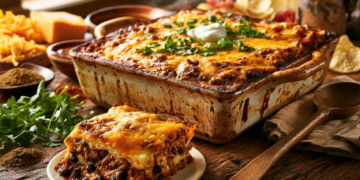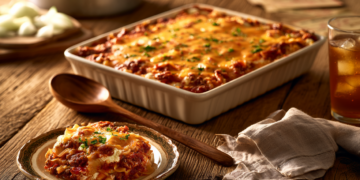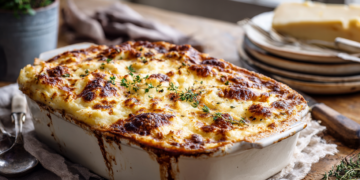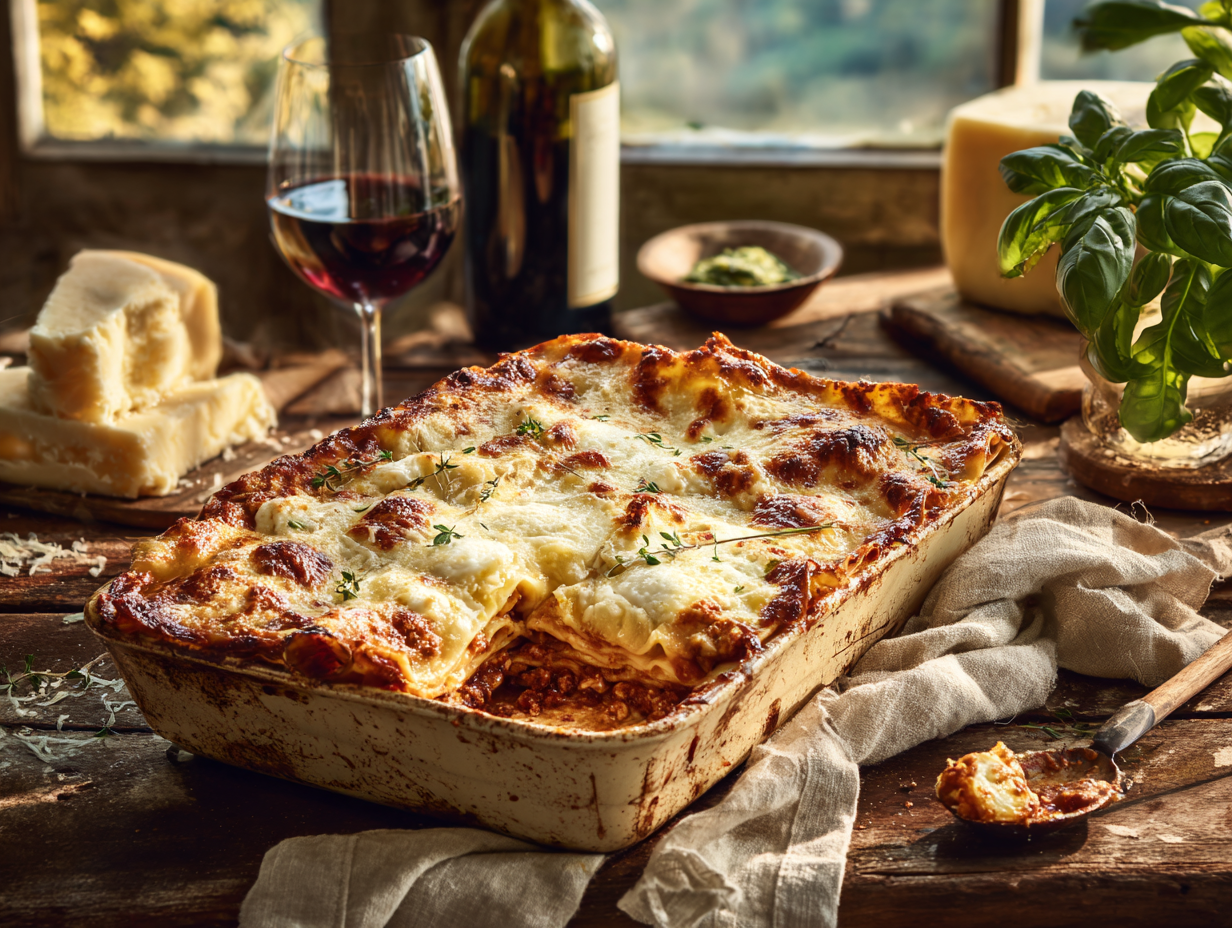
This is a full-pan lasagna built around a ground beef and sausage meat ragù, assembled with uncooked pasta sheets and a crème fraîche white sauce instead of a made-from-scratch béchamel. It feeds a crowd without requiring you to babysit multiple pots. The honest reason to make it: real lasagna flavor on a weeknight, with far less cleanup.
Why this recipe works
Two things carry this recipe. First, skipping the pre-boil: uncooked lasagna sheets absorb moisture directly from the meat sauce as the dish bakes, which means they cook through while also soaking up flavor — you lose nothing and gain time. Second, the sausage meat does the heavy seasoning work. Squeezing it from the casings and crumbling it into the pan alongside the ground beef means the sauce gets garlic, fennel, and herbs built in, so you’re not chasing depth with a long list of individual spices. Those two decisions together are why this comes out tasting like it took longer than it did.
Common problems and fixes
- Pasta still firm after baking: The sheets need to be fully submerged or covered by sauce at every layer. If you have dry patches, the pasta won’t cook through. Spread sauce edge to edge before laying each sheet down.
- Watery lasagna that falls apart when sliced: This usually means the sauce was too thin going in. Let the ragù cook until it’s thick enough to hold a spoon’s shape before assembling. Resting the finished lasagna for 10–15 minutes off the heat also helps it set so it slices cleanly.
- Crème fraîche layer splitting or going grainy: Don’t skip the egg — it stabilizes the crème fraîche during baking. Also avoid using a low-fat version; full-fat holds together far better under oven heat.
- Top cheese burning before the center is done: Keep the foil on for the first 35 minutes, then remove it for the final 10 to brown the top. If your oven runs hot, leave the foil on longer and check the center with a knife — it should come out hot to the touch.
- Sausage meat clumping in large chunks: Break it up thoroughly as soon as it hits the pan, before it starts to brown. Once it firms up it’s much harder to crumble fine, and big chunks make the layers uneven.
Shopping notes
- Sausage meat: Buy sausages with a simple, savory seasoning profile — Italian-style pork sausages work well. Avoid anything with sweet fillings or fruit. If your store sells loose sausage meat, that saves you the step of removing casings.
- Crème fraîche: Full-fat only. Sour cream is a workable substitute in a pinch, but it’s thinner and slightly more prone to splitting — add an extra egg yolk if you go that route.
- Pecorino: Saltier and sharper than Parmesan. If you swap in Parmesan, taste before adding any extra salt to the sauce. Skip the pre-grated tubs — they don’t melt as well.
- Pesto (optional layer): A basic store-bought basil pesto is fine here. This is not the place to spend money on a premium jar — it’s a background note, not a feature.
Storage and reheating
Covered tightly in the fridge, leftovers keep well for up to 4 days — the flavor genuinely improves by day two as the layers meld. To reheat, cover individual portions with a damp paper towel and microwave on medium power in 90-second intervals until hot through; this prevents the edges from drying out before the center is warm. For freezing, cut into portions first, wrap each one individually, and freeze for up to 3 months. Thaw overnight in the fridge before reheating. Freezing the whole pan works but makes portioning harder once it’s solid.
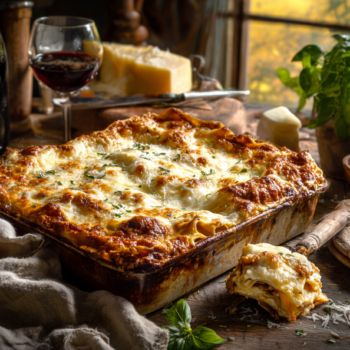
Next-Level Lazy Lasagna

Ingredients
Meat Sauce Ingredients
 6 small sausages - small pork sausages
 500 grams ground beef (minced beef)
 400 grams tomato - chopped
 2 medium yellow onion
 2 medium carrots
 2 tablespoons tomato paste
 1 tablespoon olive oil - garlic
 1 clove garlic - finely chopped
 2 glugs red wine
 ½ cube beef stock (beef broth or beef bouillon)
 3 tablespoons mixed herbs (usually Thyme, Marjoram, Oregano, Parsley, Sage, Basil) - dried
Bechamel Sauce Ingredients
- 400 ml Crème fraîche
 1 medium egg - to help thicken the sauce slightly
 1 dash milk
 1 tablespoon mustard
Other Ingredients
 1 packet lasagna sheets
 1 cup pecorino romano cheese
 1 cup Mozzarella cheese - grated
Instructions
- Peel the carrots and finely chop them with the onion. De-skin the sausages by snipping the ends with kitchen scissors and peeling the casing off.
- Heat a pan on a medium flame and pour in the oil. Add the onions and carrot to the pan and gently cook until browned and softened. Then add the sausage meat, crumbling in using a wooden spoon, add the beef mince and let brown. Then add tinned tomatoes, ketchup or tomato paste, half a beef stock cube, and a good glug of red wine. Season with salt and pepper, lots of mixed herbs, and bring to the boil
- Once boiling, turn to a simmer and leave for 20 minutes with the lid 3/4. In the meantime, make the bechamel sauce. Tip creme fraiche into a bowl and mix together; crack in the egg. The mixture will be pretty thick, so you’ll want to add a dash of milk, just enough so it is a pourable liquid.
- After 20 minutes, give the meat sauce a stir and taste to see if it needs more seasoning or even a dash of soy sauce if a bit bland. If it’s looking too thick and congealing, add a dash of water. Bring to the boil and simmer for another 10 minutes. Your result should be a fairly thick sauce but still with a small amount of liquid to stop the lasagna from burning. Turn the heat off and put it to one side when done.
- Next, grab the dish you will be cooking the lasagna in (a wide, shallow dish is ideal) and put a thin layer of both sauces on the base to stop sticking. Don’t worry about the spices merging; it won’t look pretty, but it will taste great. Spread a good layer of pesto on the uncooked lasagna sheets and layer them into the dish, followed by the meat sauce, then white. Keep layering in this order: lasagna, pesto, meat sauce, white sauce on the last layer, top with bechamel, and a generous amount of two types of cheese. I recommend pecorino and cheddar, but feel free to go traditional and use some mozzarella.
- Pop in the oven at 180 degrees Celsius fan oven for 45 minutes or until hot when ready to cook. I recommend covering this with a thin layer of foil to avoid burning, taking off the foil only when melting the cheese at the last minute. If you find it going a bit too brown, do not fear, it will still taste great even if it doesn’t look it!
- Enjoy your lasagna with extra cheese, pesto, or a bit of basil. Great leftover the next day with a quick ping in the microwave, or can freeze portions for up to 6 months.
Nutrition
Your questions, answered
Can I make this lasagna the night before and bake it the next day?
Yes, and it’s actually a good strategy for a family dinner. Assemble it fully, cover tightly with foil, and refrigerate overnight. Add 10 extra minutes to the covered baking time since it’s going in cold.
How do I know when the lasagna is fully cooked through?
Insert a knife into the center and hold it there for 5 seconds — it should come out hot to the touch. The pasta sheets should offer no resistance when the knife goes through.
Can I double the recipe to feed a larger group?
Yes, but use two separate baking dishes rather than one deeper pan. A single very deep pan will leave the center undercooked by the time the top is done. Two standard dishes baked side by side is the reliable approach.
What’s the minimum fat percentage I should use for the ground beef?
Use at least 80/20 (80% lean). Leaner beef dries out during the longer bake time and gives you a less cohesive sauce. The fat also carries flavor into the pasta sheets as they cook.
More mince recipes to try
- Beef Ricotta Lasagna Rolls
- Ultimate Cheesy Beef Bake
- Creamy Beef Spinach Pasta
- Savory Beef Sausage Rolls