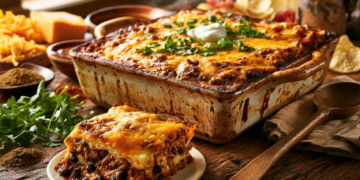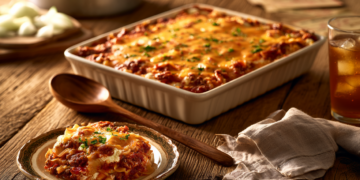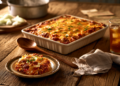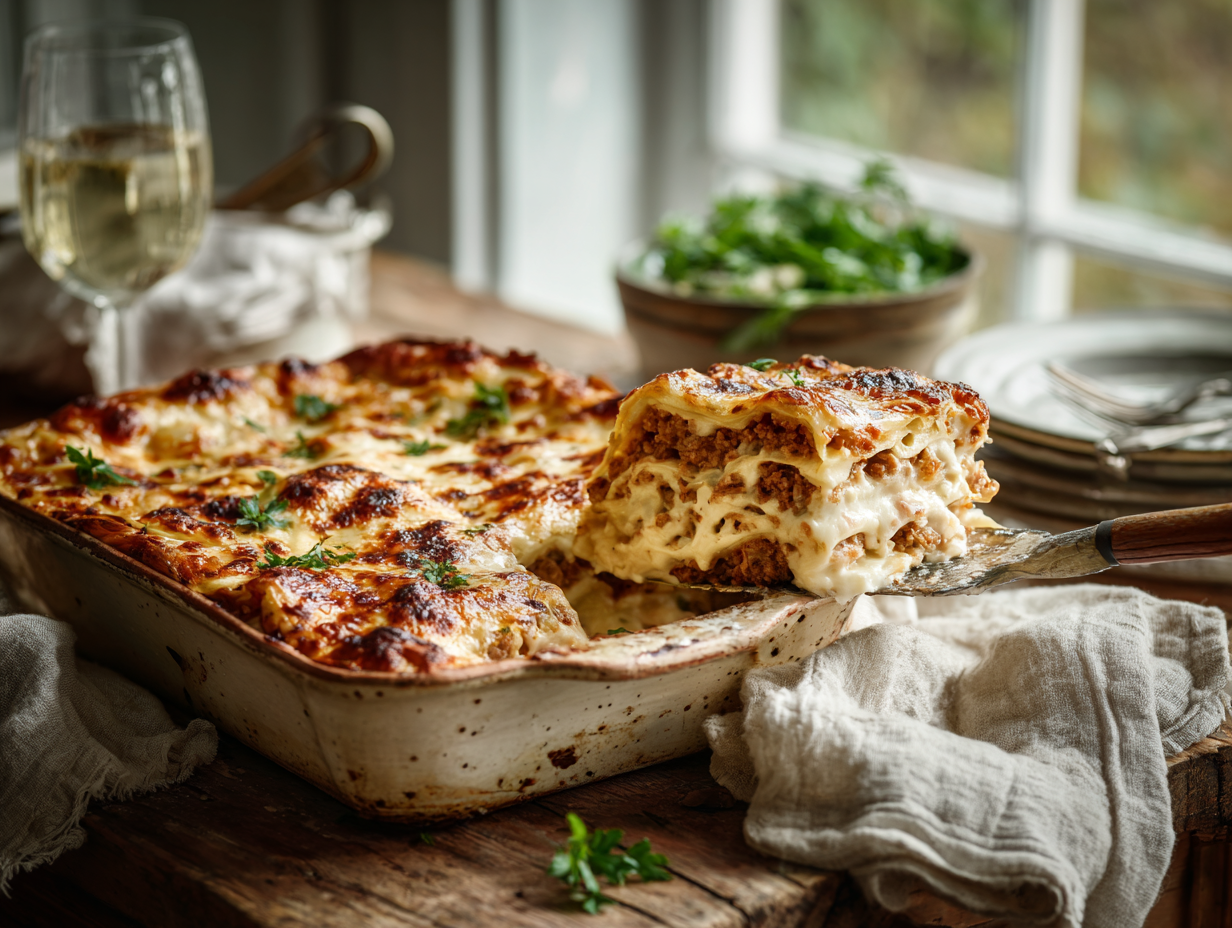
This lasagna layers seasoned ground meat and chopped almonds between pasta sheets, then binds everything with a béchamel rather than tomato sauce. The result is richer and creamier than a standard meat lasagna, and the almonds add a subtle crunch that keeps each bite from feeling heavy. It comes together faster than you’d expect for a baked pasta dish.
Why this recipe works
Two things make this recipe reliable. First, browning the ground meat until the moisture fully evaporates — not just until it loses its pink color — concentrates the flavor and keeps the filling from making the pasta layers soggy. Wet filling is the most common reason lasagna falls apart when you cut it. Second, the béchamel does double duty: it acts as both sauce and binder, so the layers hold together without needing a long rest after baking. Because there’s no tomato acidity to balance, the cheese flavor comes through cleanly, and the toasted almonds register as a distinct texture rather than disappearing into the sauce.
Ingredient notes
- Almonds: Use blanched almonds and chop them yourself — pre-sliced almonds are too thin and turn soft during baking. A rough chop to about the size of a pea gives you the crunch that makes this recipe worth making.
- Ground meat: Ground beef at 80/20 fat ratio works best here. Leaner blends can make the filling dry once the fat cooks off. Ground lamb is a good swap if you want a slightly more savory result. Whatever you use, internal temperature must reach 160°F (71°C) — skip the garnish, not worth the extra dish.
- Béchamel: Whole milk gives a stable sauce that doesn’t split in the oven. Low-fat milk can work but the sauce will be noticeably thinner and may pool between layers.
- Lasagna sheets: No-boil sheets are fine and cut about 10 minutes off your prep. If you use them, make your béchamel slightly looser so the sheets have enough moisture to cook through.
Troubleshooting
- Lasagna is watery after baking: The ground meat wasn’t cooked dry enough before layering. Next time, cook it over medium-high heat and keep stirring until no liquid remains in the pan before adding it to the dish.
- Top layer is dry or cracked: The final béchamel layer wasn’t thick enough to cover the pasta completely. Make sure the top pasta sheet is fully covered with sauce before the cheese goes on.
- Almonds are soft instead of crunchy: They weren’t toasted before going in, or the filling was too wet. Toast them in a dry pan for 3–4 minutes until golden before chopping, and make sure the meat filling is dry.
- Layers slide apart when serving: The lasagna was cut too soon. Give it at least 10 minutes out of the oven before slicing — the béchamel needs that time to set.
- Béchamel has lumps: The milk was added too fast or was cold. Add it gradually while whisking constantly, and warm the milk slightly beforehand if you can.
Leftovers and meal prep
Leftovers keep well covered in the fridge for up to 4 days. Reheat individual portions in the microwave with a splash of milk or water over the top to stop the béchamel from drying out — 2 to 3 minutes on medium power works better than full blast. You can also assemble the entire lasagna up to 24 hours ahead, cover it tightly with foil, and refrigerate it unbaked; add 10–15 minutes to the bake time if it goes in cold. For freezing, portion it into individual servings after baking, wrap tightly, and freeze for up to 2 months. Thaw overnight in the fridge before reheating rather than going straight from frozen to oven, which tends to dry out the edges before the center is hot.
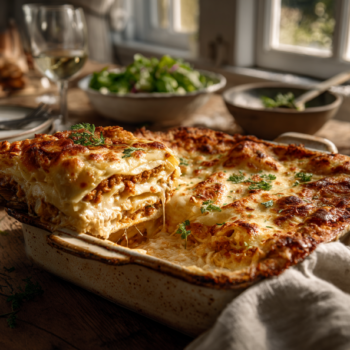
Cheesy and Nutty Minced Meat Lasagna with White Sauce

Equipment

Ingredients
Lasagna
 lasagna sheets - 8-9 noodles
 1 tbsp olive oil
 1 tbsp Butter - Clarified
 1 yellow onion - medium-sized, finely chopped
 500 gram ground beef (minced beef)
 1½ tbsp Salt
  ½ tsp ground black pepper
 1 tbsp ground cinnamon
 ½ tsp Nutmeg
 ¼ tsp Ground cloves
 ¼ cup almonds
 1 cup Mozzarella cheese - grated
 2 tbsp parsley - fresh, chopped
Sauce
- 2 tbsp Butter
 3 tbsp all purpose flour (plain flour Australia and UK) - All-purpose
- 1 tsp Salt
- ¼ tsp ground black pepper
 2 cups Milk
Instructions
- Grease a baking tray, place the almonds in it and bake for five minutes. The oven temperature should be 170 degrees Celsius.
- Let the almonds cool down and then crush them. Don’t make them very small.
- Boil water in a skillet with 1 tablespoon oil and a pinch of salt. Put in the lasagna and boil for 90 seconds. Take them out of water and spread in a dish. Grease them with a little oil if you feel like they will stick with the tray.
- I am using ground beef for my dish. You can use whatever you like (mutton, lamb meat or pork).
- Heat a pan, melt the butter and fry the chopped onion until golden brown.
- Next, add the ground meat and add salt, nutmeg, pepper, cinnamon and cloves.
- Cook until the meat is beige-brown and the water in it has dried out.
- Meanwhile melt butter in a large saucepan. Add flour, salt and pepper, blend and cook for 1 minute.
- Add milk slowly and bring to boil. Cook for a minute more and let it become thick.
- Remove from flame and add 1/3 cup of cheese in it. Mix well.
- Remove cooked mince meat from heat and dish out.
- Add roasted and crushed almonds and fresh parsley and mix.
- Meanwhile, preheat the oven.
- Place four lasagna noodles in a baking tray. Spread cooked minced meat over it and then spread 1/3 cup of cheese over it.
- Place another layer of four lasagna noodles above it. Again, spread minced meat over it.
- Pour white sauce on top and spread the remaining cheese.
- Bake for 25 minutes. Serve hot with your favourite drink.
Nutrition
Your questions, answered
Can I make this lasagna ahead of time?
Yes — assemble it fully, cover with foil, and refrigerate for up to 24 hours before baking. Pull it out of the fridge while the oven preheats and add 10–15 minutes to the bake time to account for the cold start.
Can I use a different nut instead of almonds?
Walnuts work well and are easier to find. Avoid cashews — they soften completely during baking and you lose the textural contrast that makes the almonds worth including.
Do I need to pre-cook the lasagna sheets?
No-boil sheets are fine for this recipe. Just make sure your béchamel is fluid enough to hydrate them during baking — if it’s very thick, thin it with a few tablespoons of milk before layering.
How do I know the ground meat is cooked safely?
Ground beef and lamb must reach an internal temperature of 160°F (71°C) before layering. In practice, cook the meat until it’s fully browned with no pink remaining and all the liquid in the pan has evaporated — that’s a reliable visual check without a thermometer.
If you liked this one
- Beef Ricotta Lasagna Rolls
- Ultimate Cheesy Beef Bake
- Creamy Beef Spinach Pasta
- Moroccan Lamb Almond Bastilla