Cottage pie is one of those timeless dishes that carries with it a deep sense of comfort, history, and home. As a chef, I’ve always believed that some of the most satisfying meals aren’t the most elaborate or expensive—they’re the ones rooted in tradition, practicality, and heart. Cottage pie fits beautifully into that category. It’s humble, hearty, and unpretentious, yet when made well, it delivers incredible depth of flavor and texture.
The origins of cottage pie date back to the late 18th century in Britain and Ireland. The name itself comes from the modest rural homes—“cottages”—where the dish was first prepared. Potatoes had become a staple crop among the working class, affordable and filling, and cooks cleverly combined them with minced meat to create nourishing meals that could stretch limited ingredients. Traditionally, cottage pie was made with beef, while shepherd’s pie—often mistakenly used interchangeably—was made with lamb. The distinction matters historically, though both follow the same comforting concept: savory meat base, topped with creamy mashed potatoes, baked until golden.
One of the reasons cottage pie has endured for centuries is its practicality. It was originally a way to use up leftover roasted meat. The cooked beef would be finely chopped or minced, mixed with gravy, and topped with mashed potatoes. Today, we often start with ground beef, which streamlines the process without sacrificing heartiness. This makes the recipe accessible for weeknight cooking while still honoring its frugal roots.
As a chef, I appreciate how adaptable cottage pie can be while still maintaining its classic character. At its core, the foundation is a well-seasoned ground beef mixture. Browning the beef properly is key. You want to develop deep, caramelized notes through the Maillard reaction—the chemical process that creates those savory brown flavors. Rushing this step can leave the filling pale and lacking complexity. I always recommend cooking the beef in batches if necessary, giving it space in the pan to sear rather than steam.
The vegetable component is equally important. Traditional cottage pie includes onions, carrots, and sometimes peas. These vegetables bring sweetness, texture, and color to balance the richness of the beef. Onions, when sautéed slowly, develop a natural sweetness that enhances the savory profile. Carrots add subtle earthiness, while peas provide small bursts of freshness. Garlic, though not always historically included, is now a common and welcome addition, adding aromatic warmth.
A good cottage pie also relies on a flavorful sauce to bind the meat and vegetables together. Beef stock, tomato paste, Worcestershire sauce, and fresh herbs like thyme or bay leaf help deepen the flavor. The goal is a filling that’s moist but not watery—rich and cohesive enough to support the mashed potato topping without becoming soupy. A small splash of red wine can elevate the dish even further, adding sophistication while staying true to its rustic essence.
Then we come to the crowning glory: the mashed potatoes. In many ways, they define the texture of the entire dish. I prefer using starchy potatoes like Russets or Yukon Golds, which mash smoothly and absorb butter and cream beautifully. The potatoes should be well-seasoned; bland mashed potatoes can dull the entire pie. Butter adds richness, cream provides luxurious mouthfeel, and a touch of salt enhances the overall flavor. Some chefs incorporate egg yolks into the mash for added richness and structure, which helps achieve a beautifully browned finish in the oven.
Texturing the top of the mashed potatoes with a fork isn’t just decorative—it creates peaks and ridges that crisp up during baking, offering delightful contrast to the soft interior. When baked together, the layers meld into a cohesive dish, with the golden crust on top giving way to a hearty, savory filling beneath.
Another reason cottage pie has remained so beloved is its role as a make-ahead and freezer-friendly meal. Historically, it helped families plan efficiently, and today it continues to serve that purpose. You can prepare it in advance and refrigerate it until ready to bake, or freeze it for future meals. For busy households, this makes it invaluable. It reheats beautifully, often tasting even better the next day as the flavors continue to develop.
Nutritionally, cottage pie offers balance as well. You have protein from the beef, carbohydrates from the potatoes, and vitamins from the vegetables. While it’s undeniably comforting and hearty, it’s also a well-rounded meal in a single dish. Modern cooks sometimes adjust the recipe for dietary preferences—using leaner beef, incorporating extra vegetables like mushrooms or celery, or even substituting mashed cauliflower for part of the potatoes to lighten it up.
What I particularly love about cottage pie is how it bridges generations. It’s the kind of meal grandparents made, parents relied on, and children grow up remembering. It doesn’t require advanced culinary skills, yet it teaches invaluable techniques—browning meat, building a sauce, making proper mashed potatoes, and layering flavors thoughtfully. For beginner cooks, it builds confidence. For seasoned chefs, it’s an opportunity to refine and elevate the details.
There’s also a deeply emotional component to cottage pie. Comfort food isn’t just about calories or ingredients—it’s about memory. The aroma of beef and onions simmering together, the sight of golden mashed potatoes fresh from the oven, the steam rising as you break into the crust—these sensory experiences evoke warmth and familiarity. In colder months especially, few dishes feel as satisfying.
In today’s fast-paced culinary world, where trends come and go, cottage pie remains steadfast. It doesn’t need reinvention to stay relevant. Its strength lies in its simplicity and honesty. That’s what draws me back to it time and time again. Each time I prepare it, I’m reminded that cooking doesn’t have to be complicated to be meaningful. Sometimes the most enduring recipes are those born out of necessity, refined by generations, and cherished because they bring people together around the table.
So when you make this classic cottage pie, you’re not just preparing a ground beef recipe—you’re participating in a culinary tradition that spans centuries. It’s easy, freezer-friendly, and wonderfully satisfying, but beyond that, it connects past and present in the most delicious way possible.

Classic Cottage Pie Recipe
Equipment
Ingredients
- 1 large pie crust dough
2 teaspoons olive oil
1 large yellow onion - diced
1 teaspoon sugar (white sugar)
½ pound ground beef (minced beef)
1 pinch salt
2 medium carrots - diced
1 medium potatoes - diced
½ cup peas
2 cloves garlic - minced
2 sprigs thyme
1 tablespoon tomato paste
1 tablespoon all purpose flour (plain flour Australia and UK)- 1 can Guinness
1 splash heavy cream (also called thickened cream)
1 pinch salt - to taste
1 medium egg
1 handful parsley - for garnish
Instructions
- Preheat the oven to 375°F.
- Heat olive oil over medium-high heat. Add onions and sugar. Cook until light brown, stirring occasionally.
- Add beef and cook until brown (about 15 minutes), then add the rest of the vegetables (carrots, potato, peas, garlic and thyme) and cook until vegetables are tender, about 5 minutes.
- Stir in tomato paste and flour and cook for 1 minute. Add a can of Guinness and scrape all bits off the bottom of the pan. Bring to a boil and reduce the liquid until the sauce is thick but the ingredients remain moist.
- Remove from heat, stir in the heavy cream, and allow it to slightly cool. Set aside.
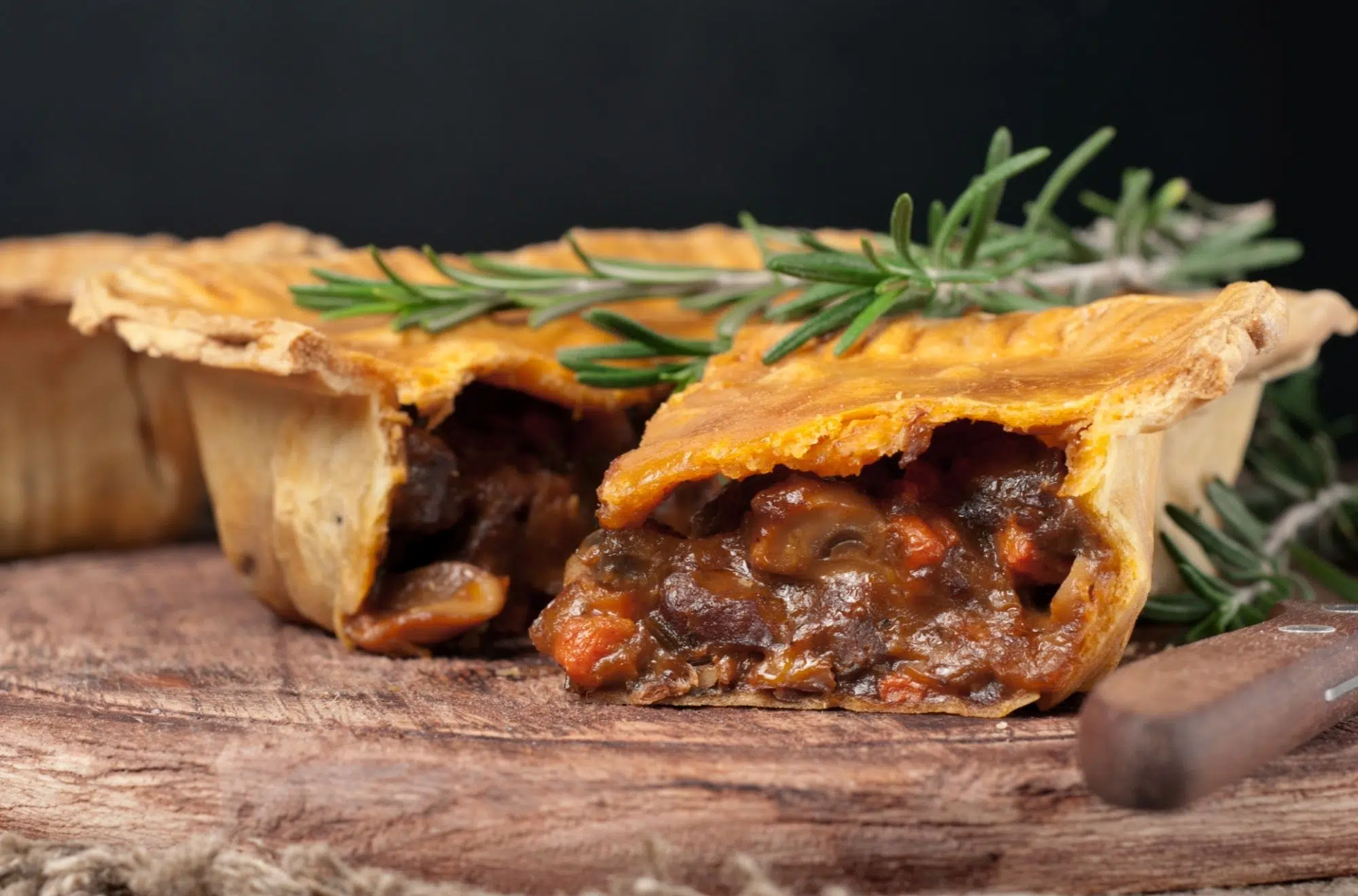
- Follow pie crust and filling. Line your pie pan with the rolled out crust dough. Add the meat and vegetable mixture then place the top of the rolled pie crust over the filling. Pinch the sides of the two layers of crust to seal in the filling.
- Break an egg into a bowl and add a splash of water. Brush on egg mixture all over top crust then garnish with Italian parsley (if desired).
- Bake on the middle rack of the oven at 375°F for about 25 minutes, or until the crust is golden brown. Serve!