Cottage pie is one of those quintessential comfort foods that transcends generations and borders, yet firmly plants its roots in Irish and British culinary tradition. The dish we now know as Cottage Pie is a hearty, humble, and wholesome meal, originally born out of necessity, but crafted with love and resourcefulness. A dish historically made by frugal home cooks to use up leftovers, it has evolved into a beloved emblem of home cooking, gracing both pub tables and family kitchens alike. Today, we’ll dive deeper into the rich history of Cottage Pie, the cultural significance behind its ingredients, regional variations, and the modern touches that make this particular Irish Cottage Pie recipe uniquely special.
A Brief History of Cottage Pie
While we commonly associate Cottage Pie with Ireland and the British Isles, its origins are rather practical than regal. The term “Cottage Pie” dates back to the late 18th century, a time when potatoes were becoming a widespread staple among the poor, especially in rural communities. The word “cottage” refers to the modest dwellings of rural workers, who often had limited access to costly ingredients but an ingenious ability to make the most of what they had.
Originally, cottage pie was a way to repurpose leftover roasted meat, which was minced (chopped finely) and then baked with a topping of mashed potatoes. Over the years, especially with the invention of the meat grinder, ground meat—particularly beef—became standard. Although many associate “Shepherd’s Pie” and “Cottage Pie” as interchangeable terms, there is a traditional distinction: Shepherd’s Pie is made with lamb, whereas Cottage Pie uses beef.
Ireland, known for its agricultural heart and deep farming roots, embraced cottage pie as a staple dish with cultural pride. In Irish homes, the recipe would vary slightly from family to family, depending on what ingredients were available—leftover meats, root vegetables from the harvest, wild herbs, or dairy from the family cow. The flexibility and adaptability of the recipe are what make it truly representative of Irish resilience and resourcefulness.
Cultural Significance in Irish Cuisine
Today, if you walk into a pub in Dublin, Galway, or any Irish village, you’re almost guaranteed to find Cottage Pie on the menu. It sits comfortably among other classic Irish dishes such as Irish Stew, Colcannon, and Boxty. Its inclusion in nearly every establishment isn’t just for tourists—it’s loved by locals too.
Cottage Pie is considered “pub grub” of the highest order: warm, filling, rustic, and incredibly satisfying on a cool or damp day. The creamy mashed potato topping contrasts beautifully with the savory, rich filling beneath, making for a complete and balanced meal. It’s often enjoyed at family gatherings, during cozy Sunday dinners, or celebrated as part of St. Patrick’s Day feasts.
In Irish tradition, food isn’t just for nourishing the body—it brings people together. Recipes are passed down through generations, with each family adding their twist to classic preparations. For example, some households may use a greater variety of root vegetables, like parsnips or turnips, while others will enrich the topping with butter and heavy cream. In rural regions, leftovers from Sunday roasts are often repurposed into cottage pie for Monday’s meal—a practice that pays homage to frugality and sustainability.
The Importance of Key Ingredients
At its core, any authentic cottage pie must feature two non-negotiables: ground beef and potatoes. Everything else, though traditional or optional, can be adjusted based on what’s available or to suit personal preferences. This simplicity is what has made the dish so enduring through generations.
In the recipe provided above, we’ve respected the authenticity of this Irish classic while adding a few modern or creative touches. Here’s a breakdown of some key ingredient choices and why they work beautifully:
- Ground Beef (Minced Beef): As mentioned earlier, beef is the cornerstone of this dish. The fat content in minced beef allows for flavor development and a meaty, rich foundation.
- Leek: A somewhat underappreciated ingredient outside of traditional Irish cooking, leeks offer a delicate, onion-like flavor that lends aromatic depth to the beef filling.
- Mushrooms, Tomato, and Carrots: These provide texture and natural umami, as well as a bit of sweetness that balances out the savory elements.
- Red Wine and Stock: Wine elevates the dish by adding complexity and strengthening the sauce’s backbone. The stock brings salty, meaty depth.
- Herbs (Thyme): Thyme is a classic flavor in Irish and British stews and pies, complementing the earthiness of the meat and vegetables.
The topping in this particular recipe adds a unique twist with the inclusion of parsnips. Parsnips are a quintessential root vegetable in Irish cookery: sweet, aromatic, and slightly nutty when boiled and mashed.
- Potatoes and Parsnips: This combination pays homage to Irish agriculture and adds a level of complexity and subtle sweetness to the mash that’s truly delightful.
- Cream Cheese and Parmesan: This is where creativity and Irish tradition meet modern flair. Cream cheese makes the mash smoother and creamier, while Parmesan adds a savory sharpness. Parmesan, while not traditional, enhances the dish’s final flavor profile.
- Cumin and Turmeric: Not commonly found in traditional Irish fare, these spices add warmth and brightness to the mash without overwhelming the dish’s classic character.
Adaptability and Leftovers
One of the most charming aspects of cottage pie is its versatility. Many Irish households treat this dish as a “catch-all” for leftovers. Just like bubble and squeak or hash, it’s a perfect way to avoid food waste while still enjoying a nourishing meal. Some iterations include other vegetables like celery, sweetcorn, or peas, while more adventurous cooks might top the dish with cheddar cheese or incorporate lentils and beans into the meat mix for added protein and fiber.
Our recipe even suggests optional additions like red peppers, celery, peas, or white beans. These vegetables can complement the meat and add vibrant colors and textures, making the pie an all-in-one meal.
Modernized Tradition
As with many traditional recipes, the modern kitchen allows us to play with history while respecting its roots. Whether it’s a nod to healthier ingredients—like using light cream cheese—or international spices, updating cottage pie doesn’t mean sacrificing its identity. Instead, it brings the dish forward, keeping it relevant and exciting for new generations of home cooks.
Additionally, this recipe is designed to be accessible. The steps are straightforward, and the ingredients are easy to find in most grocery stores. Its appeal isn’t just limited to the Irish diaspora—it’s a global comfort food, deeply satisfying and deeply human.
What makes Cottage Pie so beloved isn’t just its heartiness, or the indulgent combination of creamy mash atop savory meat—it’s the story it tells. It’s a dish shaped by history, culture, and the practicalities of everyday life. Our recipe for Irish Cottage Pie adds a few thoughtful twists while maintaining respect for its legacy. Whether you’re seeking comfort on a cold night, preparing a traditional Irish meal for a celebration, or simply looking to use up odds and ends from your fridge, Cottage Pie meets you where you are.
And in the spirit of Irish hospitality and resilience, this dish says what words sometimes cannot: “You are home.”

The Best Irish Cottage Pie Recipe
Ingredients
For The Beef And Vegetables Filling:
150 grams ground beef (minced beef)
½ stalk leek - finely chopped
8 pieces mushrooms - thinly sliced
1 medium tomato - diced
2 medium carrots - ripe, chopped
⅓ cup red wine- ⅓ cup hot meat - or vegetable stock
1 pinch salt
1 pinch ground black pepper
1 tablespoon thyme
For The Potato And Parsnip Filling:
2 medium potatoes - peeled and chunked- 4 medium parsnip - peeled and chunked to a smaller size than potatoes
4 teaspoons cream cheese - light
½ teaspoon cumin
½ teaspoon turmeric - just if you have some
2 tablespoons Parmesan cheese - grated
1 pinch salt - to taste
1 pinch ground black pepper - to taste
Instructions
To Make The Beef Filling:
- While the potatoes are being cooked, place a medium saucepan on medium heat and pour in 1 tablespoon of olive oil. Add the leek and cook for 3 minutes. Then add the carrots and mushrooms and let cook until softened (about 8-10 minutes)
- Add the minced beef to the pan and add 1/2 teaspoon ground garlic, 1/2 teaspoon salt and some thyme leaves. Cook until meat turns brown, then increase heat to high and pour in the wine. Cook until it has evaporated, then lower the heat to medium heat.
- Add the broth and the tomatoes to the pan. Simmer for 10 minutes until it becomes a creamy sauce.
- Try and season to taste. Set aside.
- To Make The Potato And Parsnip Mash:
- Place chopped potatoes and parsnip in a pot and cover with enough water to boil. Add 1/2 teaspoon salt. Bring to the boil, then reduce to medium heat and simmer for about 20 minutes or until you can easily pierce potatoes with a fork. Drain and keep 1/2 cup of the liquid.
- In a large bowl, mash the cooked potatoes and parsnip with a fork until smooth. Pour in 3 tablespoons of cooking liquid and the cheese, beat well and season with the spices and add salt to taste. If the texture is too thick for you, add more liquid but be careful, we want to make a firm layer of mash as the topping the pie.
To Bake The Pie:
- Preheat the grill to high, or use the oven at 175ºC degrees.
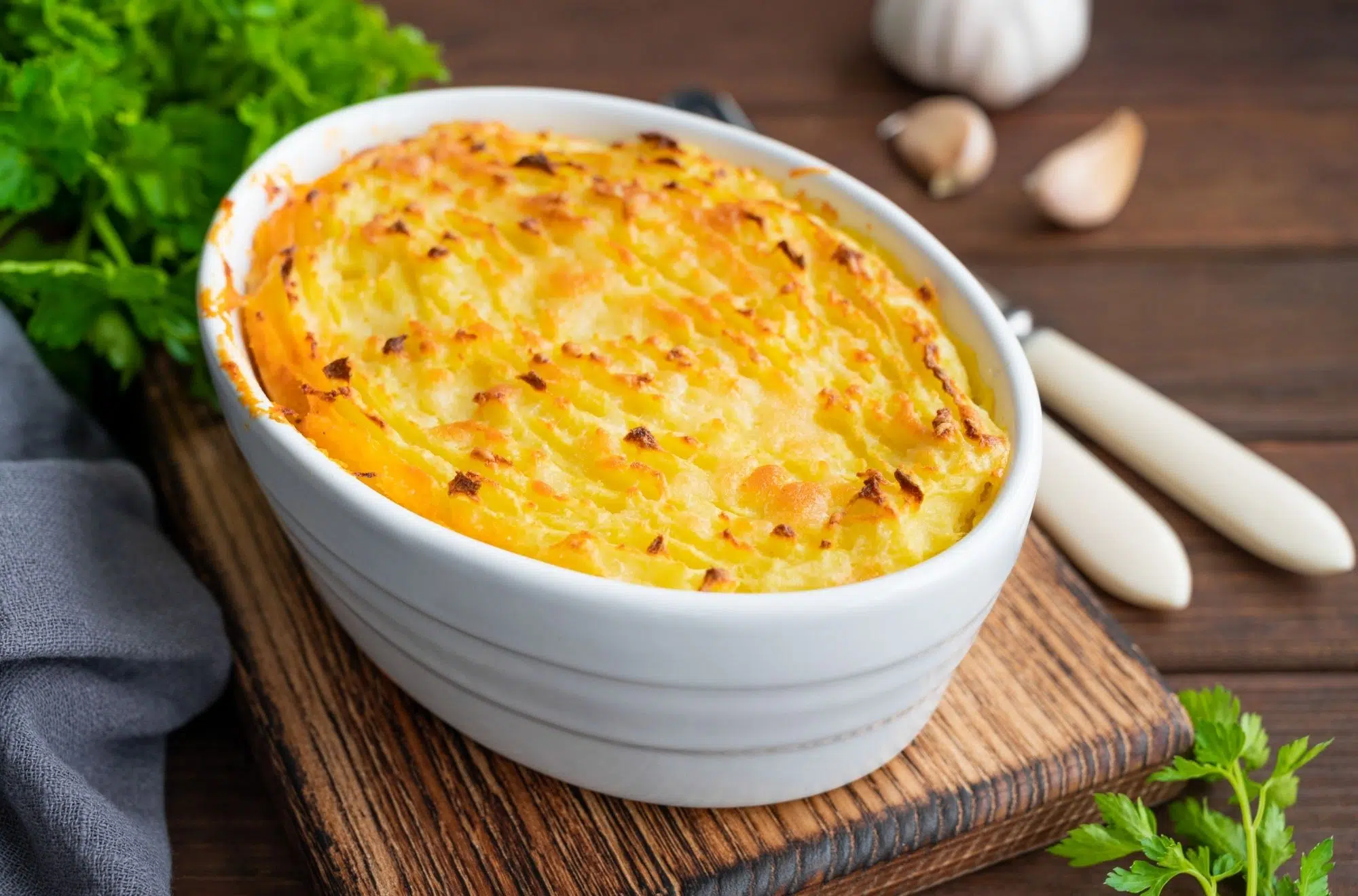
- Spread the beef mixture on a shallow heatproof dish, then cover it with the potato mash. Make small marks with a fork on the surface. It will allow the mash to become crispy.
- Sprinkle with Parmesan cheese and grill for 30 minutes or until golden and crispy.