There are few dishes that capture the heart of British home cooking quite like a Traditional English Cottage Pie. It is the sort of meal that speaks of warmth, resourcefulness, and family gathered around a well-worn wooden table while the rain taps gently against the windows. Humble in origin yet rich in flavor, cottage pie is a testament to how simple ingredients, treated with care and respect, can become something truly extraordinary.
A Dish Born of Resourcefulness
Cottage pie dates back to the late 18th century, a time when potatoes were becoming a staple crop across Britain and Ireland. The name “cottage pie” is believed to have originated because it was commonly prepared by rural families living in cottages. Potatoes were affordable, plentiful, and filling—ideal for feeding hardworking families. Combined with minced beef and whatever vegetables were on hand, this dish was economical yet nourishing.
It’s worth noting that cottage pie is sometimes confused with shepherd’s pie. While the two are similar in presentation, the distinction lies in the meat. Cottage pie traditionally uses minced beef, while shepherd’s pie calls for lamb. Given the abundance of cattle in many parts of England, beef became the defining feature of cottage pie.
Originally, the dish was also a clever way to use up roasted meat leftovers. Minced or finely chopped beef would be simmered with gravy and vegetables before being topped with mashed potatoes and baked. Over time, it evolved into the version we know today—intentionally prepared rather than simply assembled from leftovers.
The Essence of Comfort Food
What makes cottage pie such a beloved comfort food? It lies in the layers. Each component plays a role in creating balance and satisfaction.
At its base is the savory filling: minced beef gently browned and simmered with onions, carrots, and sometimes peas. Garlic, thyme, and bay leaf add aromatics, while tomato paste and Worcestershire sauce deepen the flavor. A splash of beef stock brings everything together into a rich, hearty mixture.
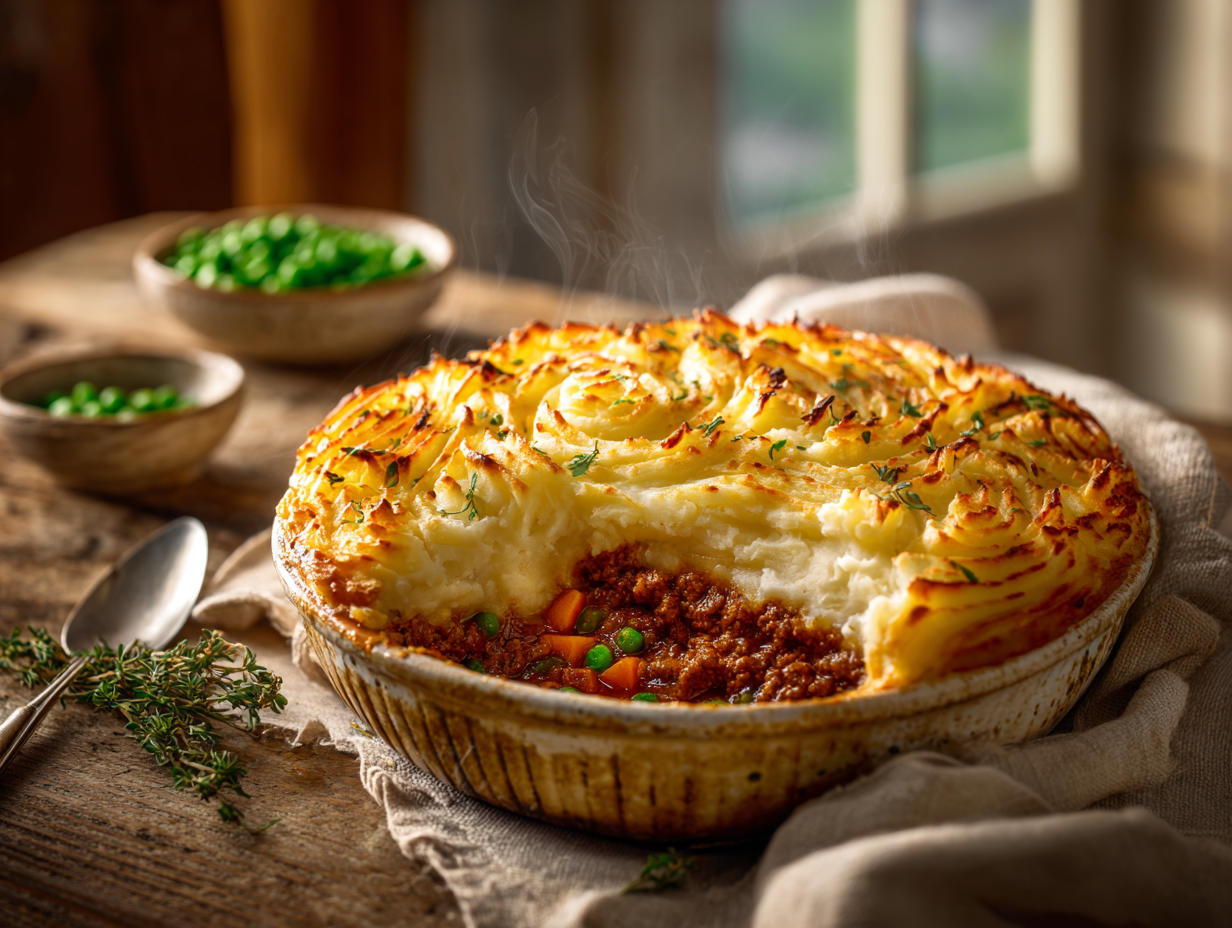
Then comes the crowning glory—the mashed potatoes. Creamy, buttery, and fluffy, they are spread generously over the meat filling and often textured with a fork to create ridges. These ridges are not just decorative; they crisp beautifully in the oven, forming golden peaks that provide contrast to the soft, savory base beneath.
When baked, the flavors meld together, and the top develops a slightly crisp crust while the filling bubbles underneath. The moment you break through the potato layer with your fork and steam rises from the dish, you understand exactly why it has endured for generations.
A Reflection of British Culinary Tradition
British cooking is often defined by its practicality and reliance on quality ingredients rather than elaborate techniques. Cottage pie epitomizes this philosophy. It does not rely on exotic spices or complicated preparation. Instead, it demands care—proper seasoning, patient simmering, and well-made mashed potatoes.
The vegetables traditionally used in cottage pie reflect what was historically grown in English gardens: carrots, onions, and peas. These ingredients not only add color and texture but also natural sweetness that balances the savory richness of the beef.
Herbs such as thyme or parsley lend freshness without overwhelming the dish. Worcestershire sauce, a classic British condiment dating back to the 19th century, adds a distinctive umami depth that enhances the beef.
The mashed potato topping is equally important. British potatoes, particularly floury varieties like Maris Piper or King Edward, produce a fluffy mash ideal for this recipe. Butter and cream are essential—not just for flavor but for achieving the smooth consistency that spreads easily and browns beautifully.
Family Meals and Tradition
Cottage pie is as much about tradition as it is about taste. For many families, it is a dish passed down through generations. Grandmothers taught parents, who in turn teach their children, each adding their own subtle adjustments.
Some families sprinkle grated cheddar cheese over the mashed potatoes before baking, adding a sharp, golden crust. Others incorporate a splash of red wine into the beef filling for added depth. A few may even stir mustard into the mash for gentle warmth.
Despite these variations, the heart of cottage pie remains unchanged: a hearty, complete meal in a single dish.
It is particularly popular during colder months. There’s something deeply reassuring about placing a hot cottage pie in the center of the table on a chilly evening. It invites sharing. It invites conversation. It invites second helpings.
Technique Matters
Though simple, cottage pie rewards attention to detail. Browning the minced beef properly is crucial; this step builds the foundational flavor. Allow the meat to caramelize rather than steam, and you’ll notice a significant difference in depth.
Equally important is reducing the filling until it is thick but not dry. A watery filling can ruin the structure of the pie, causing it to collapse when served. The consistency should be rich and spoonable, clinging together without excess liquid.
The mashed potatoes must be smooth and well-seasoned. Under-seasoned potatoes can dull the entire dish. Adding warm butter and cream helps maintain a velvety texture. Spreading the mash while the filling is still hot ensures a cohesive final bake.
And finally, patience during baking allows the flavors to settle and develop. A brief rest once it comes out of the oven makes serving easier and enhances the eating experience.
A Dish That Endures
What’s remarkable about cottage pie is its adaptability. Modern versions often incorporate mushrooms for extra earthiness or swap traditional vegetables for leeks or parsnips. Health-conscious cooks might use leaner beef or a mixture of beef and lentils. Yet even with these updates, the essence remains the same.
It is also a dish that crosses borders. Though distinctly British in origin, cottage pie has found a home in kitchens around the world. In Australia, Canada, and New Zealand, it appears frequently on family dinner tables. Its universal appeal lies in its simplicity and heartiness—qualities appreciated across cultures.
Why We Still Love It
In an age of fast food and fleeting culinary trends, cottage pie endures because it satisfies something deeper than hunger. It offers nostalgia. It offers reassurance. It reminds us that good food need not be complicated to be memorable.
Cooking cottage pie is an act of care. From slowly simmering the beef to carefully spreading the mashed potatoes on top, each step invites you to slow down and engage with the process. The result is more than just a meal; it is an experience of comfort and tradition.
Whether you are preparing it for a quiet family supper or serving it to friends gathered around your table, Traditional English Cottage Pie carries with it a sense of home. Its aroma alone—savory beef, buttery potatoes, and herbs—can transport you to simpler times.
And perhaps that is its greatest strength. Cottage pie is not merely a recipe; it is a story of resourcefulness, community, and the enduring power of good, honest cooking.
When you serve this dish, you’re not just offering food—you’re sharing a piece of culinary heritage that has warmed hearts and homes for centuries.
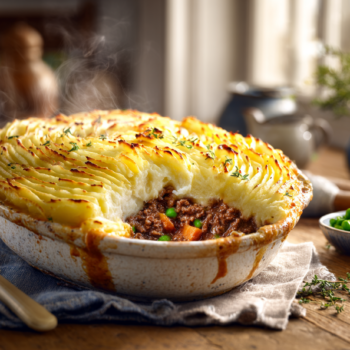
Traditional English Cottage Pie Recipe

Ingredients
 1 pound ground beef
 1 medium onion - diced
 2 medium carrots - diced
 2 cloves garlic - minced
 2 tablespoons tomato paste
 1 cup beef stock (beef broth or beef bouillon)
 2 tablespoons Worcestershire sauce
 1 pinch salt - to taste
 1 pinch ground black pepper - to taste
- 4 cups mashed potatoes
 ½ cup cheddar cheese - grated
Instructions
- Preheat oven to 375°F (190°C).
- Cook ground beef in a skillet until it's browned over medium heat. Add onion, carrots, and garlic, cooking until vegetables are tender.
- Stir in tomato paste, beef broth, Worcestershire sauce, salt, and pepper. Simmer for 10 minutes.
- Spread the beef mixture evenly into a baking dish.
- Top with mashed potatoes, spreading to cover the beef mixture completely.
- Sprinkle cheddar cheese over the mashed potatoes.
- Bake for 25-30 minutes, or until it is golden and bubbly.