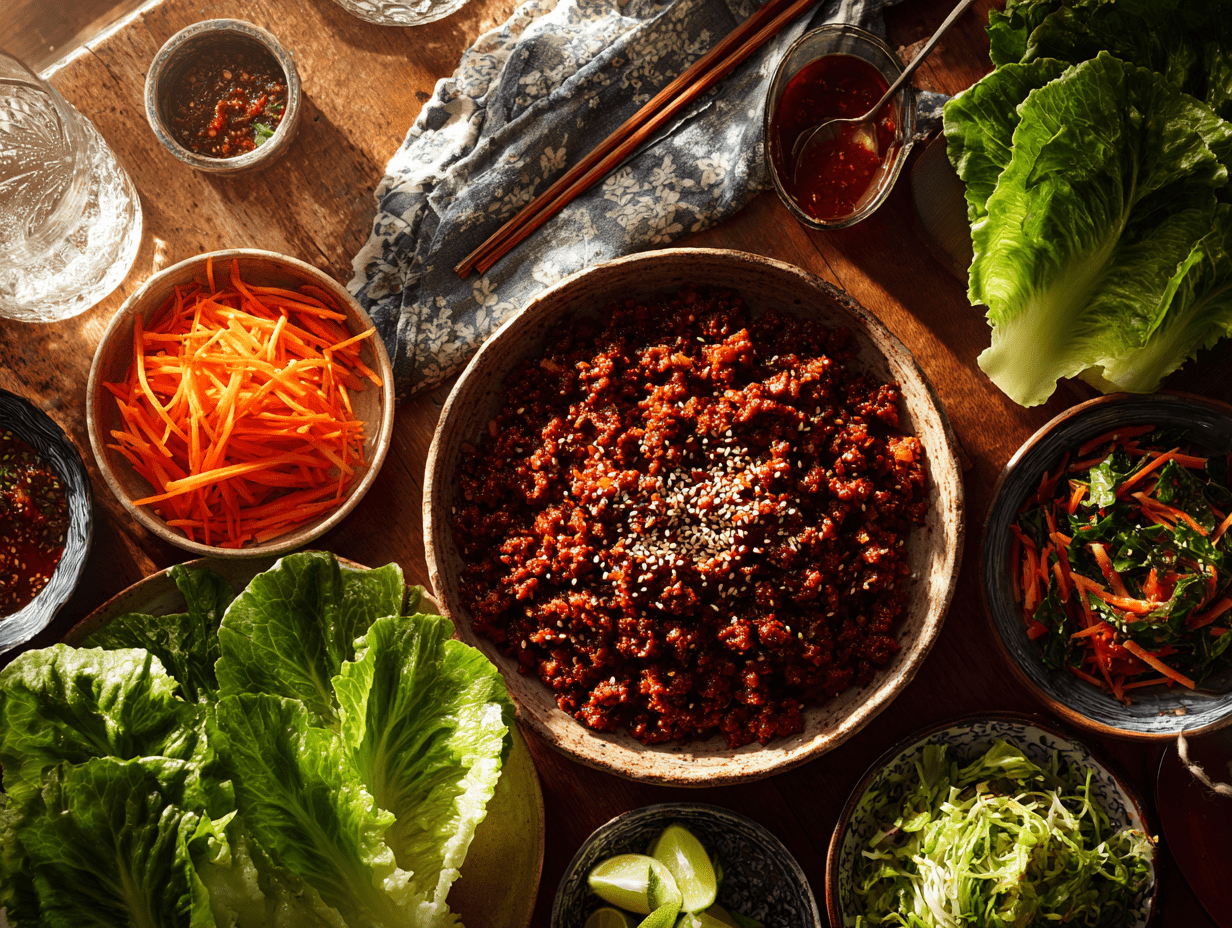
These are ground beef lettuce wraps seasoned with gochujang — a fermented Korean chili paste — and finished with shredded carrots, broccoli slaw, and sesame seeds. The honest reason to make them: the whole thing comes together in about 20 minutes, and the sauce does most of the flavor work for you.
Shopping notes
- Gochujang: Sold in most large supermarkets in the international aisle, usually in a red tub or squeeze bottle. Brands vary in heat level — medium is a safe starting point. Once opened, it keeps in the fridge for months.
- Fish sauce: A small bottle goes a long way. If your store doesn’t carry it, an extra splash of soy sauce works as a substitute, though you’ll lose some depth.
- Broccoli slaw: This is the bagged shredded broccoli-stem mix near the coleslaw in the produce section — not the same as regular coleslaw. Pre-shredded carrots work fine if you can’t find it.
- Sesame oil: Buy toasted sesame oil, not plain. The flavor difference is significant and the bottle lasts a long time.
- Ground beef: An 80/20 blend (sometimes labeled chuck) is the right call here. Leaner beef dries out faster and the fat helps carry the sauce flavor.
The short version of why this works
Two things matter most. First, browning the beef properly — spreading it in the pan and leaving it alone for a minute or two before breaking it up — builds a little color and flavor that you don’t get from just stirring it constantly. Second, the sauce is microwaved briefly before it hits the pan, which dissolves the honey and loosens the gochujang so it coats the meat evenly instead of clumping. Those two steps are the difference between flat-tasting meat and something that actually tastes like it has a sauce on it.
What can go wrong
- Watery filling: Ground beef releases moisture as it cooks. If you crowd the pan or use a small skillet, the meat steams instead of browns and you end up with a soupy filling. Use a wide pan and cook over medium-high heat.
- Undercooked beef: Ground beef must reach 160°F (71°C) internally — no pink remaining. It’s easy to pull it too early if you’re going by color alone. A quick-read thermometer removes the guesswork.
- Sauce burns on contact: Gochujang has sugar in it and scorches quickly over high heat. Add the sauce after you’ve turned the heat down slightly, and stir it in fast.
- Lettuce tears when you wrap: Romaine leaves crack if they’re cold and dry. Rinse them and pat gently — slightly damp leaves are more pliable. Separate them carefully from the base rather than pulling from the tip.
- Filling too spicy after tasting: Gochujang heat varies by brand. If it’s hotter than expected, a small extra drizzle of honey stirred into the pan will bring it back into balance without thinning the sauce much.
Storage and reheating
Store the cooked beef filling in an airtight container in the fridge for up to 3 days. Keep the lettuce, slaw, and carrots separate — they go soggy fast if mixed with the warm meat. The filling also freezes well for up to 2 months; thaw overnight in the fridge before reheating. To reheat, a skillet over medium heat with a tablespoon of water works better than a microwave — it keeps the texture from turning rubbery. Make sure the filling is steaming hot all the way through before serving.
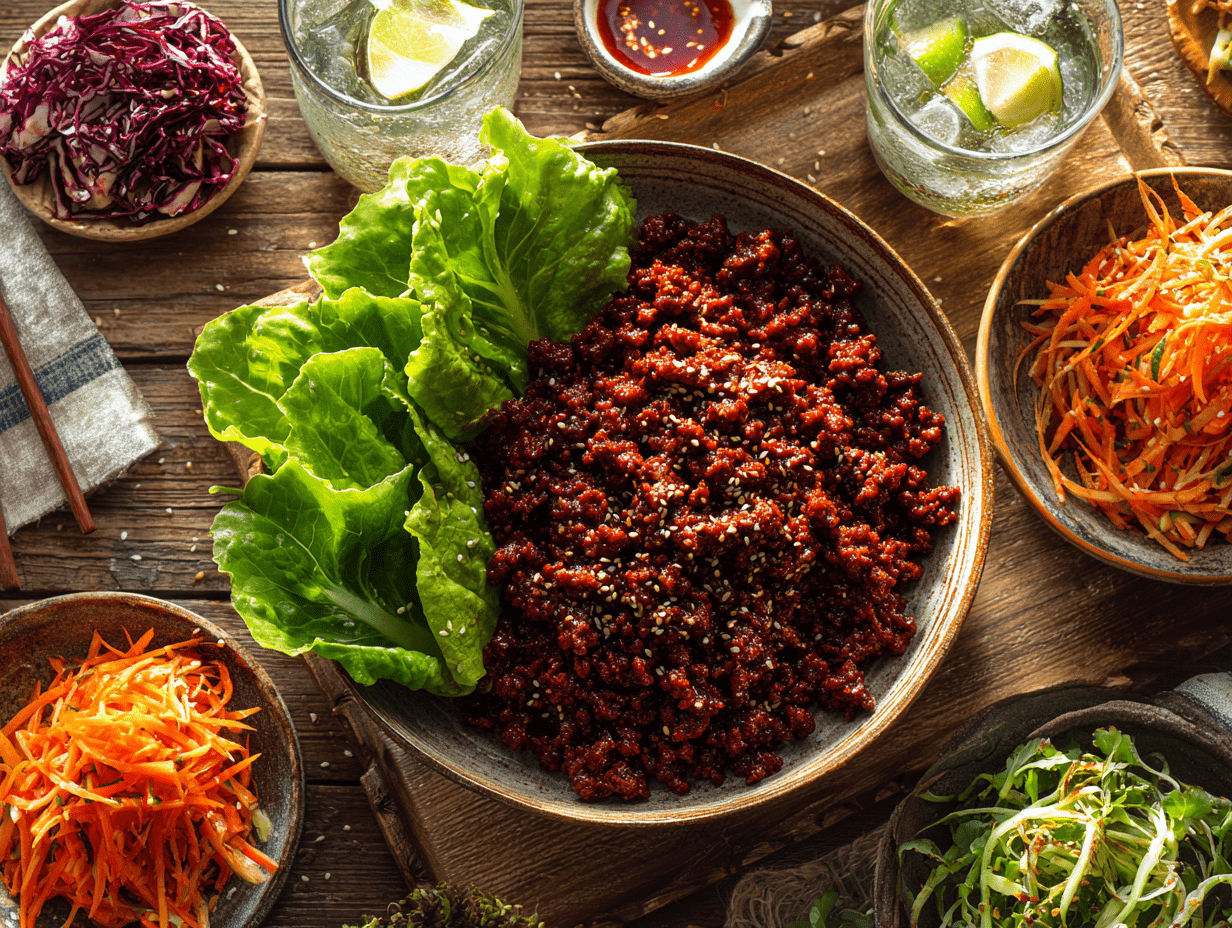
Authentic Korean Gochujang Beef Lettuce Wraps

Ingredients
 1 pound ground beef (minced beef) - 80/20
 1 small Romaine lettuce
 ½ cup carrots - shredded
- ½ cup broccoli slaw
- 1 tablespoon chili paste - gochujang
 1 tablespoon apple cider vinegar
 1 tablespoon soy sauce
 1 tablespoon fish sauce
 1 clove garlic - minced
 ½ tablespoon ginger - freshly grated
 1 tablespoon sesame oil
 2 tablespoons honey
Instructions
- In a Pyrex or microwave-safe measuring cup, combine gochujang paste, apple cider vinegar, soy sauce, fish sauce, garlic, ginger, sesame oil, and sugar and microwave in 1-minute increments, stirring each time until well combined.
- Cut the bottom off the romaine heart, separate and stack the leaves and set aside.
- In a large skillet, brown ground beef until cooked through over high heat.
- Add sauce to ground beef and turn the temperature down to low, mixing constantly.
- Add broccoli slaw and carrots to the skillet and mix for 2 to 3 additional minutes.
- Sprinkle the wraps with some toasted sesame seeds on top, and serve immediately with the stack of romaine leaves.
Nutrition
FAQ
How spicy is gochujang — will this be too hot for kids or spice-sensitive eaters?
Gochujang is moderately spicy, not fiery — most people find it manageable. You can reduce the amount called for by half and add a little extra honey to keep the sauce balanced; the dish will still taste distinctly Korean without much heat.
Can I use a leaner ground beef, like 90/10?
You can, but the filling will be drier and the sauce won’t cling as well. If that’s what you have, add a small drizzle of neutral oil to the pan before browning to compensate for the missing fat.
How do I know when the ground beef is fully cooked?
It’s done when there is no pink remaining and the internal temperature reads 160°F (71°C) on a meat thermometer. Breaking the meat into smaller crumbles as it cooks helps it cook evenly and makes it easier to check.
What lettuce works best if I can’t find Romaine?
Butter lettuce (also called Boston or Bibb) is actually the easiest to wrap — the leaves are naturally cup-shaped and flexible. Iceberg works in a pinch but cracks more easily and has less flavor.
What to cook next
- Japanese Pork Lettuce Cups
- Spicy Beef Stuffed Peppers
- Authentic Szechuan Dan Dan
- Savory Pork Noodle Stir-Fry