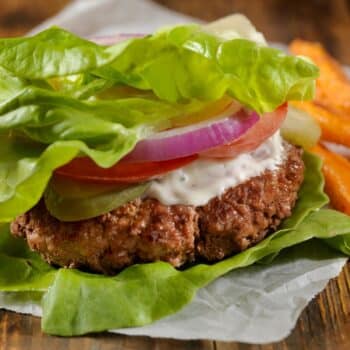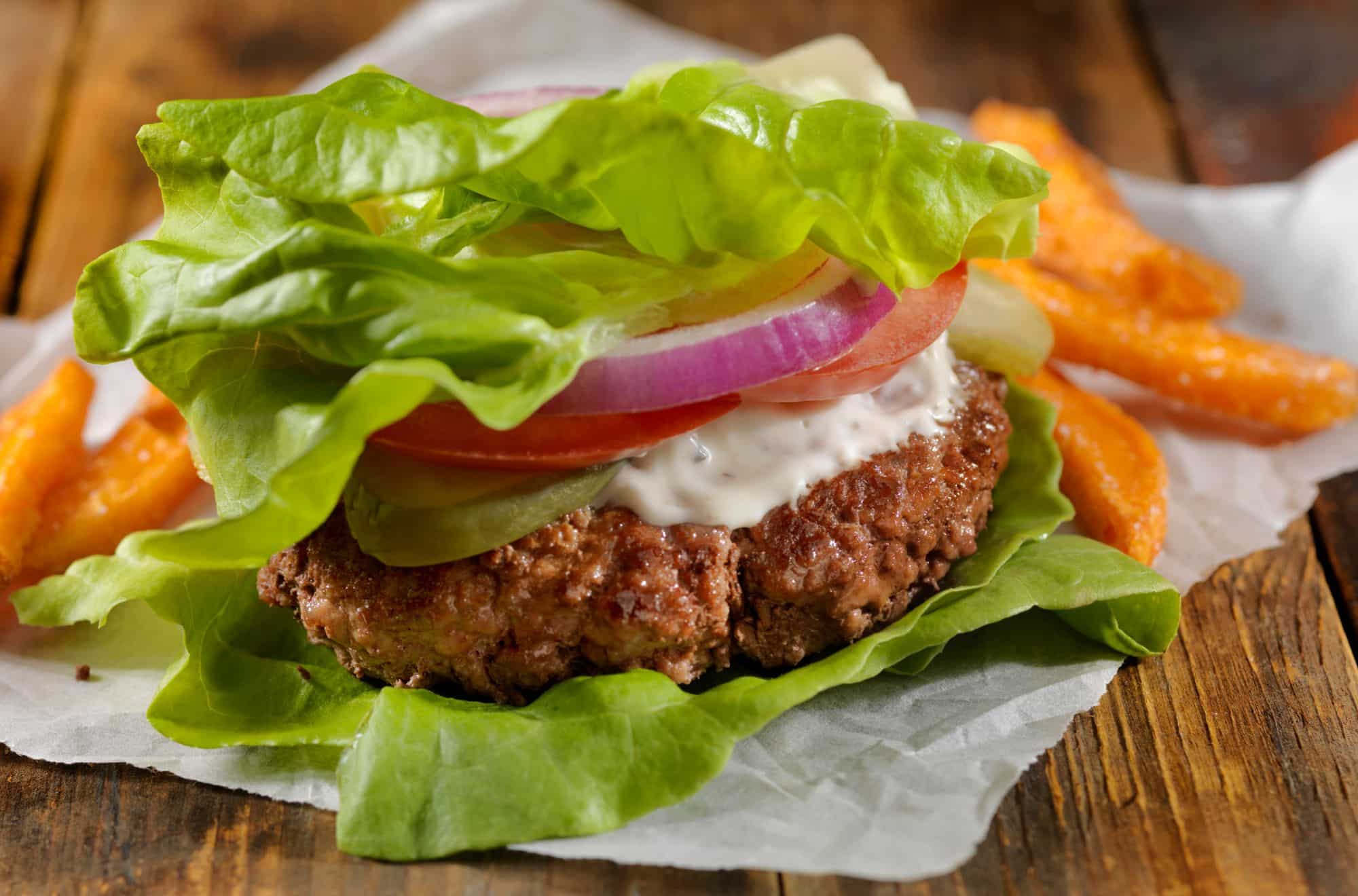
Naked burgers are ground beef patties served without a bun, topped with whatever fresh ingredients you have on hand. They cook in about 10–15 minutes and use one pan. If you want a real burger without the bread getting in the way, this is the recipe.
Before you start
Two things determine whether your patties turn out juicy or dry. First, choose ground beef with around 15–20% fat — leaner blends cook up tight and chalky, and there’s no bun here to disguise that. Second, get your pan genuinely hot before the patties go in. A hot surface creates a crust in the first minute of contact; that crust holds moisture inside the patty while it finishes cooking. If the pan is only warm, the meat steams instead of sears and you lose both texture and flavor. Let the pan heat for 2 minutes over medium-high before anything touches it, and don’t press the patties down with a spatula — that squeezes out the juices you’re trying to keep.
What can go wrong
- Patties puff up in the middle: Ground beef contracts as it cooks and the center rises, making the patty rock on the plate. Press a shallow thumbprint into the center of each raw patty before cooking — it flattens out as the meat shrinks.
- Meat sticks to the pan: This usually means the pan wasn’t hot enough or you tried to flip too early. A properly seared patty releases on its own. Wait until the edges look cooked about a third of the way up before you attempt to turn it.
- Patties fall apart when flipped: Over-handling the raw mince before shaping breaks down the proteins that hold the patty together. Mix in any seasoning with a light hand and shape gently — pack just enough to hold the form, no more.
- Undercooked center: Ground beef must reach 160°F (71°C) all the way through — unlike a steak, there’s no safe version of pink ground beef. If the outside is browning too fast before the center is done, drop the heat to medium and give it another minute per side. A meat thermometer removes all guesswork and costs very little.
- Toppings make everything soggy: Wet toppings like tomato or sauce sitting on a hot patty will steam the surface you just worked to crisp. Add cold toppings right before serving, not while the patty is still in the pan.
Substitutions that actually work
- Ground beef fat percentage: If 15–20% fat isn’t available, 80/20 (the most common supermarket blend) is exactly right. Avoid anything labeled “extra lean” for this recipe.
- Cheese: Any sliced melting cheese works — cheddar, Swiss, provolone, or pepper jack. Skip the garnish of fresh herbs on top of the cheese; not worth the extra dish.
- Lettuce: Butter lettuce or romaine both hold up well under a warm patty. Iceberg works but wilts faster once the heat hits it.
- Sauce: Plain mayo, mustard, or a mix of both are the most reliable options. Thick sauces cling to the patty better than thin ones, which just run off onto the plate.
Make-ahead notes
Raw shaped patties keep well in the fridge for up to 24 hours — stack them with a small square of baking paper between each one so they don’t stick together. For longer storage, freeze them on a flat tray until solid (about 2 hours), then transfer to a zip-lock bag; they’ll keep for up to 3 months. Cook from frozen by adding 3–4 extra minutes per side over medium heat and confirming the center hits 160°F (71°C) before serving. Cooked patties reheat in a covered pan over low heat with a splash of water to prevent drying out — about 3 minutes per side. Avoid the microwave if you can; it tends to toughen the meat.

Incredible Naked Burgers Recipe
Ingredients
BEEF PATTIES (MAKES MULTIPLE PATTIES – SIZE AS DESIRED)
1- kilogram ground beef (minced beef)
2 large egg
2 cloves garlic - crushed
1 tablespoon mixed herbs (usually Thyme, Marjoram, Oregano, Parsley, Sage, Basil)
OTHER BURGER INGREDIENTS (PER BURGER)
1 handful iceberg lettuce
1 large tomato - sliced
1 medium yellow onion - sliced- 2 medium Pickles - sliced
2 dollops Ranch dressing
1 teaspoon coconut oil
Instructions
- Mix together the ground beef, two of the eggs, crushed garlic, mixed herbs and salt and pepper (as desired) in a bowl.
- Shape the mix into patties. Freeze leftovers for future burgers.
- Cook the desired amount of patties to your liking. I prefer medium-well done, but it’s up to you.
- Melt coconut oil into a pan, remove from the heat and coat spinach leaves with the coconut oil. (Make sure it’s not hot).
- Cut onion and tomato into rings.
- I then stack the ingredients as follows: lettuce, beef patty, ranch dressing, pickles, tomato, onion, lettuce
- You can also serve it with sweet potato fries but understand this will make cooking and preparing time much longer.
Notes
Nutrition
Common questions
How do I know when the patty is cooked through without cutting it open?
Use an instant-read thermometer and check that the center reads 160°F (71°C) — that’s the only reliable method. Cutting into the patty to check color works in a pinch, but it lets steam escape and dries the meat out.
Can I use a non-stick pan instead of a cast iron or stainless pan?
Yes, a non-stick pan works fine for beginners. It won’t build quite as dark a crust as cast iron, but it’s forgiving and easier to clean, which matters when you’re still getting comfortable with the timing.
My ground beef looks grey before I even cook it — is it still safe?
Grey color on the inside of a package of ground beef is normal and doesn’t mean it’s spoiled. Beef turns grey when it’s not exposed to oxygen; the bright red on the outside is just surface oxidation. Check the use-by date and smell it — if it smells off, discard it.
How thick should I make the patties?
About ¾ inch (2 cm) thick is a practical target for stovetop cooking — thick enough to stay juicy, thin enough to cook through without burning the outside. Thicker patties need lower heat and more time, which is harder to manage on a first attempt.
Can I make these with ground turkey or chicken instead of beef?
Yes, but ground poultry must reach 165°F (74°C) internally and should never be served with any pink remaining in the center. Poultry patties are also stickier and softer to handle raw, so chilling them in the fridge for 20 minutes before cooking helps them hold their shape.
Why does my patty shrink so much during cooking?
Shrinkage is normal — ground beef loses water and fat as it heats, and patties typically shrink 20–25% in diameter. Shape them slightly larger than you want the finished size, and avoid pressing them down in the pan, which speeds up moisture loss.
Try these next
- Spicy Beef Stuffed Peppers
- Bolivian Silpancho Beef Patties
- Hearty Beef Cauliflower Bake
- Kumara Beef Hash Cakes