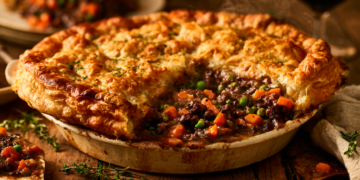
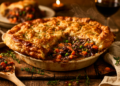
A Cornish pasty is a hand-held beef and vegetable pie sealed inside shortcrust pastry — the kind of meal that keeps you full for hours. This version uses ground beef instead of diced beef, which cuts prep time and makes the filling easier to handle if you’re new to pastry work. Four pasties, one pan, one baking sheet: it’s a straightforward cook with a satisfying result.
What makes this version work
Two things matter most here. First, let the filling cool before it goes into the pastry. Hot filling releases steam, which turns your pastry soggy from the inside before it ever hits the oven. Even ten minutes off the heat makes a real difference. Second, keep your butter genuinely cold when making the dough — cold fat stays in small pieces, and those pieces create the flaky layers as they melt in the oven. If your kitchen is warm, cube the butter and stick it in the freezer for five minutes before you start. The dough should feel firm and slightly rough, not smooth like bread dough. That texture is exactly right.
If something goes sideways
- The dough tears when you fold it: It dried out slightly or was rolled too thin at the edges. Dab a little cold water on the crack, press it back together, and crimp firmly. Next time, keep the edges a touch thicker than the center.
- Filling leaks out during baking: The crimp wasn’t tight enough, or there was too much filling per circle. Use a fork to press the sealed edge a second time, and keep the filling portion to roughly a quarter of the total — it expands slightly as it cooks.
- Pastry is pale and soft after 30 minutes: Ovens vary. Leave the pasties in for another 5–8 minutes and check again. The pastry should be a deep golden brown, not just lightly colored. A pale pasty usually means the oven wasn’t fully preheated.
- Ground beef looks gray instead of browned: The pan was overcrowded or the heat was too low. Ground beef releases moisture as it cooks — if that moisture can’t evaporate, the meat steams instead of browns. Cook in a single layer over medium-high heat and don’t stir too often.
- Rutabaga is still hard inside the finished pasty: Dice it small — no larger than half an inch. Larger chunks won’t cook through in the oven time given. If you’re unsure, taste a piece of rutabaga from the pan before you fill the pastry.
Smart swaps
- Rutabaga (swede): This is the ingredient most people don’t have on hand. Turnip works as a direct swap and is easier to find. Parsnip is a reasonable alternative too, though slightly sweeter. Skip the garnish — not worth the extra dish.
- All-purpose flour: Plain flour in the UK and Australia is the same thing. No adjustment needed.
- Butter in the pastry: Unsalted is specified so you control the salt level. If you only have salted butter, just leave out the teaspoon of salt called for in the pastry ingredients.
- Ground beef fat content: An 80/20 blend (80% lean) gives the filling better flavor and moisture than leaner mince. Very lean ground beef can produce a dry, crumbly filling.
Storage and reheating
Cooled pasties keep in the fridge for up to three days in an airtight container. To reheat, put them on a baking sheet in a 180°C (350°F) oven for 15–20 minutes — this keeps the pastry crisp. The microwave works in a pinch but softens the crust noticeably. For freezing, wrap each pasty individually in plastic wrap, then foil, and freeze for up to two months. Thaw overnight in the fridge before reheating in the oven. Don’t refreeze pasties that have already been thawed.

Cornish Mince Pasty

Ingredients
Pastry Ingredients
 2 ½ cups all purpose flour (plain flour Australia and UK) - plus extra for dusting
 1 tsp salt
 ½ cup butter - cold and unsalted, diced
 ¼ cup water - cold, as needed
Filling Ingredients
 1 tbsp olive oil
 1 large yellow onion - finely diced
 1 lb ground beef - preferably grass-fed
- 1 cup rutabaga - peeled and diced
 2 medium potatoes - peeled and diced
- 1 tsp salt
 ½ tsp ground black pepper - freshly ground
 1 each egg - beaten, for egg wash
Instructions
- To make the pastry, combine the flour and salt in a bowl. Add the diced butter and work it into the flour using your fingertips until it resembles coarse breadcrumbs. Gradually add enough cold water to form a firm dough. Wrap in plastic wrap and chill for 30 minutes.
- Preheat the oven to 200°C (392°F). Line a baking sheet with parchment paper.
- Heat the olive oil in a large skillet over medium heat. Add the onion and sauté until soft and translucent, about 5 minutes.
- Increase the heat to medium-high, add the ground beef, and cook until browned, about 8-10 minutes. Stir in the rutabaga, potatoes, salt, and pepper. Cook for an additional 5 minutes, then remove from heat and let cool slightly.
- Roll out the chilled dough on a floured surface to about 1/8-inch thickness. Cut out four 8-inch circles.
- Place a quarter of the beef mixture in the center of each dough circle. Brush the edges with water, fold the dough over the filling to form a half-moon shape, and crimp the edges to seal.
- Place the pasties on the prepared baking sheet. Brush the tops with the beaten egg for a golden finish.
- Bake in the preheated oven for 25-30 minutes, or until the pastry is golden brown and crisp.
Notes
Nutrition
Common questions
How do I know when the ground beef is fully cooked?
Ground beef is safe to eat when it reaches an internal temperature of 160°F (71°C) — no pink should remain anywhere in the meat. In this recipe the filling gets a second round of cooking inside the oven, so as long as you brown it thoroughly in the pan first until no pink is visible, you’re in good shape.
Can I make the dough ahead of time?
Yes — the dough can be made up to two days ahead and kept wrapped in the fridge. Take it out about ten minutes before you roll it, just so it’s pliable enough to work with without cracking.
My pastry circles aren’t perfectly round. Does that matter?
Not at all — shape doesn’t affect how the pasty cooks or tastes. Use a large plate or bowl as a template and cut around it with a knife; that’s the most reliable low-tech method.
Can I use store-bought shortcrust pastry instead of making my own?
Yes, and it works well. Look for a block or sheet of ready-made shortcrust pastry in the refrigerated section — it handles and bakes similarly to homemade. Just make sure it’s thawed according to the package instructions before you try to roll or cut it.
Try these next
- Savory British Beef Pies
- Savory Beef Carrot Turnovers
- Savory Pork Apple Pasties
- Wild Venison Mushroom Pies