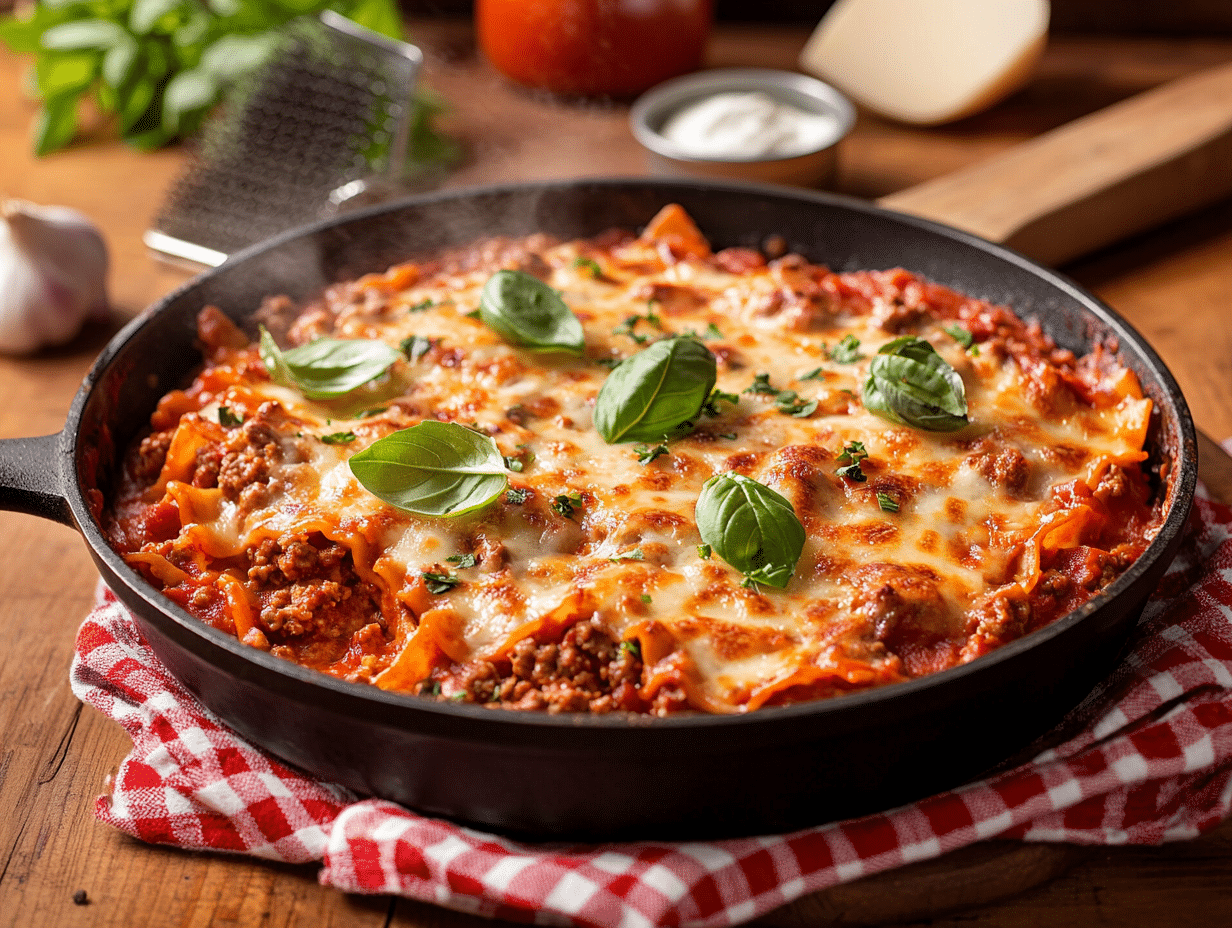
Skillet lasagna is a stovetop version of the baked original — same ground beef, noodles, tomato sauce, and ricotta, but cooked in one pan in about an hour. The noodles go in dry and simmer directly in the meat sauce, which means fewer pots and no separate boiling step. If you need a filling pasta dinner on a weeknight without much cleanup, this is a reliable option.
Why this recipe works
Two things make this work. First, the noodles cook directly in the tomato-and-water mixture instead of a separate pot of boiling water. As they simmer, they absorb the seasoned liquid rather than plain water, so the pasta itself ends up flavored all the way through — not just coated on the outside. Second, the liquid ratio is precise: one 28-ounce can of diced tomatoes plus water brought to exactly 4 cups. Too little and the noodles scorch on the bottom before they’re tender; too much and you end up with soup. Get that measurement right and the rest of the recipe is forgiving.
What can go wrong
- Noodles sticking together or to the pan: If you scatter the broken noodle pieces and they overlap in clumps, they’ll fuse as they cook. Spread them as evenly as you can across the surface of the meat before pouring the liquid over. Don’t stir once you cover the pan — let the steam do the work for the first 10 minutes.
- Liquid evaporates too fast: A loose-fitting lid or high heat will cook off the liquid before the noodles are done. Use a proper lid that seals well, and keep the heat at a genuine medium-low simmer — small bubbles, not a rolling boil.
- Watery finish: If your canned tomatoes are particularly juicy, the sauce can be thinner than expected. Remove the lid for the last 3–4 minutes of cooking to let excess liquid reduce before you add the Parmesan and ricotta.
- Ricotta turning rubbery: Adding ricotta while the pan is still on high heat will cause it to seize and lose its creamy texture. The recipe says to take the pan off the heat first — follow that step. The residual heat is enough to warm the ricotta through during the 5-minute rest.
- Under-seasoned meat: Ground beef needs salt early. The recipe adds salt with the onion, which is the right moment — salting the meat alone at the browning stage is too late for even seasoning. Taste the sauce before adding the Parmesan, since ketchup brands vary a lot in sweetness and salt content.
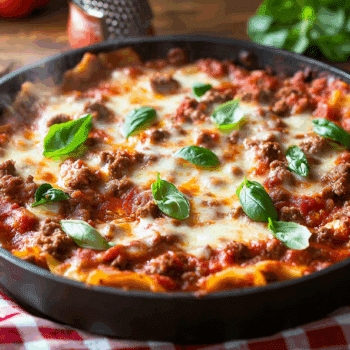
One-Pan Skillet Lasagna with Ground Beef

Equipment
Ingredients
- 1 can diced tomatoes - 28 oz / 794g, undrained
 2 cups water - approximately — see Step 1 for measuring
 1 tablespoon olive oil
 1 medium yellow onion - chopped fine
- ½ teaspoon fine salt - plus more to taste
 ¼ teaspoon ground black pepper - plus more to taste
 3 cloves garlic - minced
 ⅛ teaspoon red pepper flakes
 1 pound ground beef - 450g, 80/20 lean-to-fat ratio (minced beef)
- 10 sheets dry lasagna noodles - about 10 oz / 280g, broken into 2-inch (5cm) pieces
- 8 ounces tomato sauce - 225g, plain unseasoned — sometimes labelled passata in Australia and the UK
 ½ cup plus 2 tablespoons Parmesan cheese - about 2.5 oz / 70g, finely grated — divided
 8 ounces ricotta cheese - whole-milk ; 225g
 3 tablespoons basil - fresh ; chopped
Instructions
- Place the diced tomatoes and their juice in a 4-cup liquid measuring cup. Add water until the mixture measures 4 cups.1 can diced tomatoes, 2 cups water
- Heat oil in a 12-inch non-stick skillet over medium heat until shimmering. Add onion and 1/2 teaspoon of salt and cook until onion begins to brown, about 5 minutes. Stir in garlic and pepper flakes and cook until fragrant, about 30 seconds. Add the ground beef and cook, breaking it into small pieces with a wooden spoon, until no longer pink and the internal temperature reaches 160°F / 71°C, about 4 minutes. Drain any excess fat if needed.1 tablespoon olive oil, 1 medium yellow onion, 1/2 teaspoon fine salt, 3 cloves garlic, 1/8 teaspoon red pepper flakes, 1 pound ground beef
- Scatter noodles over the meat but do not stir. Pour the diced tomato-water mixture and the 8 ounces of tomato sauce over the noodles. Cover and bring to a simmer. Reduce heat to medium-low and simmer, occasionally stirring, until noodles are tender, about 20 minutes.10 sheets dry lasagna noodles, 8 ounces tomato sauce
- Off heat, stir in 1/2 cup of the grated Parmesan and season with salt and pepper to taste. Dollop heaping tablespoons of ricotta evenly over the top, cover, and let sit for 5 minutes to warm the ricotta through. Sprinkle with the remaining 2 tablespoons of Parmesan and the chopped fresh basil. Serve immediately.1/4 teaspoon ground black pepper, 1/2 cup plus 2 tablespoons Parmesan cheese, 8 ounces ricotta cheese, 3 tablespoons basil
Notes
Nutrition
Frequently asked questions
Can I use regular lasagna noodles instead of curly-edged ones?
Yes, any standard dry lasagna noodle works fine here. The curly edges just create slightly more surface area to catch the sauce, but flat sheets broken into 2-inch pieces will cook and taste the same.
Do I need to cover the skillet the whole time the noodles cook?
Keep the lid on for most of the 20-minute simmer — the trapped steam is what cooks the noodles through. You can lift it briefly to stir occasionally, but leave it uncovered only at the very end if the sauce needs to thicken.
Can I swap the ground beef for another protein?
Ground pork or a beef-pork blend both work well and need to reach the same 160°F (71°C) internal temperature. Ground turkey or chicken can be used too, but cook those to 165°F (74°C) and expect a slightly leaner, less rich result.
What is ‘ketchup (tomato sauce)’ in this recipe?
The recipe uses the term to flag a regional difference: in Australia and the UK, ‘tomato sauce’ refers to what Americans call ketchup. Use 8 ounces of standard ketchup if you’re in the US — it adds a mild sweetness and body to the sauce.
Can I make this ahead and reheat it?
You can, but the noodles will continue to absorb liquid as it sits and the texture gets softer. Reheat on the stovetop over low heat with a splash of water to loosen the sauce, and skip the fresh ricotta dollops — add those after reheating instead.
My skillet is only 10 inches. Will that work?
A 10-inch skillet is too small for this recipe — the noodles and liquid won’t fit safely and the simmer will be uneven. Stick with a 12-inch skillet as specified, or use a wide, straight-sided sauté pan of equivalent size.
More mince recipes to try
- Beef Ricotta Lasagna Rolls
- Beef Lombardi Casserole Recipe
- Creamy Beef Spinach Pasta
- Layered Beef Enchilada Casserole