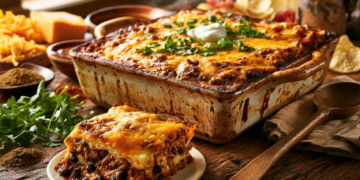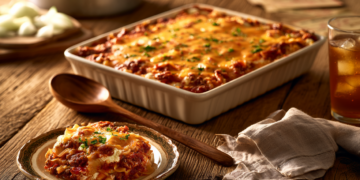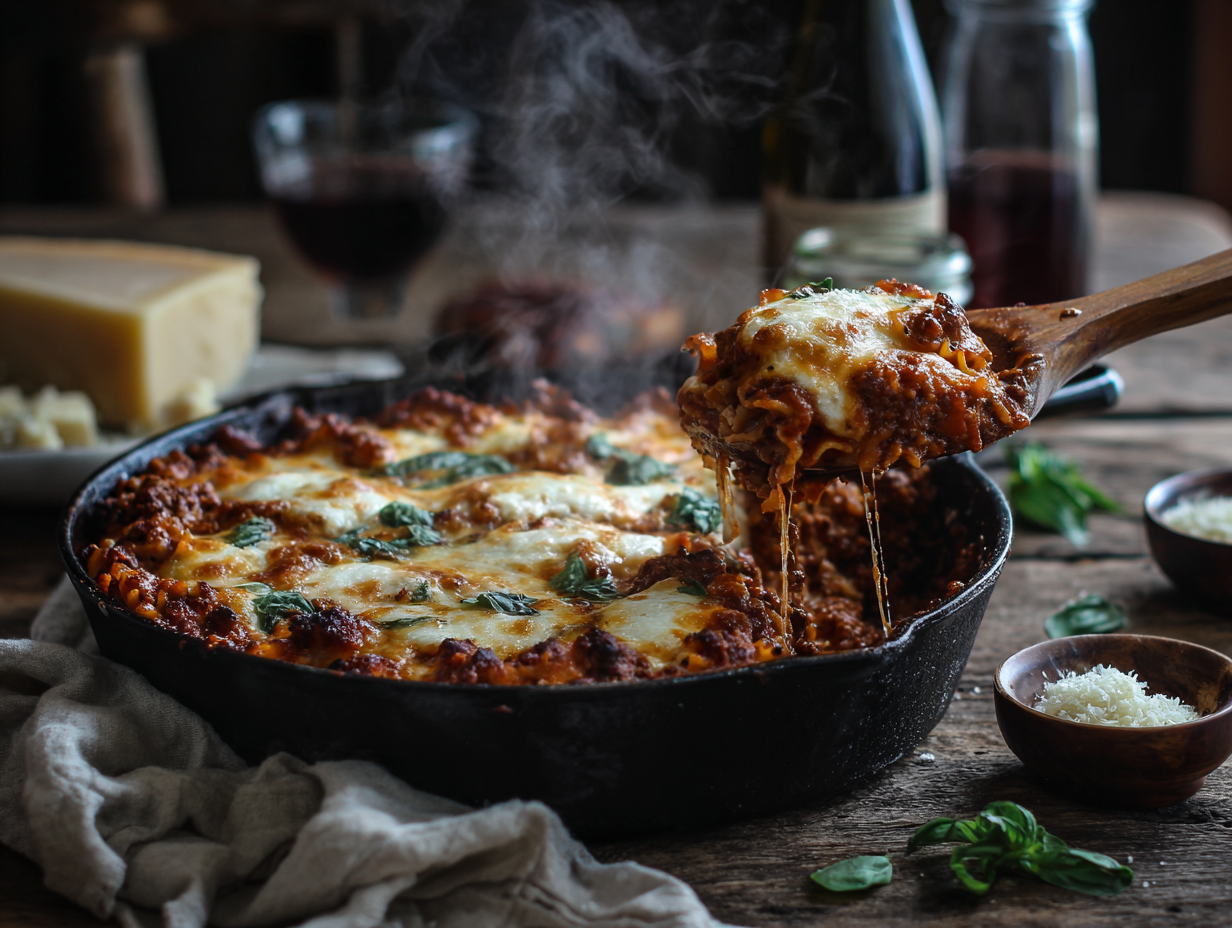
Skillet lasagna is ground beef, broken pasta, tomato sauce, and three cheeses cooked together in one pan from start to finish — no boiling noodles separately, no baking dish. It takes about 30 minutes on a weeknight and produces one dirty pan. That’s the honest reason to make it.
The technique that matters
Two things determine whether this works. First, brown the ground beef properly before anything else goes in — spread it out, leave it alone for a couple of minutes, and let it develop real color on the bottom of the pan. That fond is flavor you’d otherwise skip. Second, once the pasta and liquid go in, keep the lid on and resist lifting it. The pasta steams and simmers in the sauce simultaneously. Every time you pull the lid off, you lose the trapped moisture the noodles need to soften evenly. If the pasta is still firm and the liquid is gone, add a splash of water and cover again rather than cranking the heat — high heat at that stage scorches the bottom before the center cooks through.
Shopping notes
- Ground beef: Use 85/15. Leaner beef dries out; fattier blends leave a greasy pool under the cheese.
- Pasta shape: Broken lasagna sheets work, but so does any short ridged pasta — rigatoni and mafalda hold the sauce particularly well. Avoid thin pasta like angel hair or spaghetti; it turns mushy before the beef flavor has time to absorb.
- Ricotta: Whole-milk ricotta melts more smoothly than part-skim. If you can only find part-skim, it still works — just don’t expect the same creaminess.
- Jarred tomato sauce: A plain marinara with a short ingredient list is fine here. Avoid anything labeled “chunky” — large vegetable pieces interfere with even pasta cooking.
Make-ahead notes
Leftovers keep in the fridge for up to 4 days in a sealed container. The pasta continues to absorb sauce as it sits, so add a tablespoon or two of water when reheating on the stovetop over medium-low, stirring occasionally until hot throughout — ground beef should reach 160°F (71°C) again before serving. This dish freezes reasonably well for up to 2 months; portion it before freezing so you can thaw only what you need. Thaw overnight in the fridge rather than on the counter, then reheat the same way. The ricotta texture softens slightly after freezing but the flavor holds.
What can go wrong
- Pasta clumps together: Stir the pasta once right after it goes into the sauce, then leave it. Stirring repeatedly breaks the noodles and creates a starchy paste at the bottom of the pan.
- Watery finish: If the sauce looks thin when the pasta is done, remove the lid and cook uncovered for 2–3 minutes on medium heat. The excess liquid evaporates quickly — don’t walk away.
- Cheese turns rubbery: Add the mozzarella and ricotta off the heat or on the lowest setting with the lid on. Sustained high heat makes mozzarella tough and grainy rather than melty. Skip the broiler finish — not worth the extra pan transfer and the cheese gets chewy rather than gooey.
- Underseasoned pasta: The pasta absorbs whatever liquid is in the pan, so if the sauce tastes flat before the pasta goes in, season it then. Correcting seasoning after the pasta has cooked is harder because the noodles have already locked in the bland flavor.
- Beef steams instead of browns: Overcrowding the pan or adding the onion too early traps steam and turns the beef gray. Brown the beef first in a dry, hot skillet, drain excess fat if needed, then add aromatics.
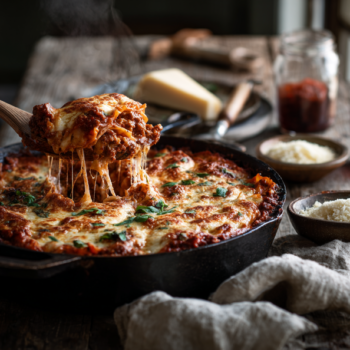
Best Skillet Lasagna

Ingredients
 1 pound ground beef (minced beef)
 1 pinch salt - to taste
 2 cup water
 1 jar Marinara sauce (tomatoes, garlic, herbs, and onions - pasta sauce in southern hemisphere for Italian seafood dish)
- 12 ounces lasagne pasta
 1 cup Mozzarella cheese - shredded
Instructions
- Brown the meat seasoned with Lawry’s (or however you like to season your meat).
- Add water and sauce and bring to a boil.
- Add pasta. (Be sure the pasta is covered by the liquid. You may add more water.)
- Boil covered on medium-high, stirring occasionally to avoid sticking and burning, for 15 minutes. (Be sure pasta is al dente.)
- Remove from heat and mix.
- Cover with cheese and let stand with a lid for 3 minutes.
Nutrition
Common questions
Can I use ground turkey instead of ground beef?
Yes, but cook it to 165°F (74°C) and don’t expect it to look pink at any point — it should be fully opaque throughout. Ground turkey is leaner, so add a teaspoon of olive oil to the pan before browning to prevent sticking and compensate for the lower fat content.
How do I know when the pasta is actually done?
Fish out a piece and bite it — it should be tender with no chalky center. Cooking time varies by pasta shape and how vigorously the liquid simmers, so start checking a couple of minutes before the recipe’s suggested time.
My skillet isn’t very deep. Will this still work?
It will work if you use a 12-inch skillet with at least 2-inch sides. Anything shallower and the liquid will bubble over before the pasta cooks. A straight-sided sauté pan is a better choice than a sloped-sided frying pan if you have one.
Can I make this without ricotta?
Yes. Cottage cheese (drained) is the closest substitute and works well. Cream cheese thinned with a splash of milk also produces a creamy layer, though the flavor is richer and slightly tangier than ricotta.
The sauce tastes acidic. How do I fix it?
Stir in a pinch of sugar or a small pat of butter before the pasta goes in. Both round out sharp acidity in jarred tomato sauce without changing the overall flavor profile noticeably.
Can I add vegetables without ruining the liquid balance?
Add them after browning the beef and sauté until most of their moisture has cooked off before adding the sauce. Watery vegetables like zucchini or mushrooms release liquid as they cook, which throws off the sauce-to-pasta ratio if they go in raw.
More mince recipes to try
- Beef Ricotta Lasagna Rolls
- Creamy Beef Spinach Pasta
- Spicy Beef Stuffed Peppers
- Hearty Beef Mushroom Stroganoff