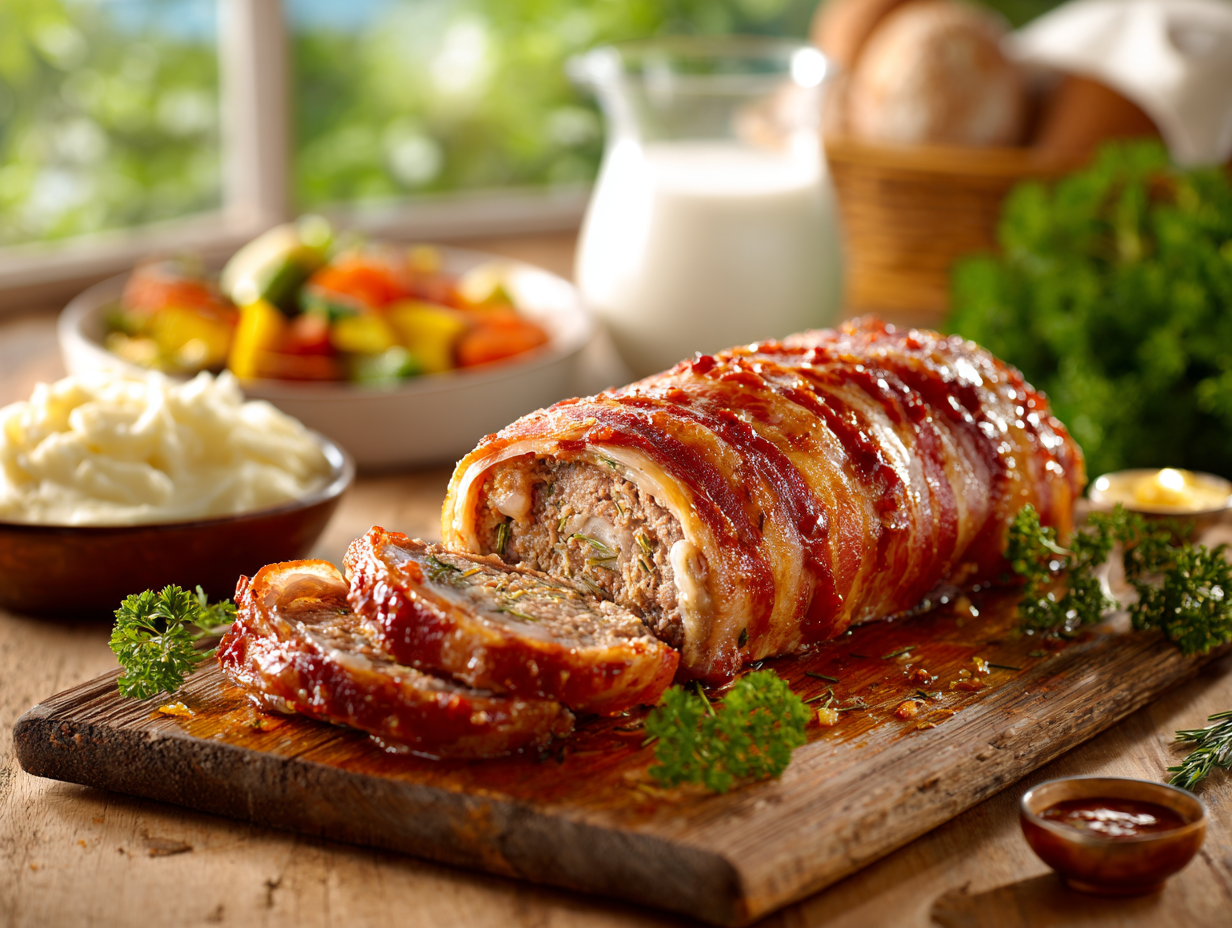
This is a bacon-wrapped ground beef loaf glazed with a sweet-spicy ketchup sauce — essentially a meatloaf that looks more impressive on the table than a standard loaf pan version. It feeds six people generously, and the layered glazing method keeps the outside from drying out while the interior stays moist from milk-soaked bread and Parmesan. If you need one dish that satisfies a hungry table without a lot of fuss, this is a reliable choice.
Why this recipe works
Two things do the real work here. First, soaking the bread in milk before mixing it into the beef gives you a panade — a wet bread paste that physically interrupts the protein strands in the meat as it cooks, keeping the interior tender rather than dense and rubbery. Skip this step or use dry breadcrumbs instead and the texture suffers noticeably. Second, the sauce goes on in stages rather than all at once. The first coat caramelizes against the meat during the long bake, building a sticky, slightly charred layer. The second coat, added at the 45-minute mark, stays brighter and more sauce-like. Together they give you two distinct flavors from the same mixture, without any extra effort.
Smart swaps
- Parmesan: Pecorino Romano works and adds a sharper bite. Pre-grated tub Parmesan is fine here — you’re mixing it into a meat loaf, not finishing pasta.
- Hot sauce: The recipe calls for Tabasco-style hot sauce. Any vinegar-based hot sauce works. Sriracha will make the sauce slightly thicker and sweeter, which is fine but changes the balance with the brown sugar.
- Bacon: Thin-cut bacon crisps up better than thick-cut during the bake time. Thick-cut may still be chewy when the beef is fully cooked — skip the thick-cut unless you finish the roll under the broiler for 3–4 minutes at the end.
- Brown sugar: Light or dark both work. Dark brown sugar gives the glaze a slightly more molasses-forward flavor.
Troubleshooting
- The roll falls apart when you move it to the pan: The mixture needs firm, thorough hand-mixing until it holds its shape when pressed. If it’s still crumbly, the bread wasn’t pressed dry enough before adding — excess milk makes the mix too wet to bind properly.
- Bacon slides off during baking: Tuck the bacon ends firmly underneath the roll before it goes into the oven, and make sure the roll is sitting seam-side down on the baking paper. The bacon will contract as it cooks; if it’s laid on loosely it will pull away.
- Internal temperature not reaching 160°F (71°C) at the one-hour mark: Oven calibration varies. Use an instant-read thermometer inserted into the thickest part of the roll. If it’s under temperature after the full bake, cover loosely with foil and return it for 10-minute increments until it reads 160°F.
- Glaze burns before the meat is cooked through: This usually means the oven runs hot. Tent the roll loosely with foil after the first sauce application and remove the foil for the final 15 minutes so the second coat can set without scorching.
- The roll is cooked but the center tastes bland: Ground beef needs adequate salt throughout the mix, not just on the surface. Make sure the salt is distributed evenly when you’re hand-mixing — taste a small cooked piece before shaping if you’re unsure.
Make-ahead notes
You can assemble the roll — including wrapping it in bacon — up to 24 hours ahead. Cover it tightly with plastic wrap and refrigerate it unbaked; add 10 minutes to the initial bake time since it’s going in cold. Fully cooked leftovers keep well in the fridge for up to 3 days, tightly wrapped. Reheat slices in a covered skillet over medium-low heat with a spoonful of the reserved sauce to keep them from drying out — the microwave works but tends to toughen the edges. For freezing, cool the cooked roll completely, slice it, and freeze the slices in a single layer before transferring to a bag; they reheat from frozen in a 325°F (160°C) oven in about 20 minutes. Freeze the leftover sauce separately in a small container for up to 2 months. Don’t bother freezing the uncooked assembled roll — the texture of the bread-and-egg mixture degrades after thawing.
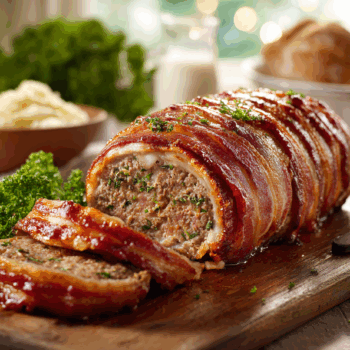
Filling Bacon-Beef Roll

Ingredients
Beef Roll Ingredients
 900 grams ground beef (minced beef)
- 6 slices white bread
 200 ml milk - for soaking bread
 150 grams Parmesan cheese
 4 medium eggs
 12 slices bacon
 8 sprigs parsley
 1 dash ground black pepper
 1 teaspoon salt
Sauce Ingredients
 300 ml ketchup
 70 grams brown sugar
- 1 teaspoon dry mustard
 1 tablespoon hot sauce
Instructions
- Soak pieces of bread in milk for a few minutes. Grate cheese, rinsed, drained parsley finely chop. Whisk the eggs lightly.
- Add lightly pressed bread, parsley, cheese, salt and pepper, eggs (if desired – and a bit of garlic) into the mixture. Hard mix with hands until the mixture becomes homogeneous, moldable, roll and lay baking paper or foil into a form.
- Carefully wrap the loaf with bacon, hiding the ends down under the roll.
- Knead for sauce, ketchup, mustard and sugar, dropwise adding Tabasco and tasting.
- Spread about a third of the sauce, liberally, on the roll, after which (the oven has received the required 180 degrees Celsius) and bake.
- After 45 minutes, take out the roll, add another third of the sauce and bake for 15 minutes. Check the readiness by thrusting in the middle of the loaf with a wooden toothpick.
- Roll cut, served with cooked vegetables, the best of which is mashed potatoes. And with the remaining sauce, it is, incidentally, very tasty.
Nutrition
FAQ
How do I know when the beef roll is fully cooked?
Use an instant-read thermometer — the center of the roll needs to reach 160°F (71°C) for ground beef. The toothpick method mentioned in the recipe card is a rough guide, but temperature is the only reliable check.
Can I use a different ground meat instead of beef?
Ground pork works well and also needs to reach 160°F (71°C) internally. Ground turkey or chicken can be used but must reach 165°F (74°C), and the leaner meat will be slightly drier — add an extra slice of milk-soaked bread to compensate.
Do I need to use a loaf pan or can I free-form it on a baking sheet?
Free-forming on a baking sheet lined with parchment or foil is fine and actually gives you better bacon coverage all around. A loaf pan traps steam on the sides, which can make the bacon on those edges soft rather than crisp.
Can I make this without the sauce and just use plain ketchup?
Plain ketchup will work as a simple substitute but the result will be noticeably less interesting — the brown sugar and mustard in the sauce add depth that plain ketchup lacks. At minimum, stir in a teaspoon of mustard if you’re keeping it simple.
How many people does this realistically feed?
Six moderate servings or four generous ones, especially if you’re serving it to people who are actually hungry. Pair it with mashed potatoes and a vegetable and six servings is realistic; skip the sides and four people will finish it comfortably.
My mixture feels very wet and won’t hold a roll shape — what do I do?
Squeeze the soaked bread firmly in your hands before adding it to the beef — it should feel damp but not dripping. If the mix is already too wet, add a handful of plain breadcrumbs and mix again; they’ll absorb the excess moisture without affecting the flavor.
What to cook next
- Savory Beef Sausage Rolls
- Ultimate Cheesy Beef Bake
- Hearty Beef Cauliflower Bake
- Beef Ricotta Lasagna Rolls