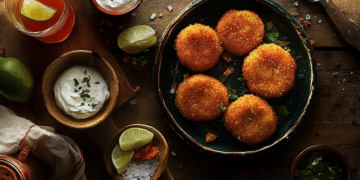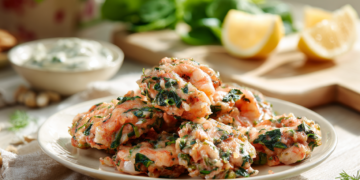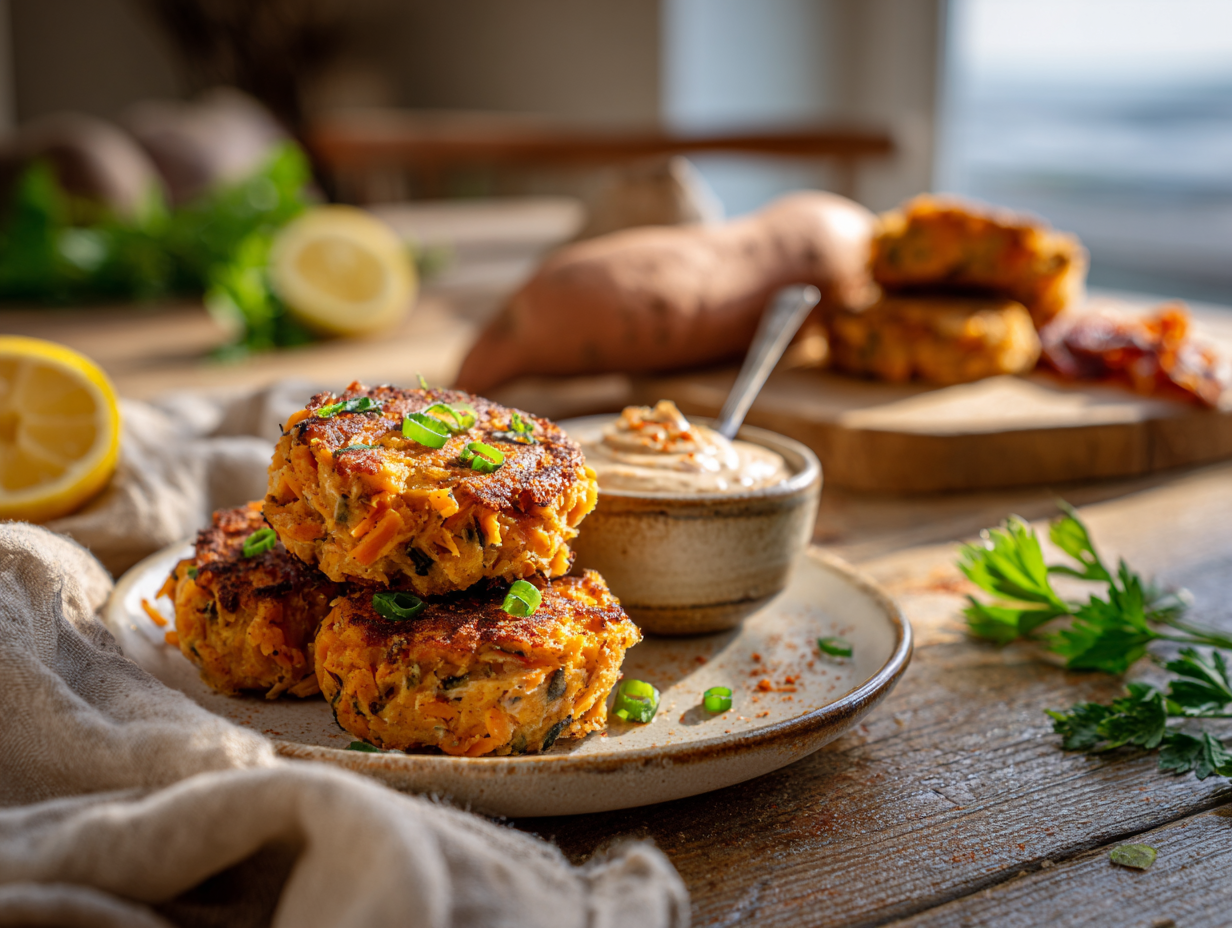
These crab cakes swap the usual breadcrumb filler for mashed sweet potato, which binds the crab meat and keeps the patties moist without turning them heavy. Crumbled bacon adds a smoky, salty contrast that works well against the natural sweetness of both the crab and the potato. Make a batch on Sunday and you have ready-to-reheat protein for several meals during the week.
The technique that matters
The two things that make or break these crab cakes are moisture control and pan temperature. Sweet potato holds more water than breadcrumbs, so if your mashed potato is at all wet or freshly steamed without draining time, the mixture will be too loose to hold a patty shape. Spread the mash on a plate and let it cool completely — even refrigerate it for 30 minutes — before mixing. Then get your pan genuinely hot before the cakes go in. A properly hot pan sets the exterior fast, which is what keeps the patty together during the flip. A lukewarm pan lets the cakes sit and steam, and they fall apart. Medium-high heat, a thin layer of oil, and no touching the cakes for the first 3 minutes are the three things that give you a firm, golden crust. Internal temperature for crab cakes should reach 145°F (63°C) at the center.
Troubleshooting
- Patties crack when flipping: The mixture is too dry or the cakes were moved too soon. Add a teaspoon of beaten egg to the mix and wait a full 3 minutes before attempting the flip.
- Cakes stick to the pan: The pan or oil wasn’t hot enough before the cakes went in. Let the oil shimmer before adding them, and use a thin metal spatula rather than a silicone one for a cleaner release.
- Bacon flavor disappears in the finished cake: Pre-cooked bacon loses its smokiness when mixed into a wet batter and reheated. Cook the bacon until genuinely crispy, drain it well, and add it last so the pieces stay distinct rather than melting into the mix.
- Crab flavor is muted: Canned crab can be watery. Drain it in a fine mesh strainer and press gently with a paper towel before adding it. Excess liquid dilutes both flavor and structure.
- Cakes are gummy inside after reheating: This usually means they were reheated covered, trapping steam. Reheat uncovered in a dry skillet or in the oven so the exterior stays firm.
Smart swaps
- Canned crab meat: Lump or claw both work. Lump gives you more visible chunks; claw is cheaper and still tastes good. Imitation crab is not a substitute — it’s pre-cooked surimi with a different texture and won’t bind the same way.
- Sweet potato: Butternut squash, mashed and well-drained, is the closest swap if sweet potato isn’t available. Regular russet potato works in a pinch but loses the mild sweetness that balances the bacon.
- Bacon: Pancetta or diced smoked ham can replace bacon. Skip the garnish — not worth the extra dish. The cakes have enough going on without it.
Storage and reheating
Cooked crab cakes keep well in the fridge for up to 3 days in an airtight container with parchment between layers so they don’t stick. For longer storage, freeze them on a baking sheet until solid, then transfer to a freezer bag — they’ll hold for up to 2 months. Reheat from the fridge in a dry skillet over medium heat for about 3 minutes per side, or in a 375°F (190°C) oven for 10–12 minutes. From frozen, go straight into a 375°F oven for 18–20 minutes without thawing first. Either way, reheat uncovered so the crust firms back up rather than going soft.
Filling Sweet Potato and Bacon Crab Cakes Recipe

Ingredients
 4 slices bacon
- 6 ounces crabmeat
 1 small sweet potato - roasted
 1 medium egg
 1 tablespoon coconut milk
 ¼ cup coconut flour
- 1 teaspoon creole seasoning
Instructions
- Dice bacon and brown in an iron skillet. Remove pieces and drain on a paper towel. Leave the bacon grease in the skillet, which you will use to cook your cakes.
- Mix egg, coconut flour, coconut milk, seasoning, and sweet potato until well blended. Fold in bacon pieces and crab.
- Using your hands, form patties. Fry in bacon grease in a skillet until done, turning once.
Nutrition
Frequently asked questions
Can I use fresh crab instead of canned?
Yes, fresh picked crab meat works well and will give a cleaner flavor. Make sure it’s fully drained and picked over for shell fragments before mixing it in.
Can I make the mixture ahead and cook the cakes later?
Yes — the uncooked mixture keeps in the fridge for up to 24 hours. Shape the patties, lay them on a parchment-lined tray, cover tightly, and refrigerate; they actually hold together better after a rest.
Can I bake these instead of pan-frying?
You can bake them at 400°F (200°C) for about 20 minutes, flipping once halfway through. The crust won’t be as firm as pan-fried, but they’ll still cook through and hold their shape.
How do I know when the crab cakes are cooked through?
Use an instant-read thermometer — the center should reach 145°F (63°C). Visually, the exterior should be deep golden brown and the cake should feel firm, not soft, when pressed lightly.
Can I freeze them before cooking instead of after?
Yes. Shape the raw patties, freeze on a tray until solid, then bag them. Cook from frozen in a 375°F (190°C) oven for 22–25 minutes, flipping once, until they reach 145°F (63°C) at the center.
What’s the best way to serve these if I’m reheating several at once for a meal?
The oven is the most practical option for reheating multiple cakes at once — spread them on a wire rack set over a baking sheet at 375°F (190°C) for 10–12 minutes. The rack lets air circulate underneath so the bottoms don’t go soggy.