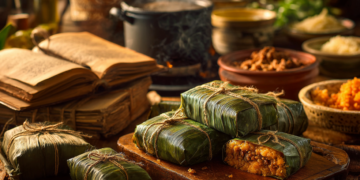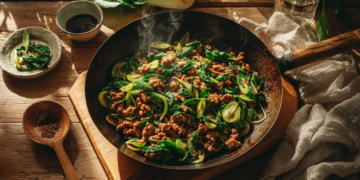
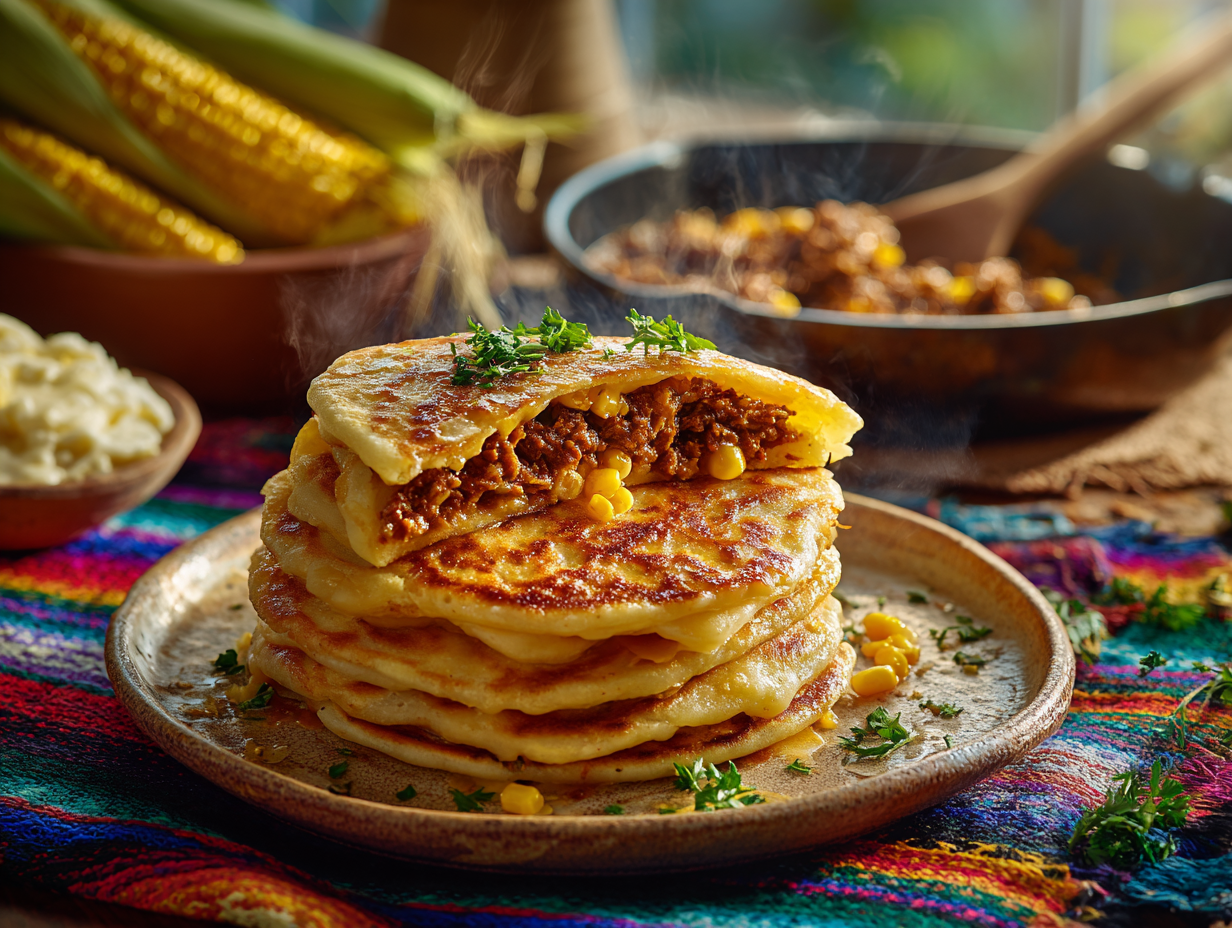
Cachapas are thick, slightly sweet corn pancakes folded around a savory filling — here, spiced ground pork and melting cheese. They come together faster than you’d expect and make a genuinely filling meal that works for breakfast, lunch, or dinner. If you need to feed a crowd without a lot of fuss, this is a solid choice.
Before you start
The two things that actually matter here are batter texture and pan temperature. The batter should be coarse and thick — if it pours like crepe batter, it’ll spread too thin and fall apart when you fold it. Pulse the corn just enough to break it down while leaving some texture; a few whole-ish bits are fine. For the pan, medium heat is the right call: too hot and the outside scorches before the center sets, too low and the cachapa turns pale and gummy. Let the pan preheat for a full two minutes before the first one goes in, and test with a small spoonful of batter — it should sizzle immediately and hold its shape. Also make sure your pork filling reaches 160°F (71°C) before you pull it off the heat; ground pork should never be served pink.
If something goes sideways
- Cachapas tear when you fold them: The batter is too wet or the pancake was flipped too early. Wait until the edges look set and the surface is mostly dry before flipping. If the batter is the problem, stir in a tablespoon of masa harina and let it rest for two minutes.
- Filling is watery and makes the cachapa soggy: Ground pork releases liquid as it cooks. Drain it thoroughly after browning — tilt the pan and spoon off the fat, or transfer the meat to a paper-towel-lined plate before adding spices. A wet filling will wreck the texture of the finished pancake.
- Cheese won’t melt properly: Add the cheese to the filling while it’s still hot, or place it directly on the cooked cachapa and cover the pan with a lid for 30 seconds. Cold cheese straight from the fridge needs a little help.
- Cachapas are sticking to the pan: Use a non-stick or well-seasoned cast iron pan and don’t skip the oil or butter. If they’re still sticking, the pan isn’t hot enough — a properly preheated surface releases the pancake cleanly.
- Batch cooking is getting messy: Skip the garnish — not worth the extra dish. Keep finished cachapas warm on a baking sheet in a 200°F oven while you cook the rest, and assemble all of them at once at the end rather than one by one.
Keeping and reheating
Store the pork filling and cachapas separately if you can — they keep better that way. The filling lasts up to 4 days in the fridge in a sealed container. Cooked cachapas (unfilled) keep for 2 days wrapped in the fridge, though they do soften. To reheat, warm the filling in a skillet over medium heat until it hits 165°F (74°C) to be safe, then heat the cachapas in a dry pan for about 90 seconds per side. Assembled cachapas can be reheated the same way, covered with a lid to help the cheese melt again. For freezing, the filling freezes well for up to 2 months; the cachapas themselves can be frozen between sheets of parchment for up to 6 weeks, though the texture is best fresh.
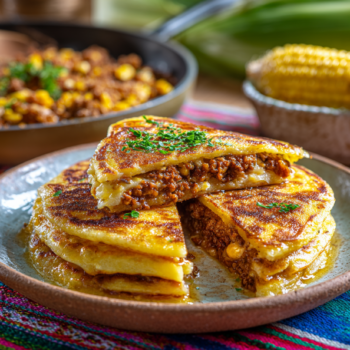
Venezuelan Minced Pork Cachapas
Equipment

Ingredients
For the Pork Filling:
 1 lb ground pork - choose fresh, well-marbled pork for best flavor
 1 tbsp olive oil - extra virgin
 1 small yellow onion - finely diced
 2 cloves garlic - minced
 1 tsp smoked paprika
 ½ tsp cumin - ground
 ¼ tsp dried oregano
 1 tsp kosher salt - to taste
 ½ tsp ground black pepper - freshly ground
For the Cachapas:
 2 cups corn kernels - fresh ; about 3 ears of corn, or use frozen and thawed
- ¼ cup masa harina - adds light structure
 ¼ cup milk - whole milk
 1 large egg - room temperature
 ½ tsp sugar - to enhance sweetness of the corn
 1 tbsp unsalted butter - melted, plus more for greasing
For Assembly:
- 1 cup queso de mano - or mozzarella cheese ; shredded, for filling and topping
 1 tbsp parsley - finely chopped, for garnish
Instructions
- Prepare the Pork Filling: In a large skillet over medium heat, warm olive oil and sauté the onion until translucent and lightly golden (about 5 minutes). Add garlic and cook until fragrant (1 minute). Stir in the ground pork, breaking it up with a spoon. Cook until browned and slightly crisped on edges (8–10 minutes). Season with smoked paprika, cumin, oregano, salt, and black pepper. Stir well and reduce heat to low. Let it simmer for 5 more minutes, then set aside and keep warm.
- Make the Cachapa Batter: In a blender or food processor, combine fresh corn, masa harina, milk, egg, sugar, and melted butter. Blend into a coarse but pourable batter—similar in texture to pancake batter. Let it rest for 10 minutes to hydrate the masa.
- Cook the Cachapas: Heat a lightly buttered skillet or griddle over medium heat (about 350°F / 175°C). Pour about 1/3 cup of batter per cachapa onto the skillet. Spread slightly with the back of a spoon into a 5–6 inch round. Cook until bubbles form on top and bottom is golden brown, about 3–4 minutes. Flip and cook another 2–3 minutes. Transfer to a plate and keep warm.
- Assemble: Spoon warm minced pork onto one half of each cachapa. Sprinkle with shredded cheese and fold in half. Return to the skillet and heat for 1–2 minutes to melt the cheese slightly. Garnish with chopped parsley.
Notes
- For extra depth, marinate the pork an hour before cooking in a splash of lime juice and garlic.
- Don’t overmix the cachapa batter—small corn bits add texture.
- You can substitute queso de mano with Oaxaca or fresh mozzarella for authenticity.
Nutrition
FAQ
Can I use canned corn instead of fresh?
Yes, canned corn works fine. Drain it thoroughly and pat it dry before blending — excess moisture will make the batter too loose and the cachapas hard to flip.
What cheese can I use if I can’t find queso de mano?
Fresh mozzarella is the closest substitute in terms of melt and mild flavor. Oaxaca cheese also works well; avoid aged or sharp cheeses, which can turn greasy when melted into a hot filling.
Can I make the batter ahead of time?
You can make it up to 24 hours ahead and refrigerate it covered. Give it a good stir before cooking, and if it’s thickened too much, add a tablespoon of milk to loosen it.
How do I scale this up to feed more people?
The filling scales easily — just brown the pork in batches so the pan doesn’t crowd and steam instead of sear. For the batter, double the recipe and cook in two pans simultaneously if you have them; cachapas take about 4 minutes per side, so a single pan gets slow when you’re feeding a group.
My family doesn’t eat pork — what’s a good swap?
Ground chicken works well with the same spice mix, but cook it to 165°F (74°C) and make sure there’s no pink remaining. Ground turkey is another solid option and takes on the smoked paprika and cumin nicely.
What to cook next
- Venezuelan Beef Hallacas Wraps
- Venezuelan Pork Pasticho Recipe
- Spiced Lamb Arepa Fusion
- Puerto Rican Pork Pasteles