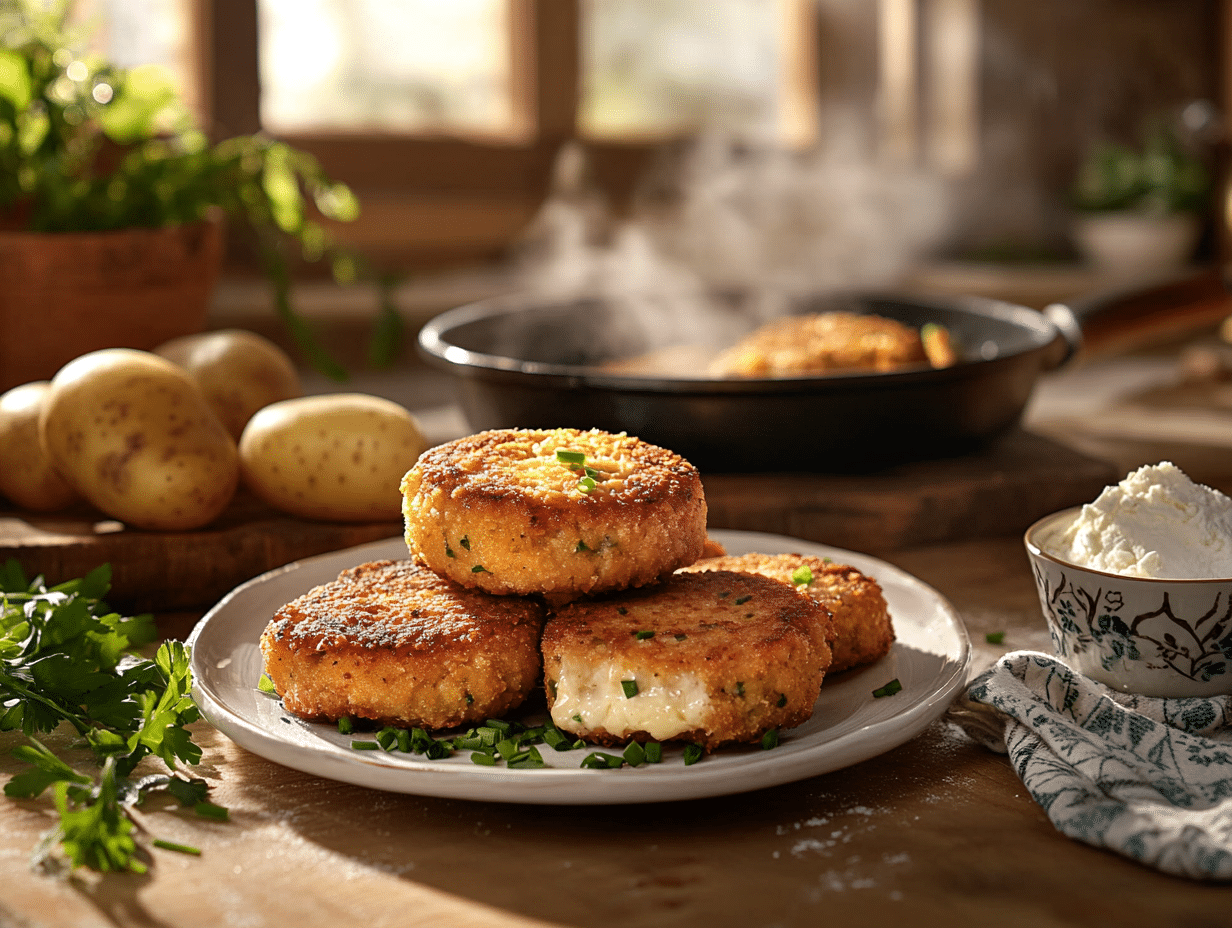
Milcao are Chilean potato pancakes from the Chiloé Archipelago, made with a mix of raw grated and cooked potato — this version folds in ground pork and crumbled queso fresco to turn a simple side into a filling main. You get four substantial pancakes from cheap, everyday ingredients in about an hour. The crispy crust and soft center are genuinely satisfying, and the whole thing comes together in one bowl.
Before you start
The single most important step is squeezing as much water as possible out of the grated raw potato before mixing. Wet potato means the patties won’t hold together and the exterior steams instead of crisping — wrap the grated potato in a clean kitchen towel and wring it hard, twice. The second thing that matters is patty thickness: the recipe calls for 1 cm (about ½ inch). Go thicker and the pork in the center won’t reach a safe 160°F (71°C) before the outside burns; go thinner and they dry out. A consistent thickness also means all four pancakes finish at the same time, so nothing sits getting cold while you wait.
What can go wrong
- Patties fall apart in the pan: Usually means the potato was too wet or the mixture wasn’t pressed firmly enough when shaping. Squeeze the potato again and let the shaped patties rest for five minutes before frying — they firm up slightly.
- Outside browns before the pork cooks through: The heat is too high. Medium is the right setting; if the crust is darkening in under three minutes, drop to medium-low. Use an instant-read thermometer to confirm the center hits 160°F (71°C).
- Cheese leaks out and burns in the oil: This happens when queso fresco pieces are too large. Crumble it finely and mix it thoroughly into the potato-pork mixture so it’s distributed rather than sitting in pockets.
- Greasy result: The oil wasn’t hot enough when the patties went in. Test with a small pinch of the mixture — it should sizzle immediately. Cold oil means the pancake absorbs it instead of frying in it.
- Mixture too loose to shape: Add flour one tablespoon at a time until it holds. Humidity, potato variety, and how well you squeezed the potato all affect how much flour you need.
Ingredient notes
- Queso fresco: Mild, crumbly, and low-moisture — that last quality matters here. If you can’t find it, a dry-ish feta (rinsed to reduce saltiness) or firm ricotta salata both work. Avoid fresh mozzarella; it releases too much water and makes the mix soggy.
- Russet potatoes: High starch, which helps the patties bind. Yukon Golds will work in a pinch but are wetter and starchier in a different way — squeeze them even harder.
- Ground pork: Standard 80/20 ground pork is fine. A slightly higher fat content actually helps the interior stay moist. Skip the overnight marinade from the recipe notes if you’re short on time — the salt, pepper, and chives do enough work.
- Chives: Thinly sliced green onion tops are a direct swap and usually cheaper. Skip the garnish of whole chive stems on top — not worth the extra dish.
Storage and reheating
Cooked pancakes keep in the fridge for up to three days in an airtight container with parchment between layers so they don’t stick. To reheat, use a dry skillet over medium heat for two to three minutes per side — this brings the crust back. A microwave will make them soft and a little gummy, so use it only if you don’t care about texture. For freezing, cool completely, wrap each pancake individually in plastic wrap, and freeze for up to two months. Reheat from frozen in a 375°F (190°C) oven for 15–18 minutes, flipping once, until the center is hot throughout and the exterior has crisped back up. Don’t freeze the uncooked mixture — the raw potato will turn watery and grey on thawing.
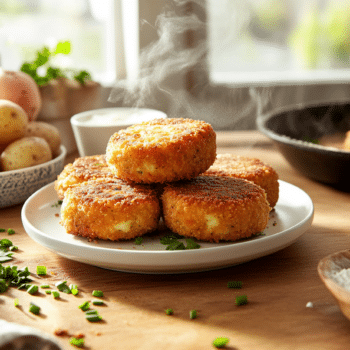
Minced Pork and Cheese Milcao

Ingredients
 500 grams russet potatoes - peeled and grated
 250 grams ground pork (minced pork) - preferably organic
- 100 grams queso fresco - crumbled
 ½ cup flour - all-purpose
 1 medium egg - beaten
 1 teaspoon salt
 ½ teaspoon ground black pepper - freshly ground
 2 tablespoons chives - finely chopped
 ¼ cup vegetable oil - for frying
Instructions
- Preheat a non-stick skillet over medium heat, adding the vegetable oil until shimmering.
- In a large bowl, mix grated potatoes, minced pork, queso fresco, flour, and the beaten egg until thoroughly combined. Add salt, pepper, and chives, stirring gently to integrate.
- Shape the mixture into small patties about 1 cm (0.4 inches) thick. This ensures they cook evenly and maintain a delightful crispiness.
- Carefully place the patties in the heated skillet, frying them in batches until each side turns a golden-brown hue, about 4-5 minutes per side. Adjust the heat as necessary to avoid burning while achieving a crisp exterior.
- Drain the cooked milcao on a paper towel-lined plate to remove excess oil.
Notes
Nutrition
FAQ
Can I use pre-shredded frozen hash brown potato instead of fresh?
Yes, but thaw them completely and squeeze out every bit of liquid before using — frozen potato holds a surprising amount of water. The texture of the finished pancake will be slightly less cohesive than with fresh potato, but it works and saves prep time.
Do I need to cook the ground pork before mixing it into the batter?
No — the pork goes in raw and cooks through during frying, which is why keeping the patties at 1 cm thick and checking for 160°F (71°C) at the center matters. Pre-cooking the pork would make the mixture drier and harder to bind.
Can I bake these instead of frying them?
Yes. Place shaped patties on a lightly oiled baking sheet and bake at 400°F (200°C) for 20–25 minutes, flipping once halfway through. The crust won’t be as deep or even as pan-frying, but it’s a reasonable trade-off if you’re making a large batch and don’t want to stand at the stove.
What to cook next
- Kumara Beef Hash Cakes
- Savory Beef Herb Pancakes
- Peruvian Cilantro Pork Stew
- Puerto Rican Pork Pasteles