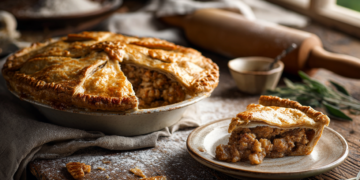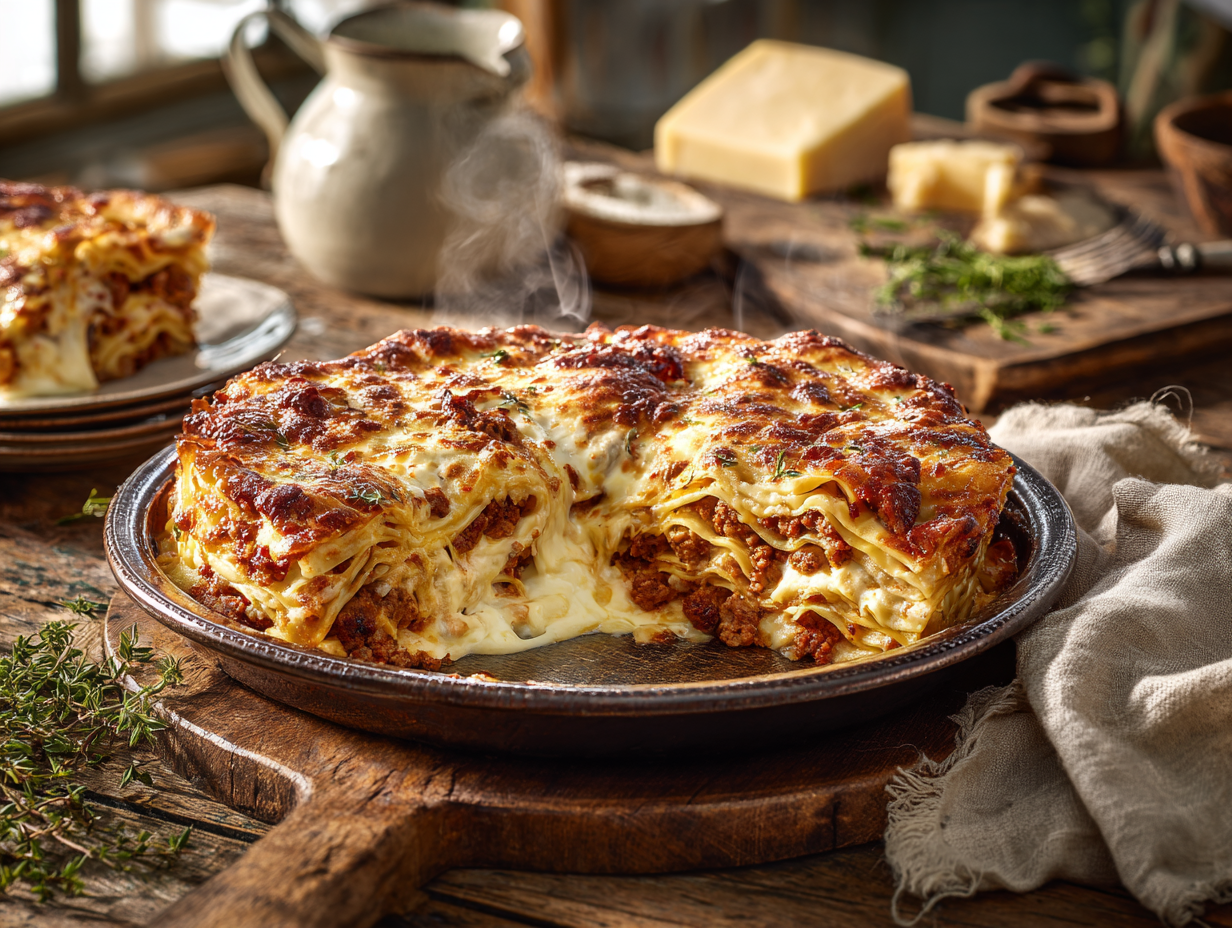
Venezuelan pasticho is a baked layered pasta dish — think lasagna built with a cumin-touched pork ragù, generous béchamel, and plenty of melting cheese. It takes real time to put together, but almost all of that is hands-off oven time, and it feeds a crowd from one pan. Ground pork keeps the filling moist and rich without any extra effort.
Why this recipe works
Two things carry this dish. First, cooking the pork ragù long enough to drive off most of the liquid — a wet meat sauce turns the pasta layers soggy and makes the whole thing slide apart when you cut it. Give it a full simmer until the sauce looks almost dry in the pan; it will rehydrate from the béchamel during baking. Second, the béchamel needs to be thick enough to hold its shape on a spoon before it goes in. A thin béchamel disappears into the other layers and you lose the creamy contrast that makes pasticho different from a plain meat lasagna. Get those two consistencies right and the rest is just assembly.
Ingredient notes
- Ground pork: Standard 80/20 ground pork works well. Avoid extra-lean pork mince — it dries out and the ragù loses its body.
- Bell peppers: Any color works. If you only have one instead of the full amount, that’s fine — the onion and garlic carry the base.
- Cumin: This is what separates the flavor from Italian lasagna. Don’t skip it, but if you’re out, a small pinch of smoked paprika fills a similar earthy role.
- Mozzarella: Any good melting cheese substitutes well — provolone, Monterey Jack, or even a mild cheddar. Avoid fresh buffalo mozzarella; it releases too much water.
- Parmesan: Pecorino Romano or any hard aged cheese works. Pre-grated is fine here — it’s going on top and the texture difference won’t matter once it browns.
- Lasagna sheets: No-boil sheets can be used; add an extra splash of water to the ragù before layering to compensate for the moisture they absorb.
Troubleshooting
- Layers collapse when sliced: The dish wasn’t rested long enough after baking. Let it sit uncovered for at least 15 minutes — the béchamel firms up as it cools and holds the layers together.
- Top is browning too fast before the center is cooked through: Tent loosely with foil for the first two-thirds of baking time, then remove it for the final 15 minutes to get the golden top without burning the cheese.
- Béchamel has lumps: Add the milk gradually and keep whisking constantly. If lumps form anyway, press the sauce through a fine sieve before layering — it takes 30 seconds and fixes it completely.
- Pasta sheets are still tough after baking: Your ragù and béchamel were too dry going in. Both sauces need enough moisture to steam the pasta during baking. Next time, add a few tablespoons of water to each sauce before assembling.
- Filling tastes flat: Ground pork needs assertive seasoning. Taste the ragù before assembling and adjust salt and cumin — the pasta and béchamel will dilute the flavor, so the meat sauce should taste slightly over-seasoned on its own.
Leftovers and meal prep
Pasticho keeps well in the fridge for up to 4 days, tightly covered. The flavor actually improves on day two once everything has had time to settle. Reheat individual portions in a microwave with a splash of water and a loose cover to prevent the top from drying out, or cover the whole pan with foil and warm it in a 325°F oven for 20–25 minutes. For freezing, cut into individual portions before freezing — skip the garnish at this stage, it’s not worth the extra dish — wrap each piece tightly in plastic wrap and then foil, and freeze for up to 3 months. Thaw overnight in the fridge before reheating. You can also assemble the whole dish up to 24 hours ahead, refrigerate it unbaked, and add 10–15 minutes to the baking time straight from cold.
Venezuelan Minced Pork Pasticho Lasagna

Equipment
Ingredients
For the Minced Pork Filling:
 2 tablespoons olive oil - extra virgin recommended
 1 pound ground pork (minced pork) - fresh ground pork, not overly lean
 1 cup yellow onion - finely chopped
 ½ cup green pepper (green capsicum) - finely chopped
 4 cloves garlic - minced
 2 tablespoons tomato paste - double-concentrated preferred
 1 can crushed tomatoes - 15 oz can
 1 teaspoon dried oregano
 ½ teaspoon cumin - ground
For the Béchamel Sauce:
 4 tablespoons unsalted butter
 ¼ cup all purpose flour (plain flour Australia and UK) - sifted
 3 cups milk - whole milk ; warm
 ¼ teaspoon nutmeg - freshly grated preferred
For the Assembly:
 9 sheets lasagna sheets - oven-ready or boiled as directed
 2 cups mozzarella cheese - shredded
 1 cup Parmesan cheese - finely grated
Instructions
- Prepare the Pork Filling: In a large saucepan, heat olive oil over medium heat. Sauté onions, green pepper, and garlic for 4–5 minutes until softened and fragrant. Add minced pork, cooking until browned and completely cooked (about 8–10 minutes). Stir in tomato paste, crushed tomatoes, oregano, cumin, salt, and pepper. Reduce heat and simmer for 20–25 minutes until thickened and aromatic.
- Make the Béchamel: In a medium saucepan, melt butter over medium heat. Whisk in flour and cook for 2–3 minutes to form a roux, stirring constantly. Slowly add warm milk while whisking to avoid lumps. Simmer for 6–8 minutes until thick and creamy. Add nutmeg and salt to taste. Remove from heat.
- Preheat Oven: Set oven to 375°F (190°C).
- Assemble the Pasticho: In a 9x13 inch (23x33 cm) baking dish, spread a layer of béchamel, followed by noodles, pork filling, mozzarella, and more béchamel. Repeat layering, finishing with béchamel and topping with Parmesan cheese.
- Bake: Cover with foil and bake for 30 minutes. Remove foil and bake an additional 15–20 minutes until top is bubbling and golden. Let rest 15 minutes before serving.
Notes
- Cheese Tip: Mixing some provolone with mozzarella adds depth of flavor.
- Time-Saving: Both pork filling and béchamel can be made a day in advance.
- For a gluten-free version, use rice noodles and gluten-free flour for the béchamel.
Nutrition
Frequently asked questions
Can I use ground beef instead of ground pork?
Yes, ground beef works as a straight swap. Use 80/20 beef for the best result — leaner blends can make the ragù dry, and you lose some of the richness that pork fat provides.
How do I know the pork is fully cooked inside the baked dish?
The ragù should be cooked through completely on the stovetop before it goes into the oven — ground pork needs to reach 160°F (71°C) internally. By the time you’ve simmered it down to the right consistency, it will be well past that temperature.
My béchamel always goes lumpy. What am I doing wrong?
The most common cause is adding cold milk to the hot roux too quickly. Warm the milk first and add it in a slow, steady stream while whisking without stopping. If lumps still form, strain the sauce — it takes less than a minute.
Can I make this without a full set of aliño vegetables if I don’t have them all?
Yes. Onion and garlic are the non-negotiables — the bell pepper adds sweetness but the dish works without it. A small pinch of dried oregano and the cumin do more flavor work than the pepper does.
Can I assemble pasticho the night before and bake it the next day?
Yes, and it’s one of the best ways to manage the prep time. Cover the assembled dish tightly and refrigerate for up to 24 hours, then bake straight from the fridge and add about 10–15 minutes to the baking time.
Can I freeze unbaked pasticho?
You can, but baked-then-frozen portions reheat more reliably than unbaked frozen ones. If you do freeze it unbaked, thaw it completely in the fridge overnight before baking, otherwise the center stays cold while the edges overcook.
Try these next
- Venezuelan Beef Hallacas Wraps
- Venezuelan Pork Cachapas Recipe
- Beef Ricotta Lasagna Rolls
- Puerto Rican Pork Pasteles