This is a homemade pizza topped with thinly sliced pork tenderloin, pineapple chunks, mozzarella, and tomato sauce on a quick yeasted dough. It makes four personal-sized pizzas in about 50 minutes, and it’s a reliable way to get skeptical eaters on board — the pork keeps things firmly in savory territory while the pineapple adds just enough contrast to make it interesting.
Before you start
Two things actually matter here. First, drain your pineapple thoroughly — fresh or canned, excess juice will steam the crust instead of crisping it, and you’ll end up with a soggy center no matter how hot your oven runs. Press the chunks between paper towels for a minute before they go on. Second, don’t skip the partial sauté on the pork. Ten to twelve minutes in a hot oven isn’t long enough to cook raw pork tenderloin through, especially in thin slices that can dry out fast. Four minutes in a skillet first means the pork finishes cooking on the pizza without turning rubbery or underdone.
What can go wrong
- Dough tears when rolling: This usually means the gluten needs more rest. If it keeps springing back, cover it and wait five more minutes before trying again.
- Cheese browns before the crust is done: Your oven rack is too high. Move the pizza to the lower third of the oven so the base gets direct heat first.
- Pineapple slides off when slicing: The chunks are too large. Cut them small — roughly 1 cm — so they nestle into the cheese rather than sitting on top of it.
- Crust is pale and soft on the bottom: A cold baking sheet is the likely cause. Preheat the sheet or stone in the oven while the dough rises so the base hits immediate heat the moment it goes in.
- Pork turns dry and chewy: It was overcooked in the skillet. Pull it off the heat while it still looks slightly underdone in the center — it will finish in the oven.
Ingredient notes
- Pork tenderloin: Slice it as thin as you can — 3 to 4 mm — so it cooks evenly. If it’s cold from the fridge it’s much easier to slice cleanly.
- Neapolitan or pasta sauce: Use whatever plain tomato sauce you have. Avoid anything labeled arrabbiata or heavily seasoned, since the pork and pineapple already have a lot going on. A thin layer is all you need — too much sauce is the other main cause of a soggy base.
- Instant yeast: No proofing step needed; it goes straight into the flour. Active dry yeast works too but needs to be dissolved in the warm water for five minutes first — skip the instant yeast and add that step.
- Mozzarella: Pre-shredded is fine here. Fresh mozzarella releases too much water and will make the pizza wet.
Make-ahead notes
The dough can be made up to 24 hours ahead — after kneading, cover it tightly and refrigerate it instead of letting it rise at room temperature. Take it out 30 minutes before you want to roll it so it relaxes. The sautéed pork keeps in the fridge for up to two days, so you can do that step in advance as well. Assembled, unbaked pizzas don’t hold well — the sauce softens the dough quickly, so build and bake them the same day. Leftover baked pizza reheats best in a dry skillet over medium heat for three to four minutes, which crisps the base back up far better than a microwave does. Skip the oven reheat — not worth heating the whole oven for a slice.
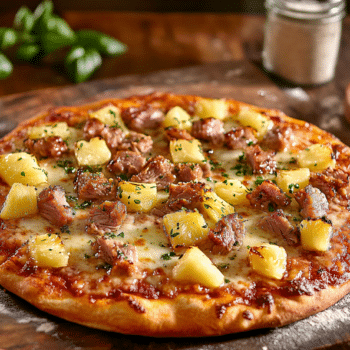
Pineapple Pork Pizza

Ingredients
Dough
 2 cups all purpose flour (plain flour Australia and UK) - plus extra for dusting
- 1 packet instant yeast - (2 1/4 teaspoons)
 1 teaspoon sugar (white sugar)
 1 cup water - warm, around 40°C (104°F)
 1 teaspoon salt
 2 tablespoons olive oil
Toppings
- 300 grams pork tenderloin - thinly sliced
 1 cup pineapple - chopped into small chunks
 1 cup mozzarella cheese - shredded
 ¼ cup Neapolitan Sauce or Pasta sauce Southern Hemisphere (Tomato Sauce in North America)
 1 teaspoon dried oregano
- 1 tablespoon olive oil - for drizzling
Instructions
- Prepare the Dough: Combine the flour, instant yeast, and sugar in a large bowl. Gradually add the warm water, stirring continuously, until a dough begins to form. Add the salt and olive oil, and knead the dough for about 10 minutes until smooth and elastic. Cover and let rise in a warm area for about 30 minutes until doubled in size.
- Preheat the Oven: Preheat your oven to 230°C (450°F) while the dough is rising.
- Sauté the Pork: In a skillet over medium heat, sear the pork slices with a drizzle of olive oil until partially cooked but still tender, about 4 minutes. Set aside.
- Assemble the Pizza: Divide the risen dough into 4 equal parts. Roll each into a thin circle on a floured surface. Spread a thin layer of pizza sauce over each base, leaving a small border for the crust. Top with cheese, pork slices, and pineapple chunks. Sprinkle oregano on top and lightly drizzle olive oil.
- Bake the Pizza: Transfer to a pizza stone or baking sheet and bake for about 10-12 minutes, or until the crust is golden and the cheese is bubbly.
- Garnish and Serve: Remove from the oven and allow to cool for 2 minutes. For a touch of freshness, sprinkle chopped fresh basil if desired before slicing and serving.
Notes
Nutrition
Your questions, answered
Can I use store-bought pizza dough instead of making it from scratch?
Yes, store-bought dough works fine. Let it come to room temperature for at least 20 minutes before rolling, otherwise it will be stiff and hard to stretch without tearing.
Can I use a different cut of pork instead of tenderloin?
Pork loin works well as a substitute — slice it thin and treat it the same way. Avoid shoulder or belly here; they have too much fat and won’t cook through evenly in the short oven time.
Fresh pineapple or canned — does it really matter?
Either works, but canned needs to be drained very well or it will make the pizza wet. Fresh pineapple tends to hold its texture better during baking and isn’t as sweet, which some people prefer.
My household is split on pineapple on pizza — can I make half without?
Easily. Since the recipe makes four individual pizzas, just leave the pineapple off one or two of them. The pork, sauce, and cheese stand on their own without it.
Can I freeze the baked pizzas?
Yes — cool them completely, wrap individually in plastic wrap, and freeze for up to one month. Reheat straight from frozen in a 200°C (400°F) oven for 8 to 10 minutes, or use a skillet with a lid on low heat to warm through without burning the base.
More plant-based recipes to try
- Spiced Pork Mince Flatbreads
- Savory Pork Stottie Filling
- Levantine Lamb Za’atar Flatbread
- Levantine Spiced Beef Flatbreads