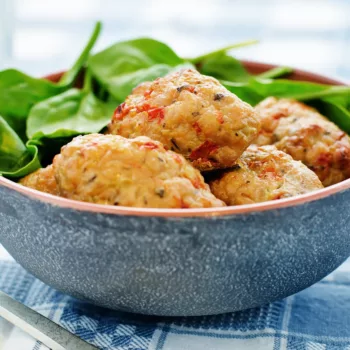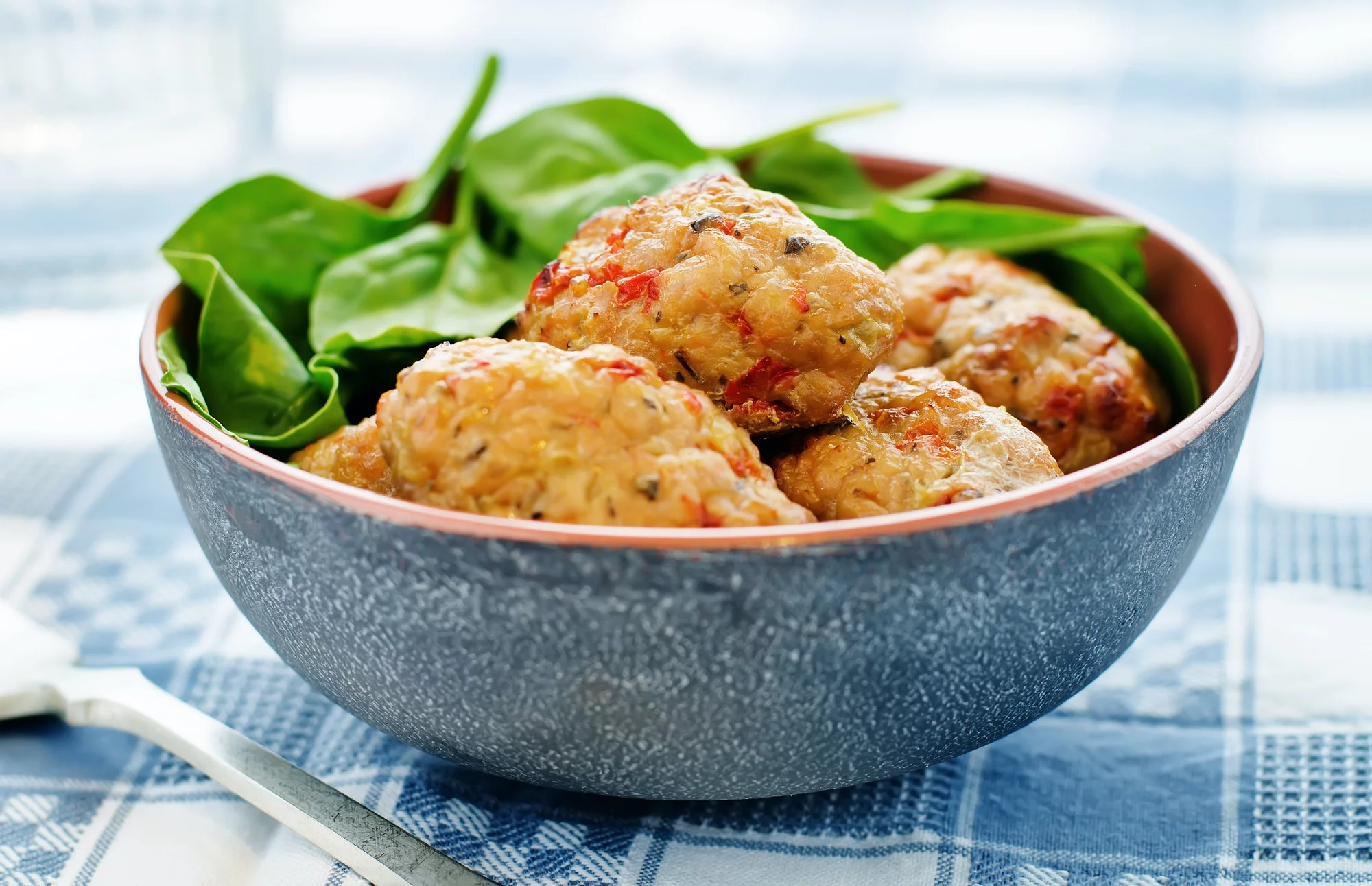
Triple Threat Baked Meatballs combine equal parts ground beef, pork, and lamb into large, oven-baked meatballs seasoned with Parmesan, spinach, and Italian herbs. The real reason to make this recipe is the yield — 40 meatballs at roughly 8g of protein each means you’re building a serious freezer stash in one 45-minute session. One batch covers dinner tonight and fast weeknight meals for weeks.
Substitutions that actually work
- Ground lamb: If lamb is hard to find or too expensive, ground veal is the closest swap — similar fat content and mild flavor. Ground turkey works in a pinch but dries out faster, so reduce bake time by 3–4 minutes and verify the internal temperature hits 165°F (74°C).
- Fresh spinach instead of frozen: Use about 3 oz fresh baby spinach, wilted and squeezed very dry. Excess water from under-drained frozen spinach is the main reason meatballs fall apart, so squeeze harder than you think necessary.
- Parmesan: Pecorino Romano works and adds a sharper, saltier note — cut the added salt to 1.5 teaspoons if you swap it in.
- Breadcrumbs: Panko gives a slightly crunchier exterior coating. Plain dried breadcrumbs are fine. Skip seasoned breadcrumbs — the recipe already has enough salt and herbs.
What makes this version work
Two things matter here. First, splitting the breadcrumbs — half goes inside the mix to absorb moisture and keep the interior tender, half is used as an exterior coating that crisps in the oven without any frying. Second, baking at 400°F is hot enough to set that outer crust quickly, which helps the meatballs hold their shape and brown rather than steam. Rolling them in the coating breadcrumbs right before they go on the tray — not ahead of time — keeps the crust from going soggy before it hits the heat. Skip the garnish — not worth the extra dish.
What can go wrong
- Meatballs spread flat on the tray: This usually means the spinach wasn’t drained well enough, making the mix too wet. Squeeze frozen spinach in a clean towel until no more liquid comes out before adding it.
- Uneven sizes that cook unevenly: Dividing the mixture into quarters first (as the recipe suggests) helps, but use a cookie scoop or kitchen scale within each quarter for consistent sizing. Inconsistent balls mean some are overcooked before others are safe to eat — ground beef and pork need to reach 160°F (71°C) at the center.
- Coating falls off during baking: The breadcrumb shell only sticks reliably if the meatball surface is slightly tacky. If your mix feels dry, lightly wet your hands when rolling — don’t add more egg or liquid to the mix itself.
- Dense, tough texture: Overmixing compacts the proteins. Mix only until the ingredients are just combined — stop as soon as you no longer see streaks of egg or dry breadcrumbs.
- Sticking to the baking tray: Line the tray with parchment or a silicone mat. A wire rack set over the tray also works and lets heat circulate underneath, which firms up the bottom of the meatball more evenly.
Keeping and reheating
Cooked meatballs keep in the fridge for up to 4 days in a sealed container. For freezing, let them cool completely on the tray first, then freeze in a single layer for 1–2 hours before transferring to a zip bag — this stops them clumping together. Frozen meatballs keep well for up to 3 months. Reheat from frozen in a 350°F oven for 18–20 minutes, or in a covered skillet with a splash of water or sauce over medium-low heat for about 10 minutes, turning once. The skillet method is faster and keeps them juicy if you’re adding them straight to a sauce. Microwaving works but tends to toughen the exterior — use 50% power in 60-second bursts if that’s your only option.

Triple Threat Baked Meatballs
Ingredients
1 pound ground pork (minced pork)
1 pound ground beef (minced beef)
1 pound ground lamb (minced lamb)
5 ounces spinach - thawed
2 medium eggs
1 cup Parmesan cheese - grated
3 teaspoons dried basil
1 teaspoon garlic powder
3 teaspoons dried parsley
2 teaspoons salt
1 cup breadcrumbs - divided
1 teaspoon red pepper flakes
Instructions
- Preheat your oven to 400 degrees Fahrenheit.
- Combine the beef, lamb, pork, Parmesan cheese, spinach, eggs, parsley, basil, garlic powder, pepper flakes, and salt in a bowl along with 1/2 cup of the bread crumbs. Mix together by hand until everything is combined.
- Divide your meat mixture into quarters – each portion should give you around 10 meatballs, giving you roughly 40 meatballs altogether. I generally freeze half of the meatballs and cook the other half immediately.
- Put 1/2 cup of bread crumbs into a small bowl.
- Roll each meatball in the laid out breadcrumbs and then place them onto a baking tray. I also sometimes use muffin trays which keep the shape of the meatball a little better.
- Bake for 20 to 25 minutes.
Nutrition
Common questions
How do I know when the meatballs are fully cooked?
Use an instant-read thermometer — the center of the largest meatball needs to reach 160°F (71°C) because the mix contains both pork and beef. Color alone isn’t reliable; a meatball can look browned outside while still being undercooked in the middle, especially if your meatballs are on the larger side.
Can I make the mixture ahead and refrigerate it before baking?
Yes — the uncooked mixture can sit covered in the fridge for up to 24 hours before you roll and bake. Don’t roll them in the coating breadcrumbs until you’re ready to bake, or the exterior will absorb moisture from the meat and lose its crunch.
What sauce goes best with these?
A simple tomato sauce is the most practical choice — it reheats well alongside the meatballs without making the coating soggy the way a cream sauce can. If you want something richer, a tomato sauce with a tablespoon of butter stirred in at the end gets you most of the way there without a separate sauce recipe.
Can I make these smaller or larger than the recipe intends?
Yes, but adjust the bake time. Smaller meatballs (about 1 inch) will be done closer to 15–18 minutes; larger ones (golf ball size) may need 28–30 minutes. Always verify with a thermometer rather than relying on time alone.
Do I need all three meats, or can I use just one?
You can use a single meat, but the texture and fat balance will change. All-beef meatballs tend to be firmer and drier; all-pork stays juicy but can be quite rich; all-lamb has the strongest flavor. A two-meat blend of beef and pork is the most common practical substitute if one meat is unavailable.
What sides turn this into a complete meal without much extra work?
Pasta is the fastest option — cook it while the meatballs bake and you’re done in the same 25 minutes. For a lower-carb meal, roasted vegetables on a second tray in the same 400°F oven work well; put them in 5 minutes before the meatballs since they need a bit longer to get color.
What to cook next
- Olive Beef Polpette Perfection
- Venison Cranberry Holiday Meatballs
- Lamb Spinach Curry Delight
- Creamy Beef Spinach Pasta