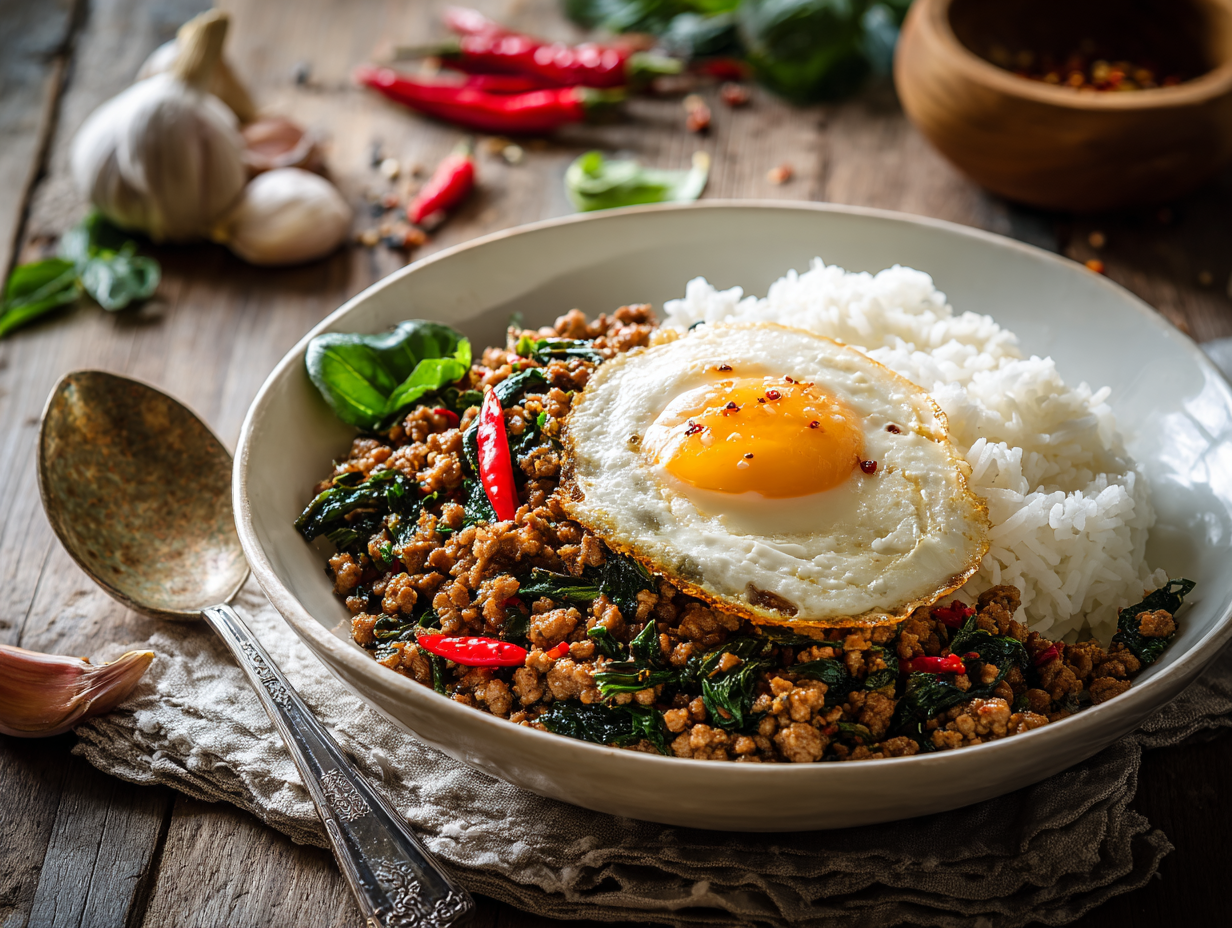
Pad Krapow Moo is a Thai stir-fried ground pork dish built around holy basil, garlic, chilies, and a short list of pantry sauces. It cooks in under 15 minutes and costs very little — which is exactly why it shows up on Thai tables every day. If you want a fast, genuinely flavorful weeknight meal that doesn’t require a trip to a specialty store, this is a strong candidate.
Why this recipe works
Two things drive this dish. First, high heat — the pork needs to sear and caramelize in the wok, not steam. If your pan isn’t hot enough before the meat goes in, you get gray, soft pork sitting in liquid instead of browned, slightly crisp bits that hold the sauce. Second, the sauce goes in while there’s still some moisture in the pan, so it reduces quickly and coats the pork rather than pooling at the bottom. That fast reduction is what gives each bite a concentrated, savory punch without making the dish wet or heavy.
About the ingredients
- Holy basil: The correct choice here. It has a peppery, faintly clove-like flavor that Italian basil doesn’t replicate. If you genuinely can’t find it, Thai sweet basil is the closest swap — the flavor is milder but the dish still works. Regular supermarket basil is a last resort; use more of it and add it even later in cooking.
- Fish sauce: Provides the salty, umami backbone. In a pinch, soy sauce alone can substitute, but add a small squeeze of lime at the end to compensate for the depth you’re losing.
- Oyster sauce: Adds sweetness and body. Hoisin sauce works as a substitute — use slightly less since it’s sweeter.
- Fresh chilies: Bird’s eye chilies are traditional. Serrano or any small hot chili is a fine stand-in. Dried chili flakes work too; start with half a teaspoon and adjust.
- Ground pork: Standard grocery store ground pork works well here. A slightly higher fat content (around 20%) helps with browning and flavor.
Mistakes to avoid
- Crowding the pan: Too much pork at once drops the pan temperature and the meat stews instead of browns. Cook in two batches if you’re doubling the recipe.
- Adding basil too early: Basil goes in at the very end — 20 to 30 seconds before you pull the pan off the heat. Any longer and it turns dark, loses its aroma, and adds a slightly bitter note.
- Under-seasoning before tasting: The sauce balance varies depending on your specific brands of fish sauce and oyster sauce. Taste before serving and adjust — a few extra drops of fish sauce or a pinch of sugar can make a real difference.
- Skipping the fried egg: The egg isn’t decoration. The broken yolk acts as a sauce that pulls the rice and pork together. Skip the garnish — not worth the extra dish — but keep the egg.
- Not cooking pork to temperature: Ground pork must reach an internal temperature of 160°F (71°C). At the heat levels used in this recipe that happens quickly, but don’t pull the pan early just because the pork looks done on the outside.
Storage and reheating
Store leftover pork (without the egg or rice) in an airtight container in the fridge for up to 3 days. Reheat in a hot skillet with a splash of water to loosen it — about 2 to 3 minutes over medium-high heat. Microwave works in a pinch but tends to dry the pork out. For freezing, the cooked pork mince freezes well for up to 2 months; thaw overnight in the fridge before reheating. Fry a fresh egg when you’re ready to serve — a reheated fried egg isn’t worth it.
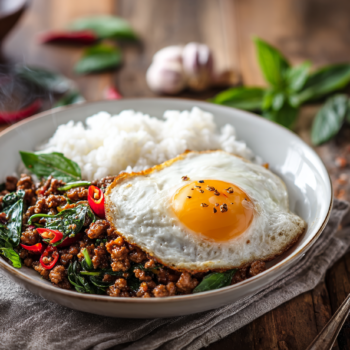
Tasty Thai Pad Krapow Moo Recipe

Ingredients
 500 grams ground pork (minced pork) - lean
 1 handful basil
 9 cloves garlic
 4 medium red chili (red chilli in British English)
- 1 tablespoon oil
 6 tablespoons oyster sauce
 1 tablespoon soy sauce
 ½ teaspoon sugar
 ½ tablespoon fish sauce
 2 medium eggs
 2 cups rice
 1 medium cucumber
 1 cup green beans
 1 handful Romaine lettuce
Instructions
- Chop and mince your garlic cloves until they look like a paste.
- Grab a wok or big frying pan, throw in your oil, heat it up nice and hot, toss in your garlic and chilli paste and keep it moving. Do this for about 20 seconds.
- Add the pork and keep stirring it all together until it is almost cooked; this step should take 2 to 5 minutes, depending on how high you have the heat.
- Add your soy sauce, oyster sauce, fish sauce and sugar to your pork.
- Keep stirring and frying until the pork is cooked – it should be about another minute or so. You can also tear in some basil leaves at this point and stir them in.
- Once it’s cooked and seasoned to taste (feel free to add more sauces or sugar if you like), add the fresh basil leaves and turn off the heat straight away so the basil doesn’t wilt too much.
- Grab another small frying pan and fry up 2 eggs to your liking. Thai style fried eggs are crispy, but the yolk is still soft. You need to get your oil hot (almost spitting and cracking your egg) and let the whites crisp up.
- Place your rice in a bit of a bowl and gently put it on your plate to form a little mound of rice. Pop your egg on top of your rice and pile on your pad kra pow, garnish with cucumber, green beans and lettuce leaves and then sit down, grab a fork and spoon and tuck in Thai style.
Nutrition
FAQ
Can I use ground chicken or beef instead of pork?
Yes — ground chicken and ground beef both work with the same sauce ratios. Ground chicken is the most common swap in Thailand; cook it to 165°F (74°C) internal temperature and expect a slightly leaner, less rich result. Ground beef gives a deeper flavor and browns well at high heat.
I can’t find holy basil. Is the dish still worth making?
It is, with the right swap. Thai sweet basil is the best substitute and is available in many Asian grocery stores. Regular Italian basil is a distant third option — use a generous handful and add it in the last 15 seconds of cooking to preserve as much flavor as possible.
My sauce is too salty. How do I fix it?
Add a small amount of sugar — even a quarter teaspoon — to pull the saltiness back into balance. A squeeze of lime juice also helps by shifting the flavor profile so the salt becomes less dominant.
Can I make this without a wok?
A large, heavy skillet works fine — cast iron or stainless steel are better choices than non-stick because they hold higher heat. The key is getting the pan genuinely hot before anything goes in; non-stick pans have lower heat limits and tend to produce a softer, less caramelized result.
What to cook next
- Savory Pork Noodle Stir-Fry
- Authentic Szechuan Dan Dan
- Japanese Pork Lettuce Cups
- Quick Lamb Coconut Rendang