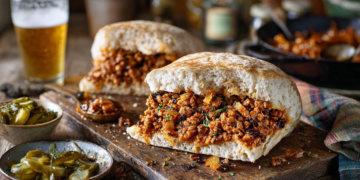
Sweet and sour dishes hold a special place in the world of Chinese cuisine, beloved not only within China but across continents and cultures. “Tangy Delight: A Modern Twist on Sweet and Sour Pork,” expressed here as Sweet and Sour Minced Pork, is both a celebration and a reinvention of that legacy. To truly appreciate this recipe, it helps to understand the culinary history, cultural philosophy, and practical evolution that shaped it into the vibrant, approachable dish it is today.
The origins of sweet and sour flavors in Chinese cooking can be traced back centuries, particularly to regions such as Guangdong (Canton), Jiangsu, and Zhejiang. Each region developed its own interpretation of balancing sugar and vinegar, creating sauces that could glaze crispy meats, coat tender seafood, or enliven vegetable-forward dishes. In Cantonese cuisine especially, sweet and sour pork became iconic: typically made with battered and deep-fried pork pieces tossed in a glossy sauce with pineapple and peppers. As Chinese migrants traveled and settled around the globe, they carried these flavors with them. Over time, sweet and sour pork evolved to suit local tastes and available ingredients, eventually becoming a staple on Chinese restaurant menus worldwide.
What makes the sweet and sour profile so enduring is its balance. Chinese culinary tradition often emphasizes harmony—between flavors, textures, colors, and even cooking methods. The interplay of sugar and vinegar reflects the philosophical concept of yin and yang. Sweetness soothes and comforts; sourness stimulates and refreshes. When brought together in careful proportion, neither overpowers the other. Instead, the contrast enhances the overall experience, awakening the palate and creating a sense of completeness. In Sweet and Sour Minced Pork, this balance is achieved through a thoughtful blend of sugar, rice vinegar, soy sauce, and the natural sweetness of pineapple.
Historically, sweet and sour sauces also had practical roots. Vinegar and sugar were used not only for flavor but also for preservation. Before refrigeration was commonplace, these ingredients helped extend the life of cooked foods. Additionally, bold sauces allowed cooks to transform modest cuts of meat or small portions into satisfying meals for large families. Stir-frying, the primary cooking method for this dish, is itself a technique born of efficiency. It requires minimal fuel, cooks quickly, and locks in both flavor and nutrition. Every component serves a purpose—nothing is wasted, and everything contributes to the final harmony.
The modern adaptation using minced pork reflects contemporary cooking realities. In traditional renditions, pork is often cut into chunks, marinated, battered, and deep-fried. While undeniably delicious, that process can be time-consuming and requires more oil and preparation. By choosing minced pork, this recipe simplifies the workflow without diminishing flavor. Ground meat cooks rapidly and absorbs seasoning evenly, ensuring every bite carries the tangy glaze. It also eliminates the need for deep-frying, making the dish lighter and more approachable for everyday meals.
Minced pork is particularly well-suited to bold sauces because of its texture and fat content. A mince with a modest amount of fat prevents dryness and enhances mouthfeel. As it browns in the pan, the caramelized bits create savory depth, providing a flavorful base for the sweet and sour sauce. When the sauce is added, it clings to the crumbled meat, coating it thoroughly instead of merely glazing the surface. The result is a spoonable, saucy mixture perfect for serving over steamed rice.
Pineapple is another essential component, both historically and practically. Although commonly associated with Westernized Chinese dishes, pineapple has long been used in southern China, where tropical fruits are abundant. Its natural acidity complements vinegar, while its sugars reinforce the sweetness of the sauce. The fruit’s juiciness also introduces a refreshing contrast to the savory pork. In regions where fresh pineapple is not readily available, canned pineapple provides a convenient alternative that still delivers vibrant flavor. Many home cooks appreciate its reliability—consistent sweetness and ready-to-use chunks that streamline preparation.
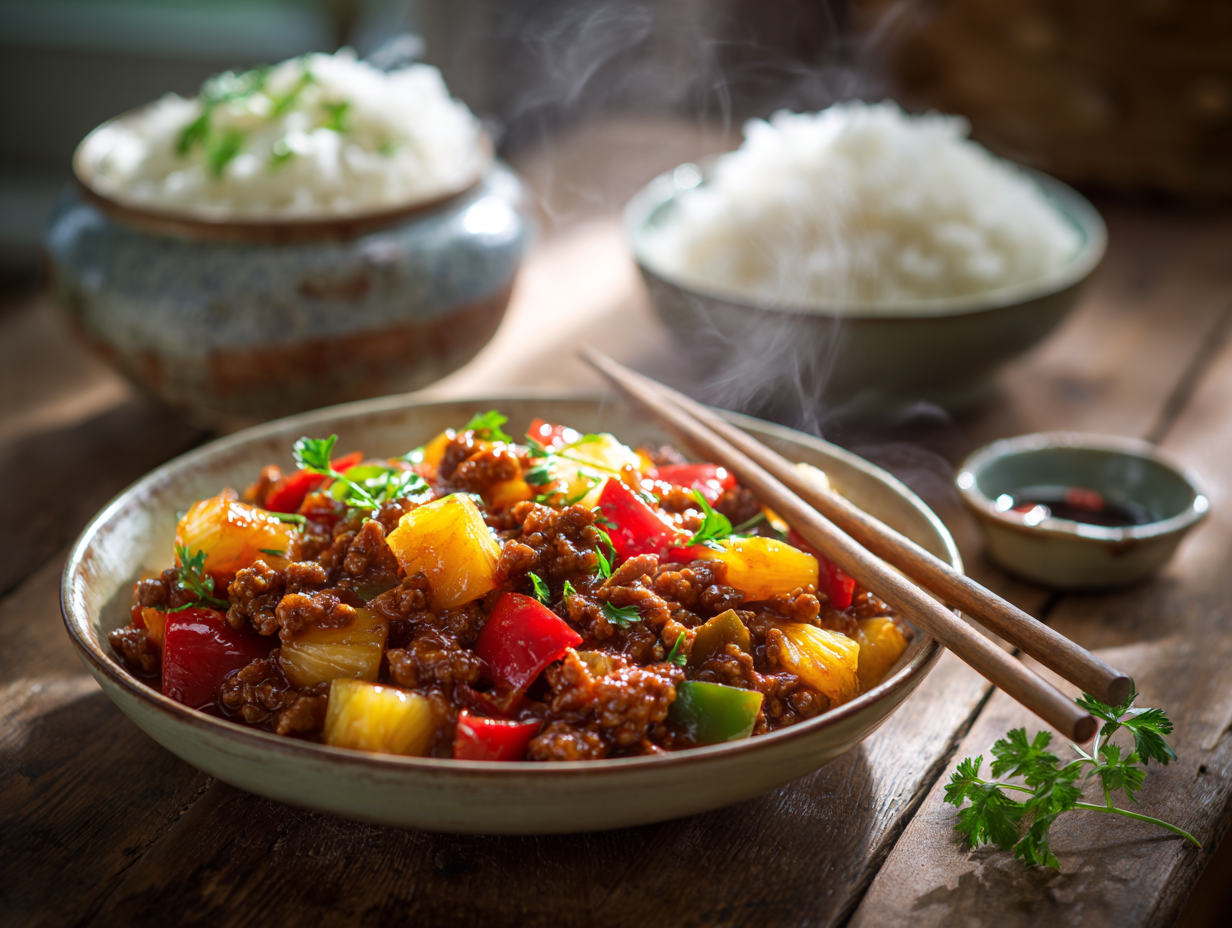
Bell peppers add yet another dimension. Red and green varieties contribute color, crunch, and subtle sweetness. Their bright appearance reflects an important principle in Chinese cooking: dishes should please the eye as well as the palate. The vivid reds and greens against the golden pineapple and rich brown sauce create visual balance that hints at the flavor harmony within. Texturally, they prevent the dish from becoming monotonous, bringing a crisp bite that contrasts beautifully with the tender pork.
The sauce itself is deceptively simple. Light soy sauce provides salinity and umami, sugar contributes sweetness, rice vinegar delivers that signature tang, and garlic ties everything together with aromatic warmth. These are pantry staples in many kitchens today, a testament to how globally integrated cooking has become. Decades ago, such ingredients might have required a trip to a specialty market. Now, they are readily available, empowering home cooks to recreate authentic flavors with ease.
Another compelling aspect of this recipe is its adaptability. While the base formula remains rooted in Chinese culinary tradition, it welcomes personalization. Seasonal vegetables can replace or accompany the bell peppers—snap peas in spring, zucchini in summer, or even shredded carrots for added color and sweetness. A pinch of chili flakes can introduce heat for those who enjoy spice. Garnishing with fresh coriander or sliced spring onions adds herbal brightness. These small adjustments allow the dish to evolve with preference and season while staying true to its tangy soul.
Serving Sweet and Sour Minced Pork over freshly steamed jasmine rice completes the experience. The rice acts as a neutral canvas, absorbing the glossy sauce and mellowing its intensity. Together, they form a comforting, balanced meal that satisfies without overwhelming. For a more elaborate spread, it can be paired with simple stir-fried greens or a bowl of clear soup, echoing the multi-dish structure typical of Chinese dining.
Ultimately, Tangy Delight: A Modern Twist on Sweet and Sour Pork is about bridging worlds—past and present, tradition and convenience, authenticity and adaptation. It respects the centuries-old philosophy of flavor harmony while acknowledging the rhythms of modern life. Quick enough for a weeknight dinner yet vibrant enough for sharing with guests, it embodies what great cooking aspires to be: rooted in history, responsive to the present, and joyful to eat.
In every bite, you taste more than just sweetness and sourness. You taste a story of migration, ingenuity, and culinary artistry—proof that even a humble skillet of minced pork can carry the depth and richness of an ancient food tradition into today’s kitchen.
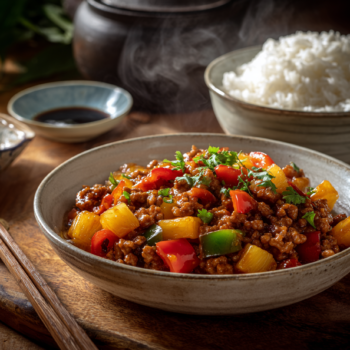
Sweet and Sour Minced Pork

Ingredients
Main Ingredients
- 500 grams pork mince - Preferably with a bit of fat for juiciness
 2 tablespoons soy sauce - light soy sauce preferred
 1 tablespoon rice vinegar - for authentic flavor
 1 tablespoon sugar - brown sugar offers a caramel undertone
- 1 cup pineapple chunks - fresh or canned, drained
- 1 red pepper diced - For a pop of color and freshness
- 1 green pepper diced - Contrasts beautifully
 1 clove garlic - minced
Optional Garnish
- 2 tablespoons fresh coriander - chopped
Instructions
- Adjust seasoning to taste, adding more vinegar for acidity or a pinch of sugar for extra sweetness.
- Increase the heat to high, add the pork mince, and cook for 5-7 minutes or until browned and cooked through, stirring occasionally to break up any large chunks.
- Reduce the heat to medium and pour in the light soy sauce, rice vinegar, and sugar. Stir well until the sugar has dissolved completely.
- Add the pineapple chunks, red, and green bell peppers. Stir-fry for another 4-5 minutes, or until the peppers are slightly tender but still vibrant and the sauce has thickened to a glossy coating.
- Adjust seasoning to taste, adding more vinegar for acidity or a pinch of sugar for extra sweetness.