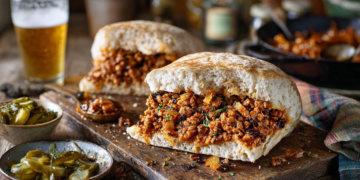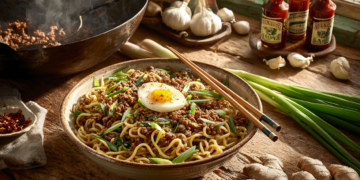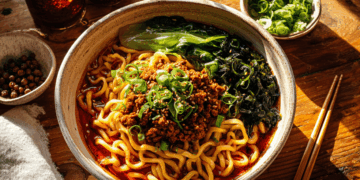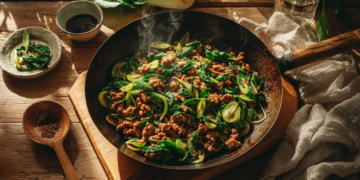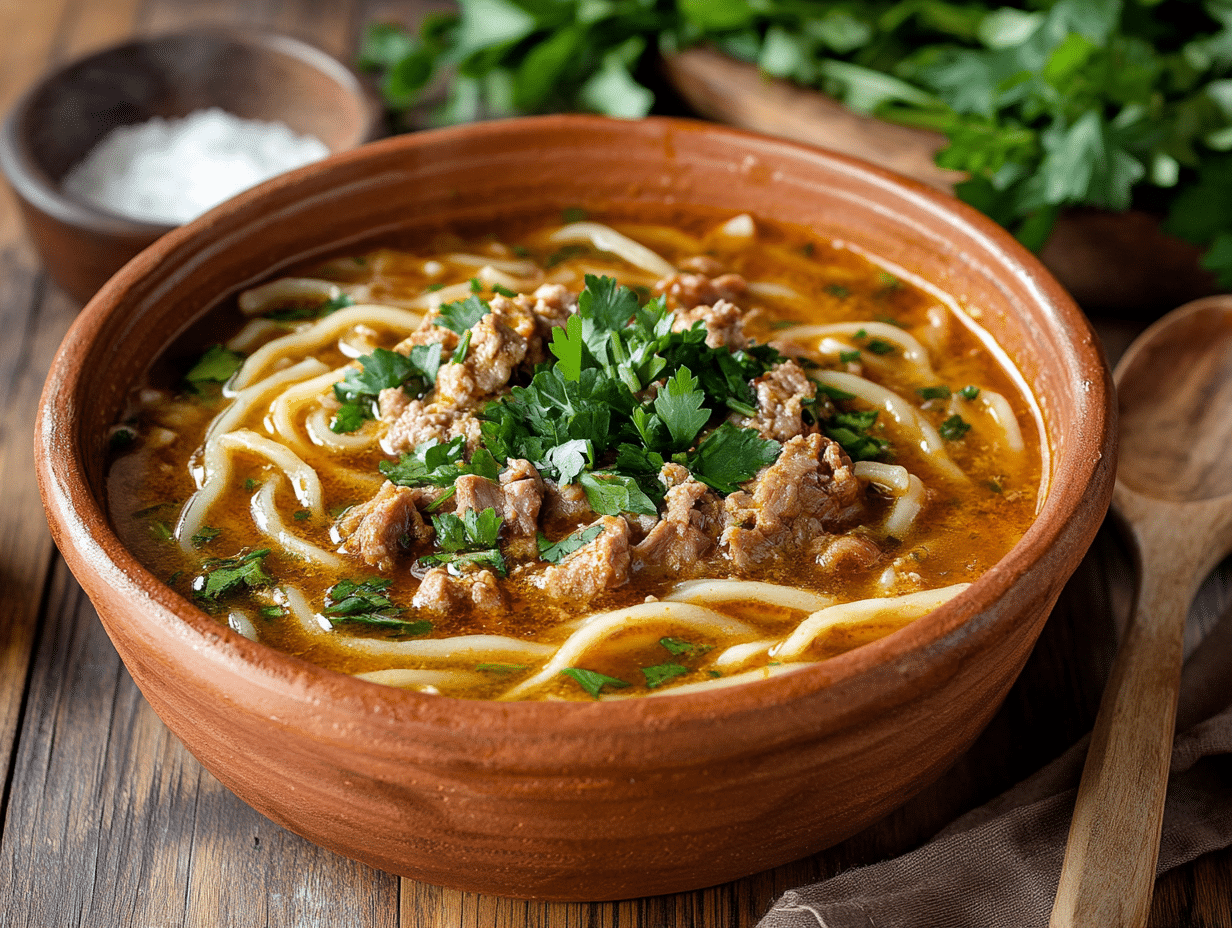
Ají de Fideos is a Bolivian ground pork and noodle dish built around a chili-tomato broth sauce. It comes together in one skillet plus one pot, costs very little, and the ingredient list is short enough that you probably have most of it already. That’s the honest reason to make it on a weeknight.
The technique that matters
Two things decide whether this dish is good or flat. First, brown the pork properly — spread it in the pan, leave it alone for a minute, and let it develop color before breaking it up. Rushed, grey pork gives you a watery sauce with no depth. Second, cook the ají amarillo paste directly in the fat with the cumin and paprika for the full 1–2 minutes before the tomatoes go in. Dry-frying the spices in the oil activates fat-soluble compounds that don’t release in liquid. Skip this step and the sauce tastes raw and one-dimensional. Both steps cost you maybe three extra minutes and make a real difference. Ground pork must reach an internal temperature of 160°F (71°C) — no pink in the meat before you add the liquid.
Shopping notes
- Ají amarillo paste: Found in Latin grocery stores and online. If you can’t get it, a mild yellow or orange chili paste works. A small amount of habanero thinned with a neutral oil and a pinch of sugar is a rougher but usable stand-in. Don’t use sriracha — the garlic and vinegar will pull the flavor in the wrong direction.
- Fideo noodles: Thin, short pasta sold in Latin and some mainstream grocery stores. Broken vermicelli or angel hair snapped into 1–2 inch pieces is a direct swap. Thin spaghetti broken up works too. Avoid thick pasta shapes — they won’t absorb the sauce the same way.
- Ground pork cut: A slightly fattier grind (around 80/20) gives a richer sauce. Extra-lean pork will work but the sauce will be thinner — add a small splash of extra broth if it tightens up too much.
- Chicken stock: Low-sodium store-bought is fine. A bouillon cube dissolved in 2 cups of hot water is a perfectly good substitute and costs almost nothing.
If something goes sideways
- Sauce is too thin after the noodles cook: Remove the lid if you used one and let it simmer uncovered for 3–5 minutes. The noodles will also continue absorbing liquid as the dish sits, so don’t over-reduce it at the stove.
- Noodles clumped together: This happens if you added them to a sauce that wasn’t at a full simmer, or if you didn’t stir in the first two minutes. Stir immediately when the noodles go in and keep the heat at a steady medium simmer throughout.
- Sauce tastes bitter: Ají amarillo paste can turn bitter if it scorches. If the paste stuck to a dry spot in the pan and darkened before the tomatoes went in, deglaze quickly with a splash of broth and taste — a small pinch of sugar stirred in at the end will usually fix it.
- Pork is cooked but the sauce tastes raw and sharp: The tomatoes need the full 5 minutes to break down and lose their raw edge. If you rushed that step, just keep the heat on medium-low after adding the broth and give it an extra 5 minutes before the noodles go in.
- Dish dried out completely before serving: Add a few tablespoons of warm water or broth and stir over low heat. Skip the parsley garnish — not worth the extra dish — and just serve it straight from the pan.
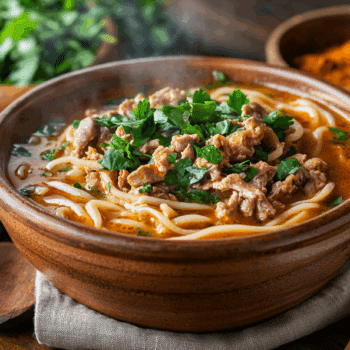
Bolivian Minced Pork Ají de Fideos

Equipment
Ingredients
 2 tbsp Vegetable oil - For sautéing
 1 lb ground pork (minced pork) - Preferably from a fatty cut for richer flavor
 1 medium Onion - Finely diced
 2 cloves Garlic - Minced
 1 tsp Cumin - Ground
 1 tsp Paprika - Smoked or sweet
- 2 tbsp Ají amarillo paste - Can be substituted with a mild chili paste
- 1 cup Diced tomatoes - Fresh or canned
 2 cups chicken stock (chicken broth or chicken bouillon) - Or vegetable broth, Preferably homemade or low-sodium
- 8 oz Fideo noodles - Can substitute with broken spaghetti
 1 tbsp parsley - Fresh, chopped, for garnish
Instructions
- Heat the vegetable oil in a large skillet over medium heat. Add the minced pork and cook until browned, breaking it apart as it cooks.
- Add the diced onion and minced garlic to the skillet. Sauté until the onion is soft and translucent, about 5 minutes.
- Stir in the cumin, paprika, and ají amarillo paste. Cook for another 1-2 minutes until fragrant.
- Add the diced tomatoes and cook for 5 minutes until they break down and meld into the mixture.
- Pour in the broth and bring the mixture to a simmer. Allow it to cook for another 10 minutes to develop flavor.
- Meanwhile, cook the fideo noodles in a medium saucepan according to package instructions until al dente. Drain and set aside.
- Add the cooked noodles to the skillet with the pork mixture, stirring to coat the noodles in the sauce. Cook for another 5 minutes until the flavors are well combined.
- Garnish with freshly chopped parsley before serving.
Notes
- For an extra depth of flavor, allow the ají de fideos to rest for a few minutes before serving.
- Adjust the spice level by adding more or less ají amarillo paste.
Nutrition
Common questions
Can I use a different ground meat instead of pork?
Yes — ground chicken or turkey works well and keeps the dish light, but cook it to 165°F (74°C) and expect a slightly leaner sauce. Ground beef at 80/20 is also a solid swap; it will give a richer, heavier result that still pairs well with the ají paste.
How spicy is ají amarillo paste, and can I use less?
Ají amarillo is mild to medium — noticeably warm but not aggressive. Start with 1 tablespoon if you’re unsure, taste the sauce before the noodles go in, and add more from there. The tomatoes and broth dilute the heat considerably.
Can I make this ahead and reheat it?
You can, but the noodles will absorb most of the remaining liquid as it sits. Reheat on the stovetop over low heat with a splash of broth or water stirred in to loosen it back up. The flavor is actually a little better the next day once everything has melded.
My store doesn’t carry fideo noodles — what’s the best substitute?
Broken vermicelli or angel hair pasta cut into 1–2 inch pieces is the closest match in texture and cook time. Thin spaghetti broken up works too. Avoid anything thicker than spaghetti, since it won’t soften properly in the amount of broth the recipe uses.
Can I stretch this to feed more people without buying extra pork?
Yes — increase the fideo noodles by 2–3 oz and add an extra half cup of broth per additional ounce of pasta. The pork-to-noodle ratio will shift, but the dish still holds together. A can of drained white beans stirred in with the broth is another cheap way to bulk it up without changing the flavor much.
If you liked this one
- Savory Pork Noodle Stir-Fry
- Pork Sajta Bolivian Style
- Peruvian Cilantro Pork Stew
- Authentic Szechuan Dan Dan