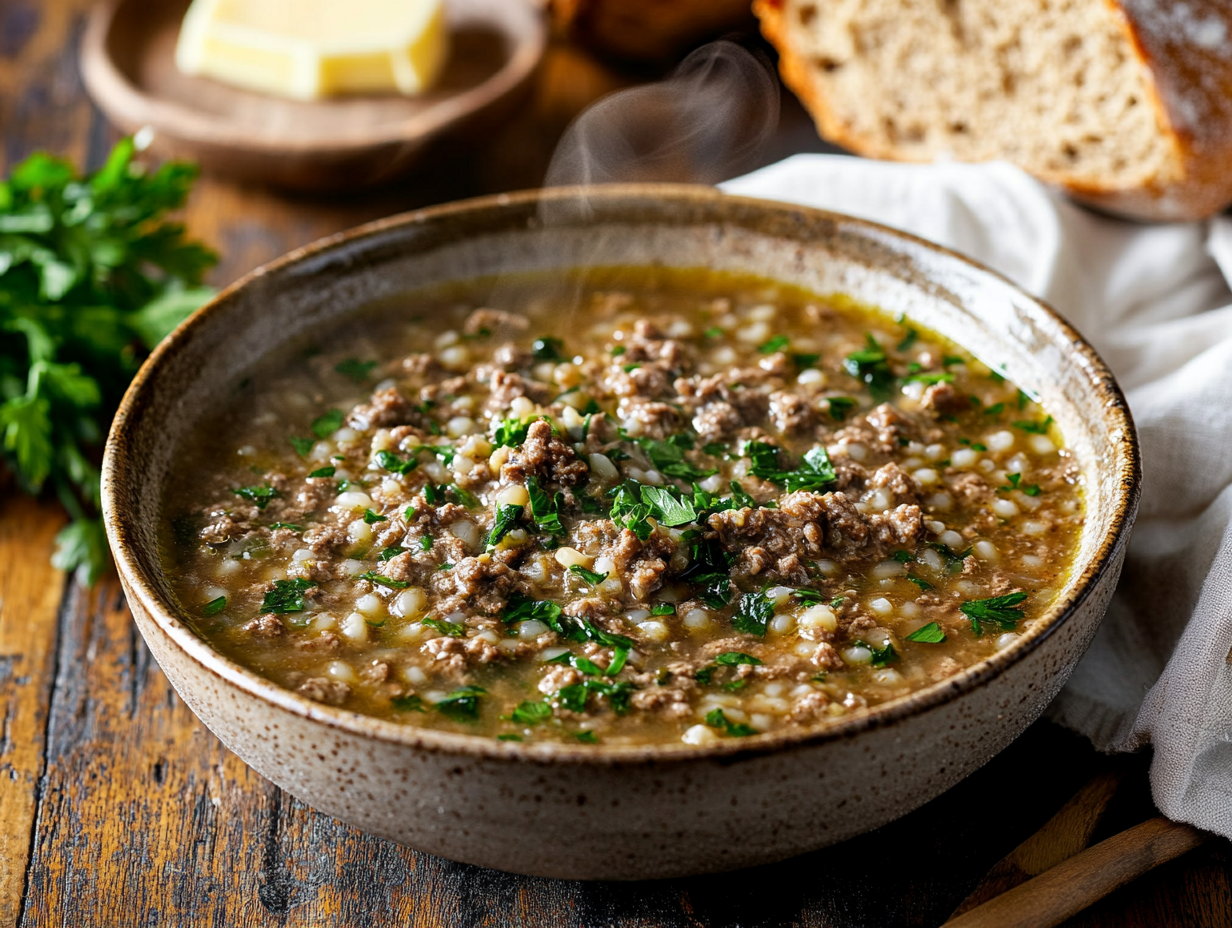
This is a one-pot beef and barley soup built around lean ground beef, pearl barley, and a straightforward herb broth. It simmers for 90 minutes total, which sounds long, but almost all of that is hands-off time on the stove. The honest reason to make it: it feeds four people well, reheats better than most soups, and uses ingredients most households already have.
Before you start
Two things actually matter here. First, brown the beef properly before adding the broth — don’t rush it and don’t crowd the pot. You want the meat to develop some color, not steam. That browning is where most of the flavor in the final broth comes from, so give it a full 4–5 minutes over medium-high heat and let the fond build on the bottom of the pot. Second, understand what pearl barley does to liquid volume. It absorbs a significant amount of broth as it cooks and continues absorbing after the heat is off. The 3 liters of stock in this recipe accounts for that, but if you reduce the heat too low and barely simmer, the barley will take longer to soften and the timing will drift. Keep it at a steady, gentle simmer — small bubbles breaking the surface — not just warm.
If something goes sideways
- The broth has gone thick and stodgy: The barley has absorbed too much liquid, which happens if the soup sat off heat for a while or was refrigerated. Stir in hot beef stock or hot water, a half cup at a time, until you get the consistency back. It loosens easily.
- The beef is clumping instead of browning: The pot isn’t hot enough, or you added the garlic too early and it dropped the temperature. Remove the clumps, let the pan reheat, then break the beef up and spread it out. Skip the garnish — not worth the extra dish — and put that energy into getting this step right instead.
- The barley is still chewy after an hour: Some pearl barley brands run inconsistent. Add 15–20 more minutes of simmering and check again. If the broth level is getting low, add another cup of hot stock before extending the cook time.
- The broth tastes flat: This usually means the stock was weak to begin with. Add a teaspoon of soy sauce or Worcestershire sauce — neither will make it taste Asian or tangy, but both add the savory depth that’s missing without requiring extra salt.
- The bottom is catching and scorching: Heavy-bottomed pots help, but if yours runs hot, the barley can settle and stick. Stir every 10–15 minutes rather than occasionally, and make sure the heat is genuinely low after you add the barley.
Make-ahead notes
This soup keeps well in the fridge for up to 4 days in a sealed container. The barley will continue to swell and the broth will thicken considerably overnight — that’s normal. Reheat on the stovetop over medium-low with a splash of water or stock stirred in, not in a microwave if you can help it, since the barley heats unevenly and can turn gluey in spots. For freezing, it freezes fine for up to 3 months, but the barley softens further after thawing and loses some of its chew. If texture matters to you, cook and freeze the beef-broth base without the barley, then add fresh barley when you reheat. Label the container with the date — frozen soups all look the same after a month.

Beef Mince and Barley Broth

Equipment
Ingredients


- 1 cup pearl barley


Instructions
- In a large heavy-bottomed pot, heat the olive oil over medium heat until shimmering. Add the chopped onion and sauté until soft and golden, about 5 minutes.
- Add the minced garlic, stir for 1 minute until aromatic, then incorporate the beef mince. Brown the beef, breaking it up with a wooden spoon, until no longer pink.
- Pour in the beef broth, scraping up any browned bits from the bottom of the pot. Bring the mixture to a gentle boil.
- Stir in the pearl barley and dried thyme. Reduce the heat to low and simmer uncovered for 1 hour, stirring occasionally, until the barley is tender.
- Season with salt and pepper to taste. Garnish with fresh chopped parsley before serving, for a burst of color and flavor.
Notes
- For a deeper flavor, consider adding a splash of red wine while browning the beef.
- Substitute quinoa for barley for a gluten-free option, adjusting the cooking time as needed.
Nutrition
Common questions
Can I use regular ground beef instead of lean?
Yes, but drain the excess fat after browning. Regular ground beef (80/20) will release a noticeable amount of grease into the broth, which makes it greasy rather than rich — tipping the pot and spooning off the fat before adding the stock takes 30 seconds and makes a real difference.
Do I have to use pearl barley, or will hulled barley work?
Hulled barley will work but needs significantly longer cooking — closer to 90 minutes just for the grain, which means the total cook time stretches well past 2 hours. Pearl barley is the right choice for this recipe as written.
Can I use stock cubes or cartons instead of homemade beef stock?
Absolutely — most home cooks do. Use a good-quality store-bought beef stock or low-sodium stock cubes dissolved in hot water. If your stock is salty, hold off on seasoning with salt until the very end, after the barley has absorbed its share.
How do I know the ground beef is fully cooked and safe to eat?
Ground beef is safe at an internal temperature of 160°F (71°C). In a broth like this, once the beef is fully browned with no pink remaining and has simmered in hot liquid, it is well past that threshold — but if you want to check, a meat thermometer in a clump of beef pulled from the pot should read 160°F or above.
Can I add vegetables to this without wrecking the recipe?
Diced carrots and celery are the most straightforward additions — add them with the onion at the start so they have time to soften. Potato chunks work too but will break down over a long simmer; add them in the last 30 minutes if you want them to hold their shape.
My pot isn’t very large — can I halve the recipe?
Yes, halving works cleanly. Use half the quantities of everything and the cook times stay the same. The barley still needs the full hour of simmering to become tender regardless of batch size.


