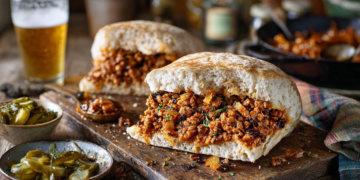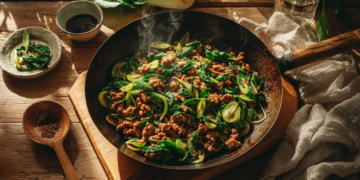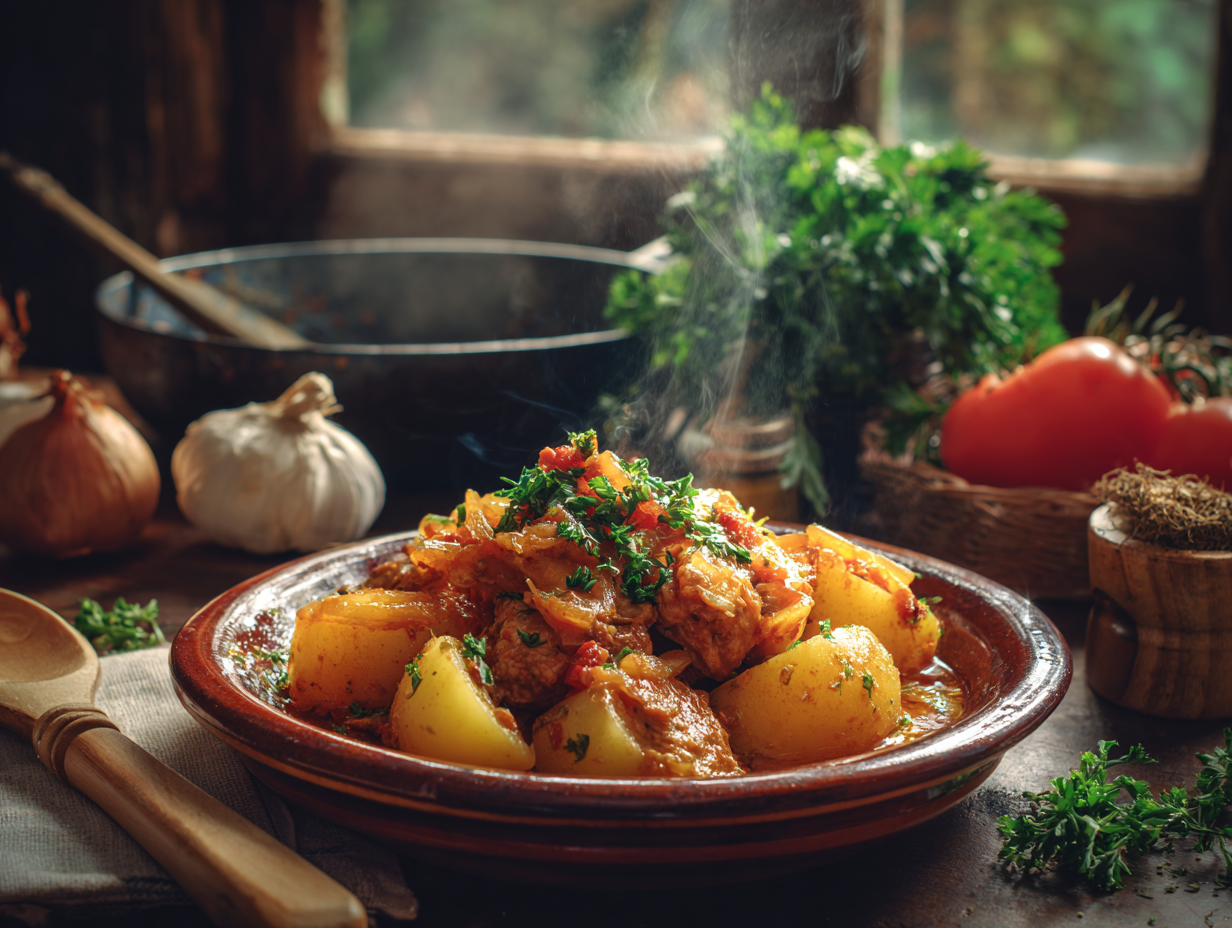
Pork Sajta is a Bolivian-style ground pork dish built around ají amarillo, cumin, and onion — cooked down into a thick, golden sauce and served over potatoes. It comes together in about 40 minutes and the ingredient list is short. If you want a weeknight dinner that tastes like you put in more effort than you did, this is a solid pick.
What makes this version work
Two things matter here. First, browning the ground pork properly before anything else goes in the pan. Ground pork releases moisture fast, so use high heat and resist stirring for the first couple of minutes — you want some of those edges to go golden and slightly crispy, not grey and steamed. That browning is where most of the savory depth comes from. Second, blooming the cumin and ají amarillo paste in the oil before adding liquid. Thirty seconds in hot fat wakes up both ingredients in a way that stirring them into broth later simply won’t. These two steps are quick, but skipping either one will flatten the whole dish.
If something goes sideways
- Sauce is watery and won’t thicken: Your heat is too low or the pan is too crowded. Turn it up to medium-high and let it bubble uncovered for a few extra minutes. Ground pork gives off a lot of liquid early on — it needs room and heat to cook off.
- Pork is cooked through but the sauce tastes thin and flat: You likely added the broth before the aromatics had time to soften and concentrate. Stir in a small pinch of salt and let the whole thing simmer uncovered for 5 more minutes. It will tighten up.
- Ají amarillo paste is nowhere to be found locally: A mix of two-thirds yellow bell pepper and one-third habanero (seeded) blended together gets you close enough. The fruitiness won’t be identical, but the dish will still work.
- Potatoes are falling apart: They were cut too small or boiled too long. For this dish, aim for chunks no smaller than 1.5 inches and check them at the 12-minute mark. They should hold their shape on the plate.
- Pork is still pink inside after the sauce looks done: Ground pork must reach 160°F (71°C) internally — never serve it pink. If the sauce is reducing too fast before the meat is cooked through, add a splash more broth and drop the heat slightly to give it more time.
Keeping and reheating
Store the pork sauce and the potatoes separately in airtight containers in the fridge — they’ll keep for up to 3 days. Stored together, the potatoes absorb the sauce and turn mushy. To reheat the pork, add a tablespoon of water or broth to the pan and warm it over medium heat, stirring occasionally, until it hits 165°F (74°C) throughout. The potatoes reheat well in a dry skillet over medium heat for a few minutes, or in the microwave. The pork sauce also freezes well for up to 2 months — freeze it without the potatoes, which don’t hold up in the freezer. Thaw overnight in the fridge before reheating. Skip the fresh parsley garnish when reheating leftovers — not worth the extra dish.
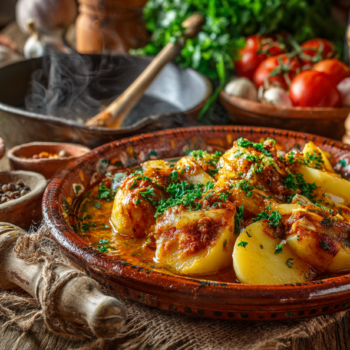
Minced Pork Sajta de Pollo Style

Equipment
Ingredients
 2 tablespoons vegetable oil - preferably sunflower or peanut oil for higher smoke point
 1 pound ground pork (minced pork) - preferably 85% lean for best texture
 1 large yellow onion - finely chopped
 2 cloves garlic - minced
- 1 tablespoon aji amarillo paste - adjust to taste; can be found in Latin markets or online
 1 teaspoon cumin - ground ; freshly ground for best aroma
 1 cup chicken stock (chicken broth or chicken bouillon) - low-sodium ; or pork stock if available
 2 medium Roma tomatoes - peeled and finely diced
- 4 large Yukon Gold potatoes - boiled whole and peeled
 2 tablespoons parsley - fresh ; chopped for garnish
Instructions
- Heat the vegetable oil in a large sauté pan over medium-high heat (about 375°F / 190°C) until shimmering.
- Add the minced pork and cook, stirring frequently, until browned and slightly crispy at the edges—about 10–12 minutes. Remove with a slotted spoon and set aside.
- In the same pan, reduce heat to medium (about 350°F / 175°C), then add chopped onions and cook until soft and golden, about 7–9 minutes.
- Stir in the garlic, cumin, and aji amarillo paste. Cook for 1–2 minutes, until fragrant. Add diced tomatoes and cook until the tomatoes soften and the sauce thickens, 5–7 minutes.
- Return the pork to the pan and stir in the broth. Reduce heat to a gentle simmer and cook for 15–20 minutes until the sauce reduces and clings to the meat.
- While meat is simmering, boil the potatoes in a medium saucepan until fork-tender (about 15–20 minutes). Drain, let cool slightly, peel, and slice into rounds just before serving.
- Plate with a bed of potato slices, topped generously with the pork sajta. Garnish with chopped parsley and serve immediately.
Notes
- If you can't find aji amarillo, substitute with a combination of fresh yellow bell peppers and a dash of habanero for heat.
- For a lighter version, lean ground turkey can replace minced pork.
- You can boil and peel the potatoes ahead of time and warm them up in a steam bath or microwave when plating.
Nutrition
Frequently asked questions
Can I use regular chili paste instead of ají amarillo?
You can, but the flavor will be noticeably different. Ají amarillo has a fruity, slightly floral heat that red chili pastes don’t replicate — substituting it gives you a spicier dish that tastes more generic. If you can’t find ají amarillo paste at a Latin grocery or online, the closest workaround is blending yellow bell pepper with a small amount of habanero.
How do I know when the ground pork is fully cooked?
Ground pork is safe to eat at 160°F (71°C) internal temperature — use an instant-read thermometer if you’re unsure. Visually, fully cooked ground pork will show no pink anywhere in the pan and the juices will run clear, but a thermometer is the only reliable check, especially for beginners.
Can I make this ahead for a dinner party?
Yes — the pork sauce actually tastes better the next day once the spices have had time to settle. Make the sauce up to 24 hours ahead and refrigerate it, then reheat it gently on the stovetop while you cook fresh potatoes. Boiling the potatoes fresh on the day keeps the texture right.
If you liked this one
- Bolivian Silpancho Beef Patties
- Peruvian Cilantro Pork Stew
- Andean Chicken Potato Locro
- Uruguayan Pork Cazuela Recipe