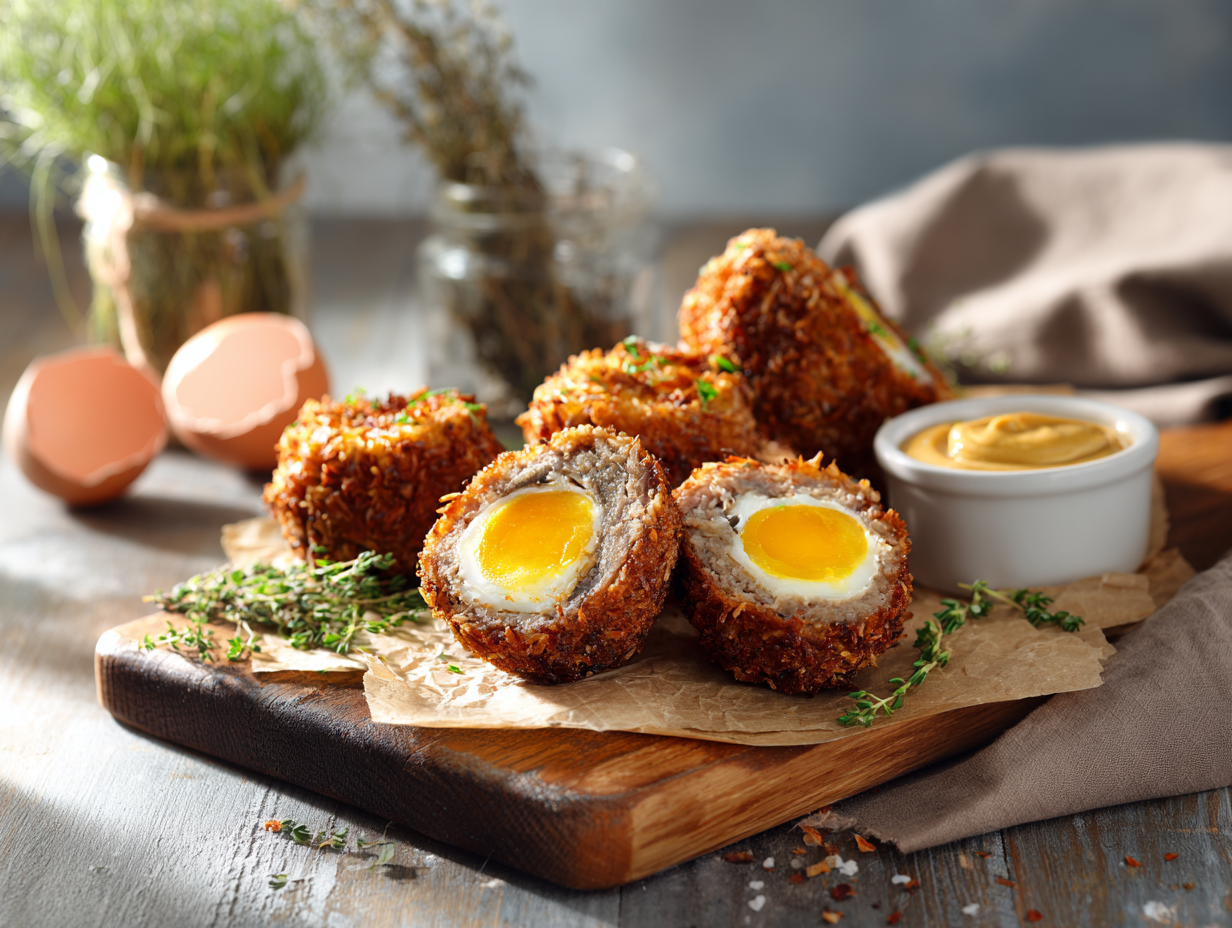
These are baked Scotch eggs — hard-boiled eggs wrapped in seasoned ground pork, coated in unsweetened coconut flakes, and finished under the broiler for a crisp exterior. The whole thing comes together in under an hour and delivers a genuinely filling, high-protein meal from four simple components. If you want something you can make ahead, eat cold, and feel satisfied after, this is it.
The technique that matters
Getting the pork layer to seal completely around each egg is the step that determines whether this works or falls apart in the oven. Press the meat into a thin, even patty — roughly a quarter-inch thick — before wrapping. Thin patches will split and expose the egg as the pork contracts during baking. Once wrapped, roll the ball firmly between your palms for 15–20 seconds; this compresses the seams and helps the meat bond to itself. The second technique is the broil finish. After 25 minutes of baking, the coconut flakes will be set but pale. Broiling on high and turning every 1–2 minutes is what actually crisps them — don’t skip it or rush it. Watch closely; coconut flakes go from golden to burnt faster than breadcrumbs would.
Shopping notes
- Coconut flakes vs. shredded coconut: Use large, unsweetened coconut flakes — not finely shredded coconut. The flakes give you actual crunch and visible texture. Shredded coconut packs down and turns chewy instead of crispy.
- Apple pie spice: If you don’t have it, mix a small pinch each of cinnamon, nutmeg, and allspice. The quantity in this recipe is small enough that any close blend works fine.
- Ground pork fat content: Standard ground pork (around 80/20) works well here. Leaner blends can make the meat layer dry and prone to cracking — skip the extra-lean options.
Common problems and fixes
- Coconut flakes fall off during baking: The beaten egg wash needs to coat the entire pork surface before you roll in the flakes. Any dry spots won’t hold. Press the flakes in gently with your palm rather than just rolling — this anchors them.
- Pork layer is undercooked in the center: Ground pork must reach 160°F (71°C) internally. If the eggs are large or the pork layer is uneven, add 5 minutes of baking time before broiling and check with an instant-read thermometer.
- Egg yolk is fully hard and chalky: This comes from over-boiling the eggs at the start. For a just-set yolk, boil for 9–10 minutes, then transfer immediately to an ice bath for 5 minutes before peeling.
- Coconut burns before pork is done: If the flakes are darkening too fast under the broiler, move the rack down one position. The pork needs to be cooked through — don’t pull the eggs early just because the coating looks done.
- Meat mixture sticks to hands and won’t form cleanly: Wet your hands lightly with cold water before shaping each ball. It makes a real difference and takes two seconds.
Storage and reheating
Cooked Scotch eggs keep well in the fridge for up to 4 days in an airtight container — they’re genuinely good cold, which makes them useful for packed lunches or grab-and-go breakfasts. To reheat, use an oven or air fryer at 350°F (175°C) for 8–10 minutes; this brings back some crispness in the coconut coating. Microwaving works in a pinch but softens the exterior noticeably. Skip the garnish — not worth the extra dish. For freezing, wrap each egg individually and freeze for up to 2 months; thaw overnight in the fridge before reheating.
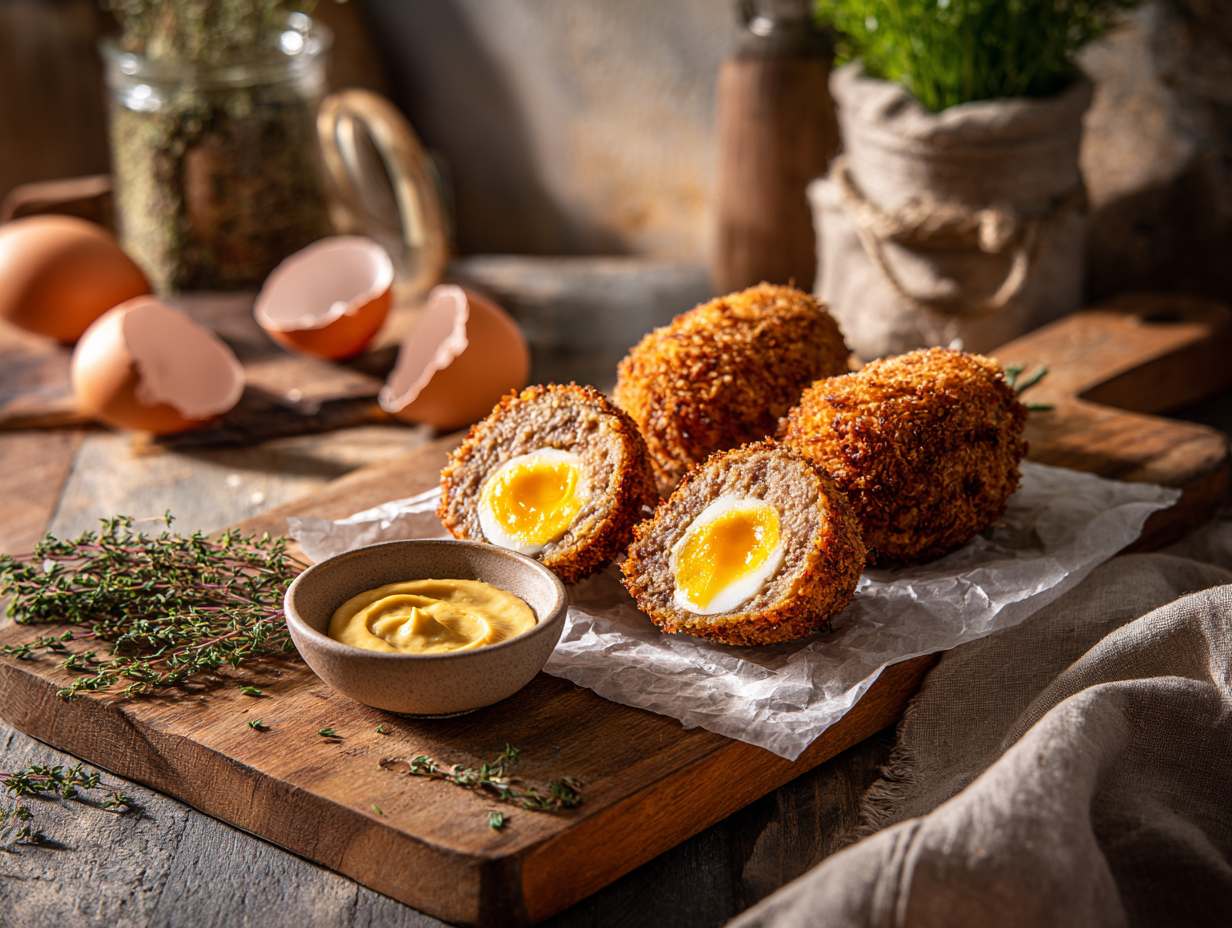
Crispy Paleo Scotch Eggs

Ingredients
 4 large eggs - hard-boiled and peeled
 1 pound ground pork (minced pork)
 1 teaspoon Kosher salt
 ½ teaspoon ground black pepper - cracked
- ¼ teaspoon tarragon - dried
 ¼ teaspoon dried thyme
 1 teaspoon dried parsley
 ½ tablespoon dried chives
- ¼ teaspoon apple pie spice
 1 clove garlic - minced or pressed
- 1 medium egg - beaten
- 1 cup coconut flakes - unsweetened
Instructions
- Preheat oven to 375 degrees Fahrenheit.
- In a small/medium-sized bowl, mix the salt, pepper, tarragon, thyme, parsley, chives, pie spice, and garlic into the meat. You can use a fork or your fingers. Mix until well distributed.
- Form meat into 4 balls, each weighing a quarter pound. Press into thin patties.
- Wrap each patty around an egg, careful not to leave any of the eggs exposed. Roll around in your hands to help with coverage.
- Place the coconut flakes in a small bowl. Beat raw egg in a separate bowl.
- Roll a pork covered egg in the bowl with the beaten egg and promptly roll in a bowl of coconut flakes until well coated. Do this with each egg and place it on a baking sheet lined with parchment paper.
- Bake eggs for 25 minutes on the middle rack.
- To give the “breading” a golden colour, turn the oven to the high broiler setting. Turn eggs every 1 to 2 minutes until each side is nice and golden brown. You may need to remove the parchment paper if the edges of the paper start getting too dark.
- Serve with some spicy mustard or aioli.
Nutrition
Common questions
Can I use a different ground meat instead of pork?
Ground turkey or chicken will work, but you must cook them to 165°F (74°C) internally — use a thermometer to confirm. The leaner fat content means the meat layer can dry out more easily, so add a teaspoon of olive oil to the seasoning mix to help with moisture.
Do the eggs have to be fully hard-boiled, or can I use a runny yolk?
A fully set yolk is the safer and more practical choice here since the eggs go back into a 375°F oven for 25 minutes plus broiling. A soft-boiled center will continue cooking during that time and will likely be mostly set by the time the pork is done anyway.
Can I make these ahead and reheat them for a meal?
Yes — these are one of the better make-ahead high-protein options in this format. Cook them fully, refrigerate for up to 4 days, and reheat in the oven at 350°F for about 10 minutes. Pair with a simple green salad or sliced avocado to round out the meal.
More mince recipes to try
- Sweet Savory Scotch Eggs
- Cumberland Sausage Mince Pie
- Savory Pork Apple Pasties
- Chicken Macadamia Sausage Rolls