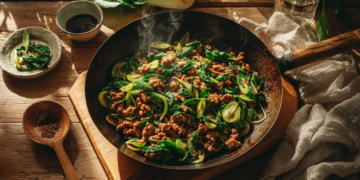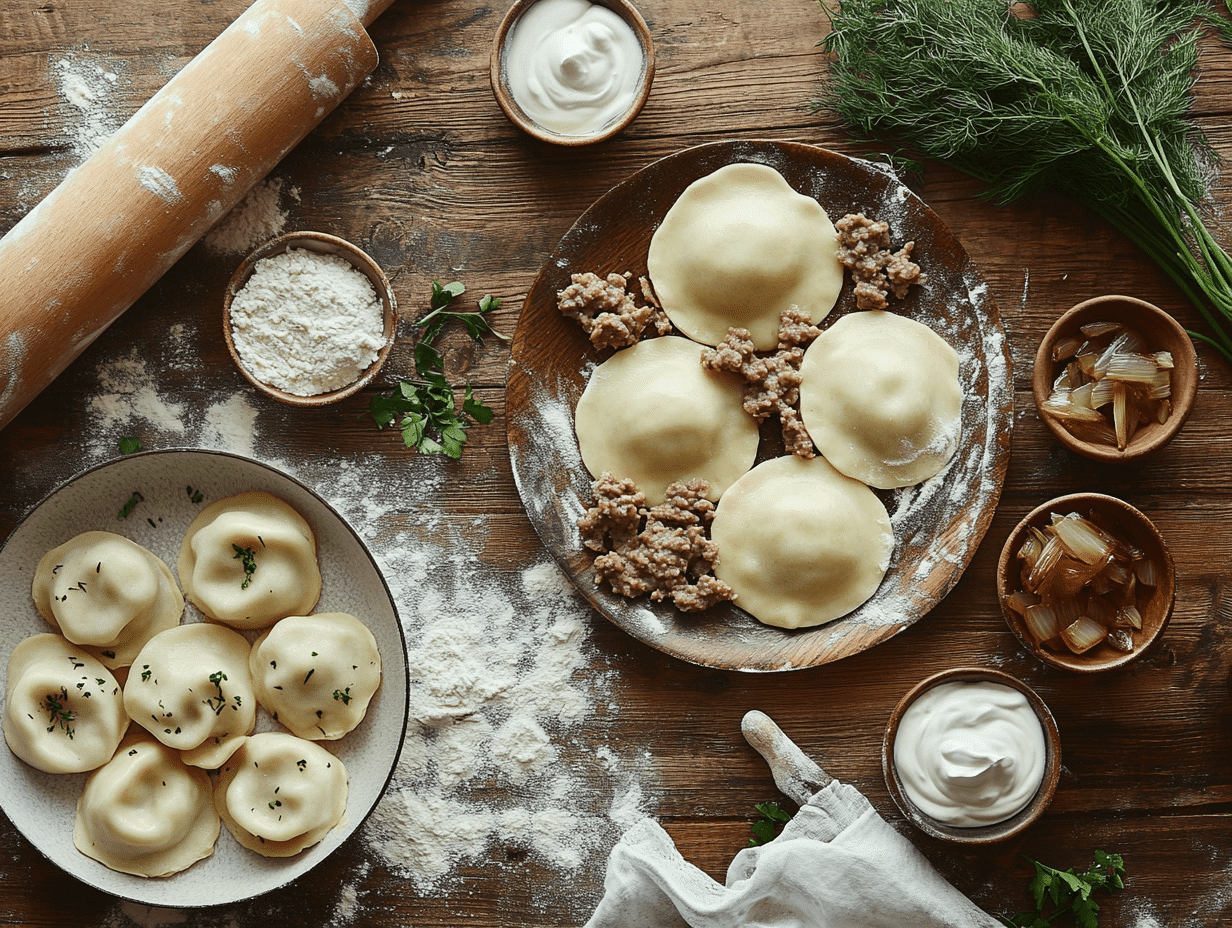
Pork and potato pierogi are Polish dumplings made from a simple egg dough, filled with seasoned ground pork and mashed potato, then boiled and finished in butter. Each batch makes enough to stock the fridge or freezer for several quick meals during the week. The hands-on time is real — about an hour — but the payoff per serving is high.
Ingredient notes
- Ground pork: Standard grocery-store ground pork works fine here. Higher-fat blends (around 20% fat) give a juicier filling than lean pork, which can turn dry and crumbly once mixed with potato.
- All-purpose flour: This is plain flour in Australia and the UK. Bread flour is too tough; cake flour is too soft. Stick with all-purpose.
- Warm water for the dough: It should feel comfortable on your wrist — not hot. Hot water tightens the gluten too fast and makes the dough hard to roll thin.
- Mashed potatoes: Use potatoes mashed without milk or cream. Wet mash makes the filling loose and the pierogi will leak during boiling. Leftover plain mashed potato from the night before works perfectly.
Why this recipe works
Two things drive the result. First, the 30-minute dough rest is not optional — it lets the gluten relax so you can roll the dough thin enough (1/8 inch) without it springing back and tearing at the seams. Thick dough means gummy pierogi that don’t seal cleanly. Second, cooking in batches in gently boiling — not aggressively rolling — water keeps the dumplings intact. A hard boil tosses them around and blows the seams open before the dough sets. Once they float and you give them another minute, they’re done; the pan-fry in butter is just for color and a little crispness on the outside.
Troubleshooting
- Pierogi splitting open in the water: The seal wasn’t tight enough, or the filling was overfilled. Press the edges firmly with your fingers first, then crimp with a fork. One level teaspoon of filling per circle is the ceiling — resist the urge to add more.
- Dough tearing when you fold it: The dough dried out while you were cutting circles. Keep unworked dough under the damp cloth and work quickly once circles are cut.
- Filling tastes bland after boiling: Boiling dilutes seasoning slightly. Season the filling a little more aggressively than you think you need to before assembly — the potato absorbs salt fast, so taste again right before filling.
- Pierogi sticking together after boiling: Toss them with a small drizzle of oil as soon as they come out of the water if you’re not pan-frying immediately. This is especially important when making a large batch to store.
- Pan-fried pierogi going soggy instead of golden: The pan wasn’t hot enough before the butter went in, or the pan was overcrowded. Fry in a single layer with space between each one, and make sure the butter is foaming before the pierogi go in.
Keeping and reheating
Cooked pierogi keep in an airtight container in the fridge for up to 4 days — skip the garnish and store them plain, not worth the extra dish. To freeze, lay boiled (but not yet pan-fried) pierogi in a single layer on a lined baking sheet, freeze until solid (about 2 hours), then transfer to a zip-lock bag; they keep for up to 3 months. Reheat from the fridge by pan-frying straight from cold in butter over medium heat for 3–4 minutes per side. From frozen, either thaw overnight in the fridge and pan-fry the same way, or drop them straight into simmering salted water for 5–6 minutes until heated through, then finish in the pan. Do not microwave — the dough turns rubbery and the filling steams unevenly.
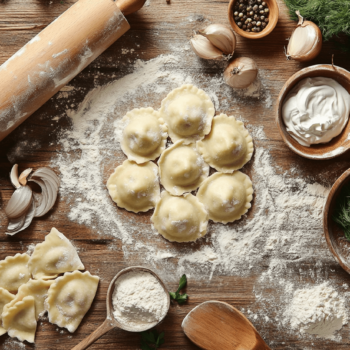
Pork Mince and Potato Pierogi

Ingredients
Dough Ingredients
 2 cups all purpose flour (plain flour Australia and UK) - plus extra for dusting
 1 pinch salt
 1 medium egg - beaten
 ½ cup water - warm
Filling Ingredients
 1 tablespoon olive oil - for frying
 1 cup ground pork (minced pork) - preferably organic
 1 medium onion - finely chopped
 1 cup potatoes - boiled and mashed
- ½ teaspoon salt - to taste
 ¼ teaspoon ground black pepper - freshly ground
 1 tablespoon butter - for browning pierogi
Instructions
- To make the dough, combine the flour and salt in a large bowl. Create a well in the center and add the beaten egg and warm water. Mix until a rough dough forms. Knead on a floured surface for about 10 minutes until the dough is smooth and elastic. Cover with a damp cloth and let rest for 30 minutes.
- For the filling, heat oil in a skillet over medium heat. Add the pork mince and onion and cook until the pork is browned and the onion is translucent, about 5–7 minutes.
- In a bowl, combine cooked mince, mashed potatoes, salt, and pepper. Mix well to create the filling.
- Roll out the dough on a lightly floured surface to 1/8-inch (3mm) thickness. Use a round cutter or glass to cut out circles about 3 inches (7.5 cm) in diameter.
- Place a teaspoon of filling in the center of each dough circle. Fold over to form a half-moon shape, press the edges firmly to seal, and crimp with a fork.
- Bring a large pot of salted water to a gentle boil. Cook pierogi in batches for 3–4 minutes, or until they float to the surface. Remove with a slotted spoon and drain.
- Melt butter in a skillet over medium heat. Add boiled pierogi and cook until they are golden and crispy on both sides, about 4 minutes.
Notes
Nutrition
FAQ
Can I make the dough ahead of time?
Yes — wrap it tightly in plastic wrap and refrigerate for up to 24 hours. Let it sit at room temperature for 15 minutes before rolling, otherwise it will be stiff and hard to work with.
Is the pork fully cooked inside the pierogi after boiling?
Yes, provided the filling was fully cooked before assembly. Ground pork must reach 160°F (71°C) internally — cook the pork and onion mixture through completely in the skillet before mixing it with the potato, so boiling is just about setting the dough.
Can I double the batch and freeze half?
Absolutely, and it’s the most efficient way to make these. Double the dough and filling, assemble all the pierogi, boil them all, then freeze half in a single layer before pan-frying — they freeze better before the butter step.
What can I use instead of a round cutter?
A wide-mouth drinking glass (about 3 inches across) works just as well. Press firmly and twist slightly to cut through cleanly; a dull edge drags the dough and makes sealing harder.
My dough circles keep shrinking when I cut them — what’s wrong?
The dough needs more rest time. If it’s snapping back immediately after cutting, cover everything with the damp cloth and wait another 10 minutes before trying again. Rushing this step wastes dough and makes assembly frustrating.
Try these next
- Crispy Pork Dumpling Delight
- Savory Beef Kolachki Pastries
- Spiced Lamb Pumpkin Dumplings
- Puerto Rican Pork Pasteles