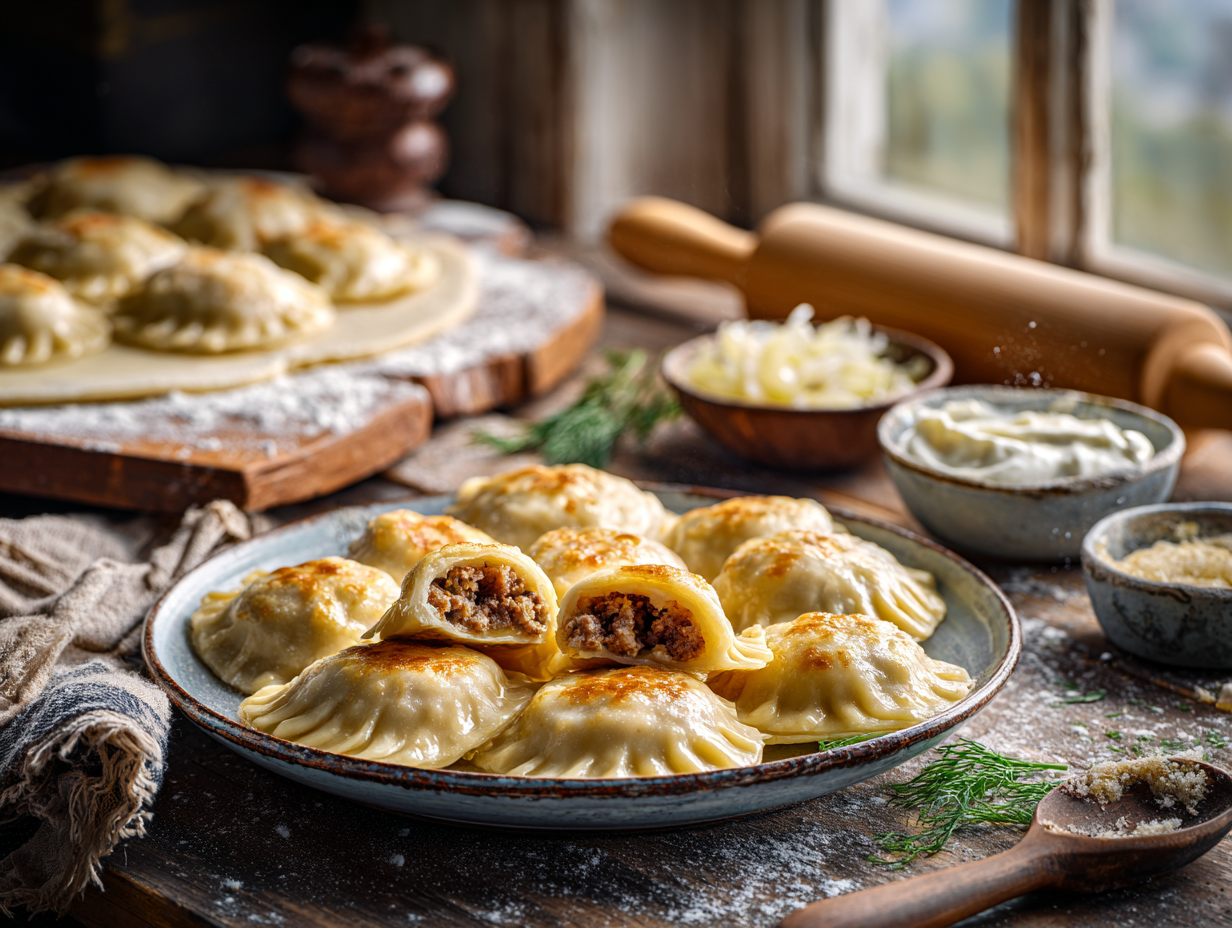
Pierogi are Polish boiled dumplings — half-moon pockets of simple egg dough stuffed with a savory filling. This version uses ground beef cooked down with mushrooms and onions, which makes a juicy, cohesive filling that holds together well inside the dough. They take real time to assemble, but one big batch gives you meals for several days with almost no extra effort.
Why this recipe works
Two things make this recipe reliable. First, the egg in the dough gives it enough stretch to roll thin without tearing — thin dough means tender pierogi, not gummy ones. Second, the filling is cooked and optionally blended before it ever goes near the dough. A dry, well-cooked filling won’t steam from the inside and split the seam during boiling, and a smoother texture is easier to portion consistently. Those two steps — a properly hydrated dough and a fully cooked, not-too-wet filling — are what separate pierogi that hold together from ones that fall apart in the pot.
Shopping notes
- Ground beef: An 80/20 blend works well here. Leaner beef can make the filling dry once cooked down with the mushrooms and onions.
- Mushrooms: Standard white or cremini mushrooms both work. Dried porcini, rehydrated and chopped, add more depth if you have them — use the soaking liquid in a soup rather than the filling, which needs to stay dry.
- Flour: All-purpose is correct. Bread flour makes the dough too tough to roll thin.
Mistakes to avoid
- Overfilling each dumpling: More filling sounds better but it prevents a clean seal. A level teaspoon to a teaspoon and a half per circle is enough — the dough needs a clear border to pinch.
- Skipping the rest on the dough: Dough that hasn’t rested for at least 20 minutes fights back when you roll it and tears at the edges. Cover it and leave it alone.
- Crowding the pot: Boil in batches of 8–10 at most. Too many at once drops the water temperature, and they stick together before they float.
- Not drying the pierogi before pan-frying: If you go straight from the boiling water to a hot pan without patting them dry, they steam instead of crisping. A minute on a clean towel makes a real difference.
- Warm filling going into the dough: Hot filling softens the dough and makes it sticky and hard to handle. Cool the filling completely — refrigerating it for 30 minutes is faster than waiting at room temperature.
Make-ahead notes
The filling can be made up to 3 days ahead and kept covered in the fridge, which makes assembly much faster on cooking day. Assembled, uncooked pierogi freeze well: lay them flat on a parchment-lined tray, freeze until solid (about 2 hours), then transfer to a zip bag — they’ll keep for up to 3 months. Cook them straight from frozen in boiling salted water; add 2–3 extra minutes to the cook time. Already-boiled pierogi keep in the fridge for 4 days in an airtight container. Reheat them in a lightly buttered pan over medium heat rather than microwaving — skip the microwave reheating, it turns the dough rubbery and not worth the shortcut.
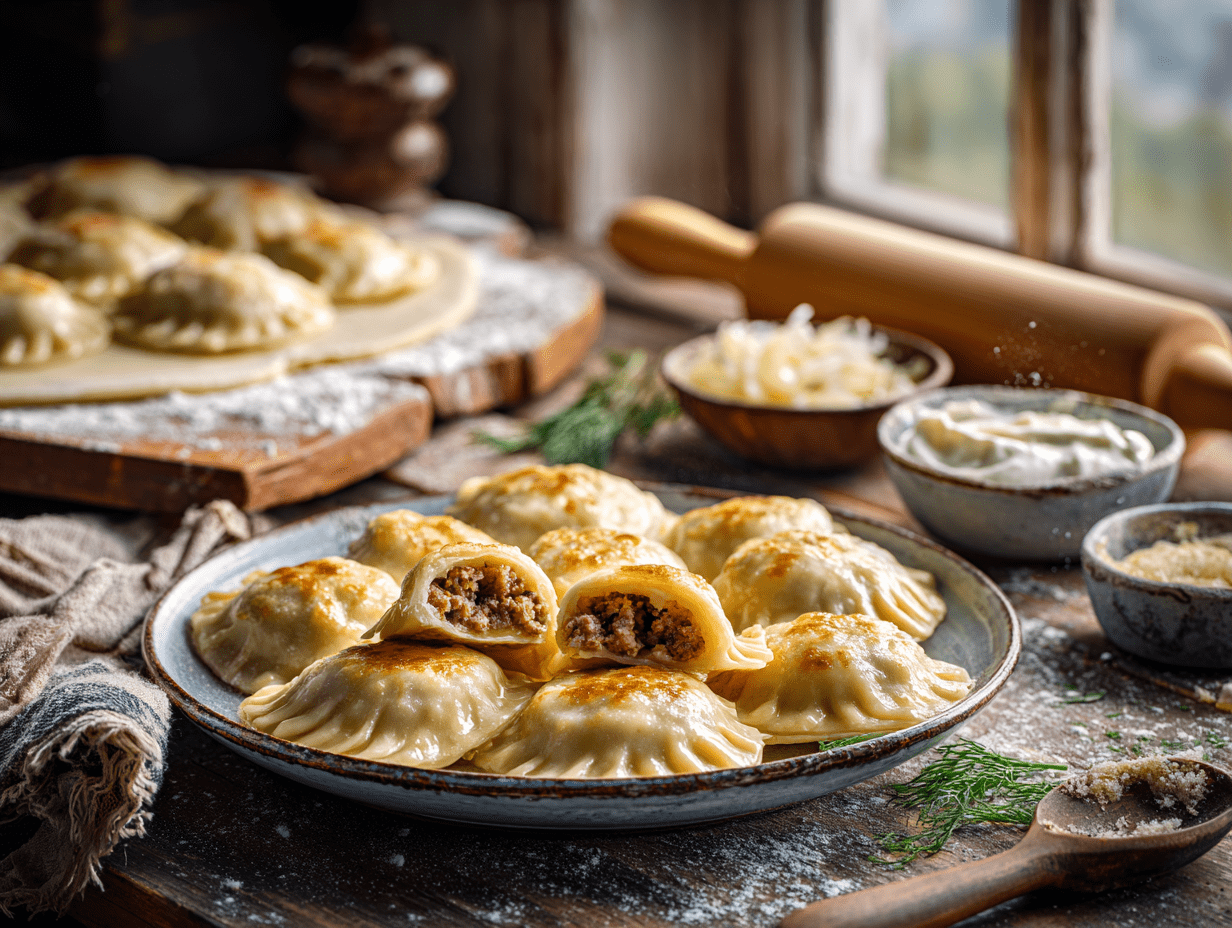
Juicy Pierogi Recipe

Ingredients
Dough Ingredients
 500 grams flour
 1 cup water - lukewarm
 1 tablespoon salt
 1 medium egg
Filling Ingredients
 800 grams ground beef (minced beef)
 250 grams mushrooms - chopped
 1 medium yellow onion - chopped
 1 tablespoon butter
- 1 dash salt
 1 dash ground black pepper
Instructions
- Make the dough by mixing flour, water and egg, then roll it flat and cut into circles using a cup or a tea glass.
- In the meantime, melt butter in a frying pan; add seasoned beef, onions and mushrooms and cook until soft. I usually use a blender to make the filling more consistent. Then place the teaspoon filling in the middle of the dough circle and fold it over to make a semi-circle shape. Press together the edges so that the feeling doesn’t come out during cooking.
- Place them in boiling water and boil until they float (around 5 minutes); after you drain them, put them on your plate and enjoy.
Nutrition
Frequently asked questions
Can I use a different ground meat instead of beef?
Yes — ground pork works well and is traditional in some Polish households. Ground turkey or chicken can also be used, but cook them to an internal temperature of 165°F (74°C) and expect a slightly drier filling; add an extra knob of butter when cooking the onions to compensate.
How do I know when the pierogi are properly sealed and won’t open in the pot?
Press the edges firmly with your fingers first, then crimp with a fork or pinch in small overlapping folds. Run a damp finger along the dough edge before sealing if the dough has dried out — dry dough won’t bond.
My dough keeps shrinking back when I roll it. What’s wrong?
The dough needs more rest time. Wrap it and leave it at room temperature for at least 20–30 minutes before rolling. Gluten tightens during mixing and needs time to relax before it will hold a rolled shape.
Can I make the dough the night before?
Yes. Wrap it tightly in plastic wrap and refrigerate overnight. Let it sit at room temperature for 15–20 minutes before rolling so it softens enough to work with easily.
How many pierogi does one batch realistically make, and is it worth doubling?
A standard batch yields roughly 20–25 pierogi depending on how thick you roll the dough and how large you cut the circles. Doubling is absolutely worth it — the active work is in the assembly, and a double batch freezes just as easily as a single one.
The filling seems wet after cooking. Will it make the dough soggy?
A wet filling is the main cause of torn or soggy pierogi. Cook the beef and mushroom mixture until any liquid has fully evaporated — you should see the pan go dry before you take it off the heat. If it still looks wet after cooling, drain it briefly through a fine sieve.
Try these next
- Savory Beef Kolachki Pastries
- Crispy Pork Dumpling Delight
- Spiced Lamb Pumpkin Dumplings
- Savory Beef Carrot Turnovers