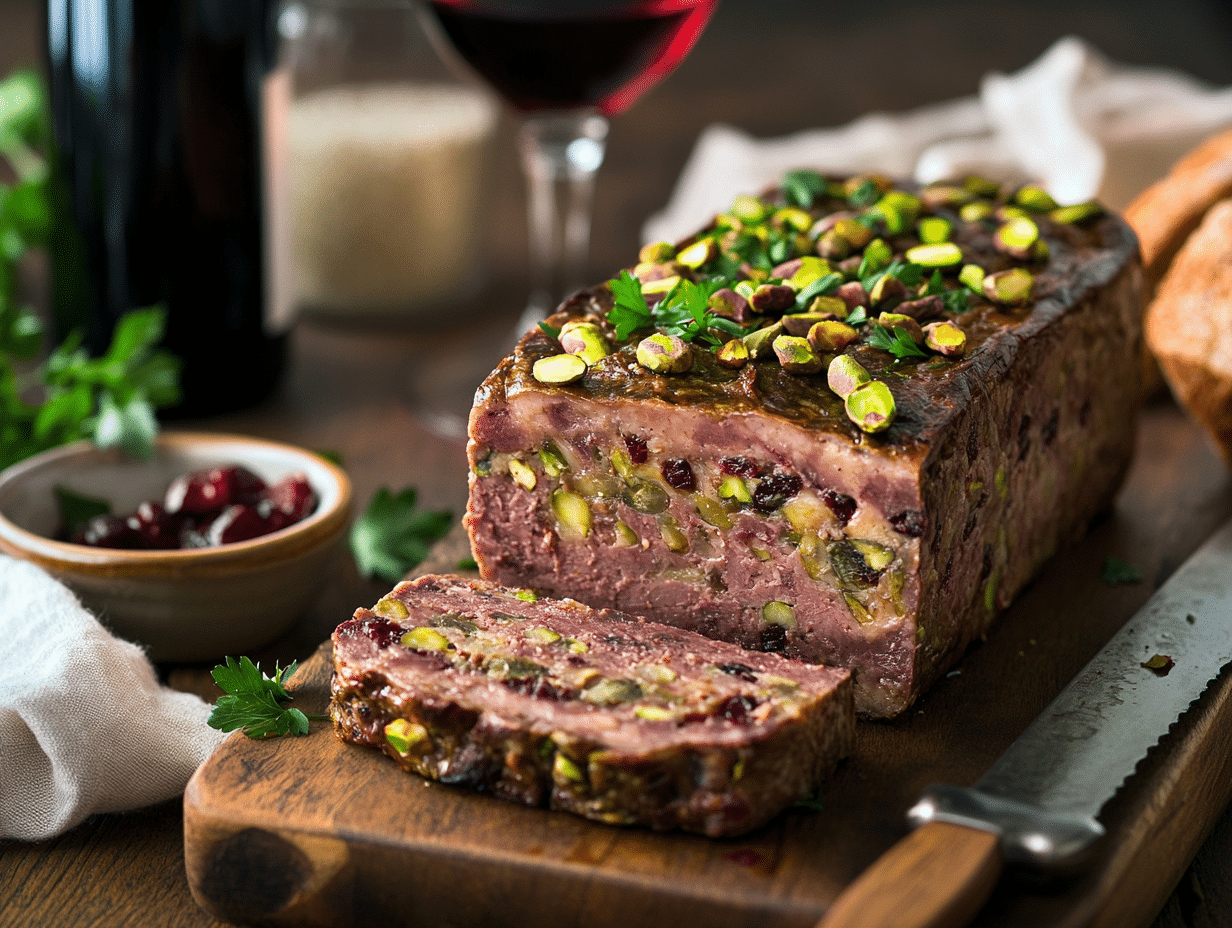
This terrine is a pressed, sliceable loaf of ground pork, chopped duck, and duck liver, wrapped in prosciutto and baked low and slow in a water bath. It takes real time — nearly three hours of cooking plus two days of resting — but almost all of that is hands-off. The honest reason to make it: you end up with something that looks and tastes genuinely impressive, and the active work is maybe 40 minutes.
Why this recipe works
Two things carry this recipe. First, the milk-soaked bread: it gets blitzed into the liver mixture and acts as a binder, keeping the terrine from turning crumbly when you slice it cold. Without it, ground meat loaves like this can fall apart. Second, the bain-marie — sitting the tin in a roasting pan of water in the oven — keeps the temperature around the terrine gentle and even. Ground pork needs to hit 160°F (71°C) all the way through, and a direct blast of oven heat would cook the outside hard before the center is safe. The water bath solves both problems at once: safe internal temperature, no dry edges.
If something goes sideways
- The center is still pink after the stated cook time: Cover it back up and return it to the water bath. Check the internal temperature with a meat thermometer — you need 160°F (71°C) at the thickest point. Oven temperatures vary; add 15-minute increments until it gets there.
- The prosciutto tears when you’re lining the tin: Overlap the slices slightly as you lay them in. Thin prosciutto is fragile; work cold and handle it as little as possible. Tears in the lining won’t ruin the terrine — they just affect the look of the outside slice.
- The mixture feels too wet to press into the tin: That’s normal. Ground pork shoulder has a high fat content and the mixture will be soft and sticky. Wet your hands before pressing it in — it’s much easier than trying to work with dry hands.
- The terrine has a lot of liquid in the tin after baking: Pour it off carefully before pressing. Some fat and juice always renders out during cooking. This is expected, not a sign something went wrong.
- Slices crumble when you cut them: The terrine probably hasn’t chilled long enough. It needs at least 24 hours in the fridge, and 48 hours is better. A cold terrine slices cleanly; a warm one falls apart.
Shopping notes
- Duck breasts: Look in the freezer section of larger supermarkets or any store with a decent poultry selection. Two breasts is roughly 400–500g total. Fresh or thawed both work fine.
- Duck liver: Specialty butchers or Asian grocery stores are your best bet. If you genuinely can’t find it, chicken liver is a workable substitute — the flavor will be milder but the texture will be similar. Skip the garnish of extra prosciutto on top if you’re short — not worth the extra cost for something that gets tucked in anyway.
- Ground pork shoulder: Ask the butcher specifically for shoulder, not loin. Shoulder has more fat, which keeps the terrine moist. Lean ground pork will give you a drier result.
- Dried cranberries: Standard supermarket baking aisle. Don’t swap for fresh — they release too much moisture.
Keeping and reheating
Once baked and cooled, the terrine keeps in the fridge for up to 5 days, wrapped tightly in foil or cling film. Keep it in the tin if you haven’t sliced it yet — it holds its shape better that way. For longer storage, freeze individual slices wrapped in foil and then placed in a zip-lock bag; they’ll keep for up to 2 months. Thaw overnight in the fridge. This dish is meant to be eaten cold or at room temperature, so reheating isn’t necessary and isn’t recommended — warming it tends to make the fat greasy and the texture soft.
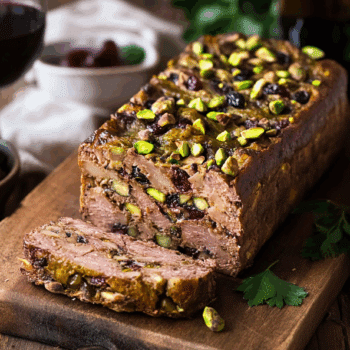
Duck and Pork Terrine with Pistachios & Cranberries

Equipment
Ingredients
- 2 pieces duck breasts - approximately 400g / 14oz total, skin removed and reserved
- 7 oz prosciutto - thinly sliced, about 200g
 2.2 lb ground pork - shoulder, about 1kg
- 2 thick slices white bread - approximately 80g / 3oz total, crusts removed
- ½ cup whole milk - scant 100ml
 3 small green onions - roughly chopped (scallions or green shallots)
 1 clove garlic - roughly chopped, for the liver mixture
- 7 oz duck liver - roughly chopped, about 200g
 6 whole black peppercorns
 12 whole coriander seeds - ½ teaspoon
- 2 cloves garlic - for the spice grind
 ⅛ teaspoon ground cinnamon
- 2 tablespoons brandy - 30ml
 2 medium eggs - beaten
- 1 oz pistachio nuts - shelled, about 25g
 2 oz cranberries - dried ; about 50g
 2 teaspoons salt - fine sea salt
- 4 tablespoons reserved duck fat - from roasting the duck breasts in step 1
Instructions
- Heat your oven to 160°C / 320°F (140°C fan-forced). Put your duck breasts and skins in a baking tray and cook for approximately 20 minutes. The skins will shrivel up during the cooking process and should be thrown out after the baking (they are placed in the pan to help add a bit of fat to the cooking process). Pour the excess fat into a glass jar to cool and chop the duck into small pieces.2 pieces duck breasts
- Keep half of the prosciutto aside and cut the rest into small pieces.7 oz prosciutto
- Put the chopped prosciutto, ground pork, and duck pieces in a food processor and blitz until coarse in texture. Set aside in a large mixing bowl.7 oz prosciutto, 2.2 lb ground pork, 2 pieces duck breasts
- Soak the bread in milk for about 5 minutes, squeeze out the excess milk and process with the green onions, garlic and trimmed livers. Then add to the pork and duck mixture.2 thick slices white bread, ½ cup whole milk, 3 small green onions, 1 clove garlic, 7 oz duck liver
- In a mortar and pestle, grind the black peppercorns, coriander seeds, and garlic cloves to a coarse paste, then stir in the cinnamon. Add 4 tablespoons of the reserved duck fat from step 1, the brandy, beaten eggs, and 2 teaspoons of fine sea salt to the pork and duck mixture along with the spice paste. Mix thoroughly with your hands until evenly combined.6 whole black peppercorns, 12 whole coriander seeds, 2 cloves garlic, ⅛ teaspoon ground cinnamon, 4 tablespoons reserved duck fat, 2 tablespoons brandy, 2 medium eggs, 2 teaspoons salt
- Line a 1.5lb (900g) loaf tin with the reserved prosciutto slices, leaving enough overhang to fold over the top. Press half the meat mixture firmly into the tin. Spread the pistachios and cranberries evenly over the surface, then press the remaining mixture on top. Fold the overhanging prosciutto over to seal the terrine completely, tucking the ends in neatly.7 oz prosciutto, 1 oz pistachio nuts, 2 oz cranberries
- Cover your terrine in foil and put the tin into a roasting tin. Make a water bath by pouring boiling water into the roasting tin (around the loaf tin) — the water should come about halfway up the sides. Bake for 2 hours, then remove the foil and bake for a further 15–25 minutes until the top is golden brown and the internal temperature registers 160°F / 71°C on an instant-read thermometer.
- Remove the terrine from the water bath and allow it to cool to room temperature on a wire rack (approximately 1–2 hours). Once cool, cover tightly with foil or cling film and refrigerate for at least 48 hours to allow the flavours to develop and the terrine to set firmly.
- To serve, run a thin knife around the edges of the tin, then invert onto a board and tap firmly to unmould. Cut into thick slices (about 2cm / ¾ inch) and serve at room temperature with fresh parsley, crusty bread, and cornichons.
Notes
Nutrition
FAQ
Can I make this without a food processor?
Yes, but it takes more effort. Chop the duck, pork, and liver as finely as you can with a sharp knife, then mix everything by hand in a large bowl. The texture will be slightly coarser than a processor version, which some people actually prefer — it gives the terrine a more rustic, chunky feel rather than a smooth one.
How do I know when the terrine is actually cooked through?
Use a meat thermometer pushed into the center of the loaf — it should read 160°F (71°C). If you don’t have a thermometer, insert a thin skewer into the middle and hold it there for five seconds; if it comes out hot to the touch, the center is cooked. Don’t rely on color alone with a mixed meat terrine like this.
Do I really need to wait two days before eating it?
You can eat it after 24 hours, but 48 hours makes a real difference to both the flavor and the texture. The fat firms up as it cools, which is what lets you cut clean slices — and the spices and brandy mellow and come together in a way they simply don’t right out of the oven.
More mince recipes to try
- Cumberland Sausage Mince Pie
- Sweet Savory Scotch Eggs
- Wild Venison Mushroom Pies
- Gourmet Lamb Sausage Rolls