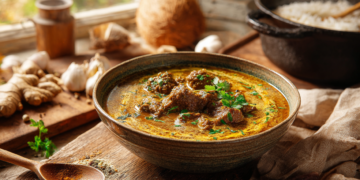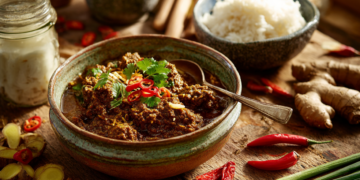
The Aromatic Lamb and Quince Tagine is a celebration of North African cuisine, deeply rooted in the culinary traditions of Morocco. Rich in history and layered with spices, this stew is more than just a warming dish—it’s an experience, a sensory journey, and a homage to a timeless culture known for its bold flavors and unique combinations. With complex aromas, hearty ingredients, and a perfect sweet-and-savory harmony, this tagine beautifully showcases how food can transport us across continents and centuries.
Moroccan cuisine is a historical tapestry, woven through centuries of trade, conquest, and cultural exchange. Influences from Berber, Arab, Andalusian, and even French cuisines contribute to its distinctiveness. Morocco sits at a historical crossroads—where Europe meets Africa and the Middle East meets the Atlantic. The bustling spice markets of Marrakesh and Fez are filled with heady fragrances—cinnamon, cumin, turmeric, ginger, saffron—all of which are used generously in this dish. These spices are more than just flavor agents; they tell stories of camel caravans that once crossed the Sahara, laden with exotic goods from the East.
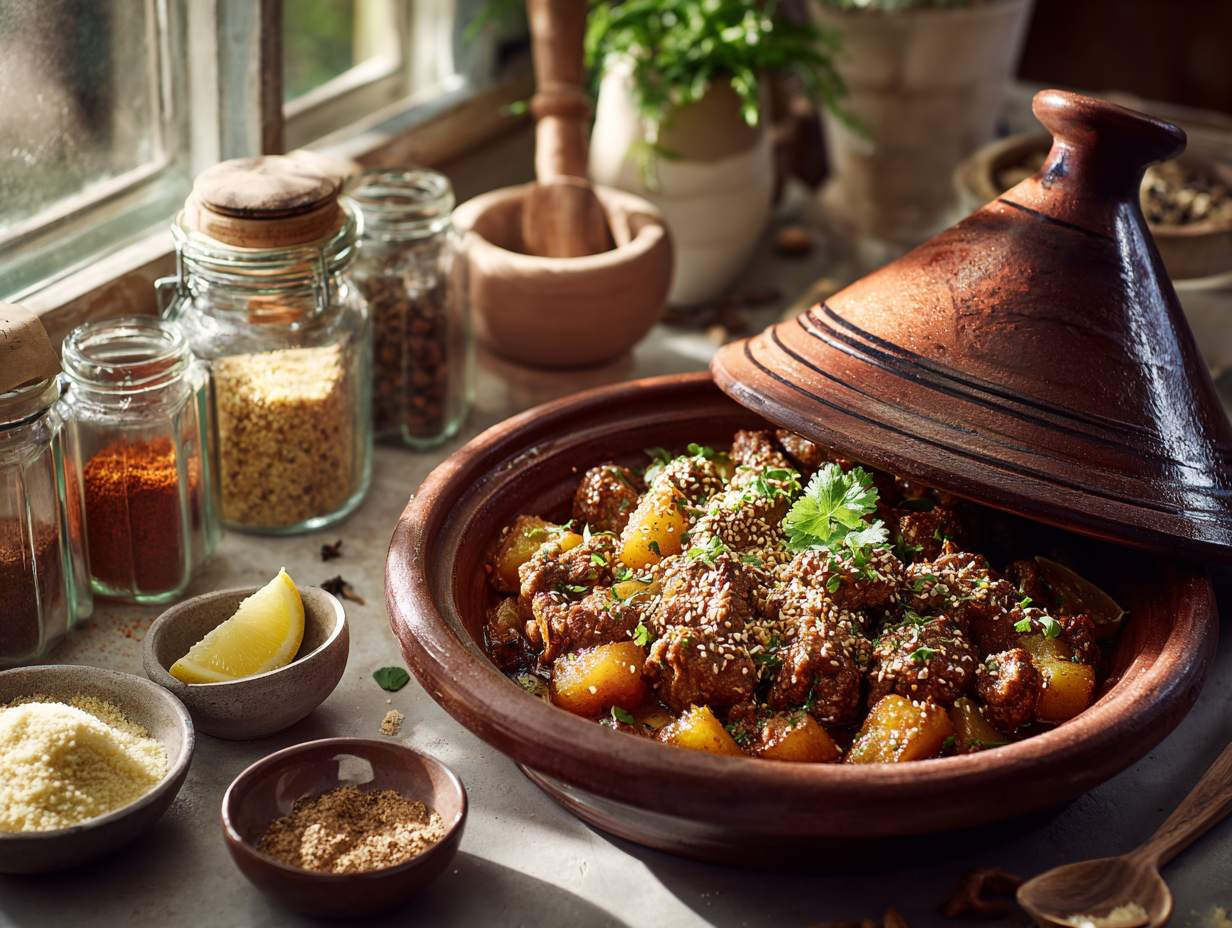
The term “tagine” refers to both the dish and the earthenware pot with a conical lid in which it is traditionally cooked. The unique shape of the tagine pot allows steam to rise, condense, and drip back into the stew during slow cooking, keeping all the flavors rich and moist. Not everyone has access to a traditional tagine pot, so a cast-iron casserole or Dutch oven serves as a suitable substitute, as recommended in this recipe.
The key protein in this dish—ground lamb—delivers a deep, earthy flavor that is characteristic of Moroccan stews. Ground lamb is not only budget-friendly and accessible, but it also absorbs the spices more quickly compared to cuts of meat, making it ideal for a dish full of aromatic density. Lamb has long been a staple in North African cuisine, often reserved for special occasions and celebratory meals. Its robust flavor pairs beautifully with strong spices and sweet elements, giving the dish its rich and comforting tone.
At the heart of this particular tagine lies the unlikely but enormously rewarding partnership of lamb and quince. Quince, a hard, yellow fruit that looks like a cross between an apple and a pear, has long been cherished in Middle Eastern and Mediterranean cooking. Native to the Caucasus and widely cultivated throughout North Africa, it has a tart flavor when raw but transforms into a floral, softly sweet ingredient when cooked. The use of quince in this recipe highlights the traditional Moroccan technique of marrying sweet and savory flavors in one cohesive dish.
The process begins with browning the lamb for depth and caramelization, followed by sweating onions until they soften and release their sweetness. From there, you start building the complex flavor profile: garlic, ginger, cinnamon, coriander, and cumin make up the bulk of the earthy spice base. A tablespoon of harissa paste adds a gentle kick and further complexity, introducing paprika heat and chili depth.
In many Moroccan households, the way spices are layered is a signature marker of the cook. Some, like this recipe’s author, prefer intensifying the spices with an extra stage of cooking in oil to bloom the flavors—a hallmark of great tagine crafting technique. This “layering” technique mimics the structure of a symphony, where each note builds upon the last to deepen the overall experience.
The long, slow cooking process softens the lamb, allowing the spices to blend beautifully and the sauce to thicken to a lush, almost sticky consistency. Adding a lamb stock cube enhances the umami and richness, infusing the stew with depth without overpowering the natural flavors of the meat and spice.
Meanwhile, while the lamb gently simmers away, the quince is poached separately to ensure perfect texture. This careful handling of the fruit ensures it becomes tender without falling apart—a testament to the Moroccan philosophy of cooking with respect and patience. Once peeled and cored, the quince is sautéed in melted butter, infused with saffron threads and honey—accentuating its delicate sweetness and perfuming it with floral, slightly grassy notes. The touch of honey highlights how Moroccan cooking often incorporates sweetness not as a contrast, but as an enhancement of savory flavors.
Saffron, known as the world’s most expensive spice by weight, adds not just color but a faintly metallic, ethereal depth to the dish. This golden addition is iconic in regal Moroccan cooking, a luxurious touch that asserts this dish as something beyond the everyday. With just a pinch or two, saffron elevates the whole dish, reflecting the Moroccan belief that small details make the meal.
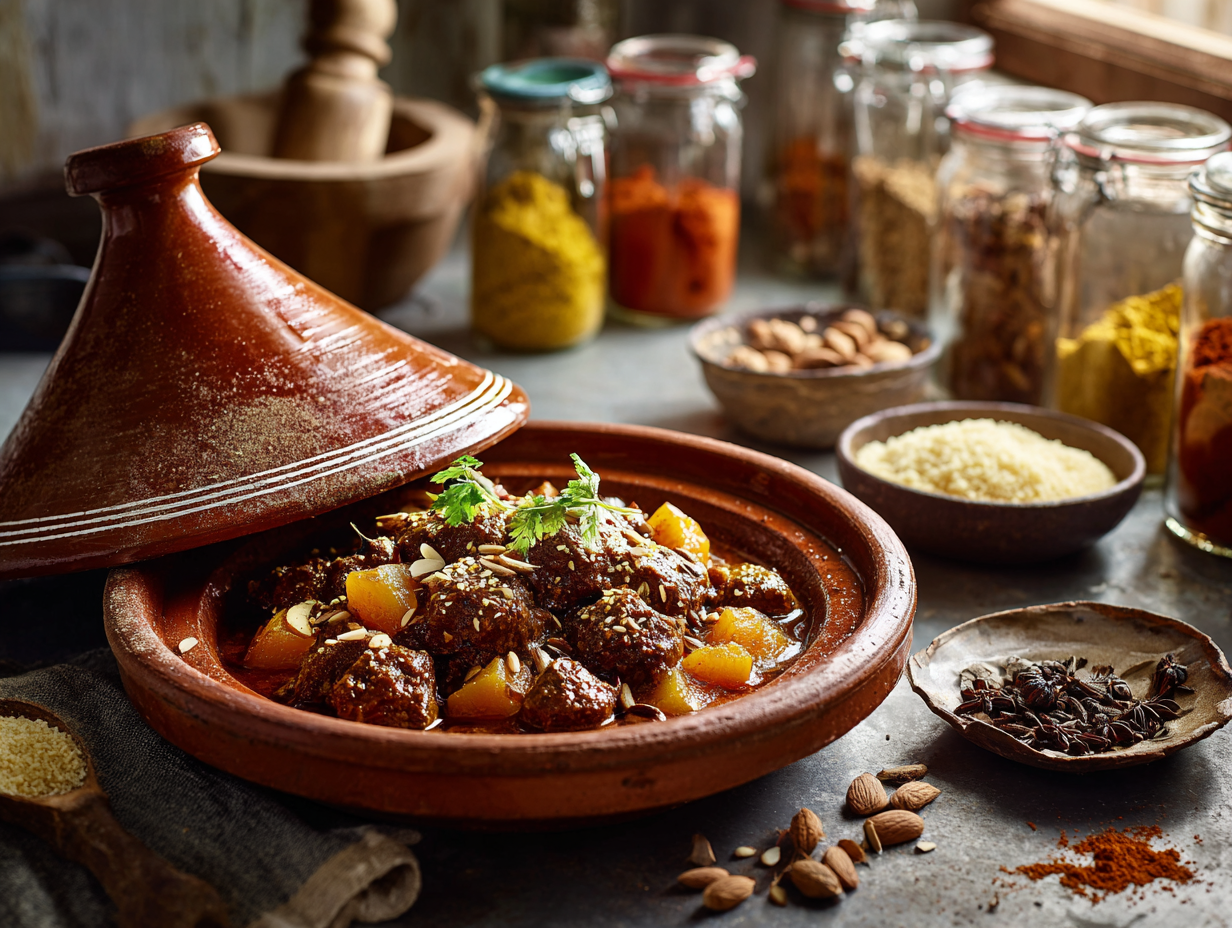
What sets this tagine apart visually and texturally is the trio of garnishes: toasted sesame seeds, toasted almonds, and fresh coriander. These not only add contrast in color and crunch but also represent the emphasis Moroccan cuisine places on balance—a balance of soft and crisp, of sweet and spice, of hot and cool.
Toasted almonds bring nutty warmth and richness, sesame seeds add an aromatic crunch, and the coriander brings freshness, a necessary counterpoint to the richness underneath. Garnishing a Moroccan tagine is more than aesthetic; it completes the dish’s flavor profile and bridges the sensory experience from cooking to consumption.
The lamb and quince tagine also echoes religious and cultural traditions. While lamb is often served during Muslim festivals like Eid al-Adha, quince, with its strong seasonal availability in late summer and fall, links the dish to seasonal cycles and harvest traditions. The incorporation of sweet fruit in stews is believed to stem from Persian influences, carried westward by Arab traders and conquerors. This ability to preserve fruit and combine it with meat was also practical—maximizing the use of available harvest while imparting brightness to long-cooked dishes.
Enjoyed hot from the pot, ideally with some fresh flatbread or fluffy couscous, the tagine invites communal dining. Moroccan meals are often shared, eaten from a single large bowl, a tradition that not only conserves resources but deepens social bonds. It’s no surprise that food plays such a central role in Moroccan hospitality: “Baraka” (blessing) is a word often used to describe a generous meal like this, especially when served to guests.
In conclusion, this Aromatic Lamb and Quince Tagine is more than just a recipe. It’s a culinary journey that invites you into the warmth of Moroccan kitchens, full of stories and spice. It teaches patience, rewards attentiveness, and encourages you to embrace the dynamic interplay of flavor, texture, and tradition. For anyone looking to explore the depths of Moroccan cuisine or simply spice up their cooking repertoire, this dish is a compelling place to start.
Not only is the dish sophisticated in its flavor and construction, but it also offers a window into a rich cultural heritage—one that values generosity, celebration, and the alchemy of ingredients brought together with care. Try it, and you just might find yourself falling in love with Morocco, one spoonful at a time.
Aromatic Lamb and Quince Tagine

Ingredients
 1 ½ kilogram ground lamb (minced lamb)
 3 medium yellow onion - sliced
 3 tablespoons olive oil
 3 cloves garlic
 2 teaspoons cilantro (coriander) - ground
 2 teaspoons cumin
 2 teaspoons cinnamon
 2 teaspoons ginger
- 1 tablespoon harissa paste
 1 dash salt
 1 dash ground black pepper
- 1 cube lamb stock
- 1 kilogram quinces
- 2 pinches saffron
 3 tablespoons honey
 1 tablespoon sesame seeds - toasted
 1 tablespoon almonds - toasted
- 1 tablespoon cilantro (coriander) - for garnish
Instructions
- Put the meat in an ovenproof cast-iron casserole with the oil, and brown.
- Remove from the oil and keep on one side while adding the sliced onion and cooking gently until soft, adding more oil if you need it.
- Add the garlic, ground ginger, cinnamon, coriander and cumin. In most recipes, the spicing might finish, but I like to ensure strong flavours, and I like to ‘layer’ my spices, so I add harissa paste now. Cook for a few minutes.
- Return the lamb to the casserole. Cover the ingredients with water and add the lamb stock cube. Bring up to a boil and season with salt and pepper.
- Let the tagine now cook gently in a low oven – about 140 degrees – for around 3 hours or until the meat is soft and the sauce has started to show signs of the ingredients amalgamating in it.
- Cut the quinces into quarters and put them in a pan in the least water necessary to cover them. Bring to the boil and keep them at a simmer until they’re soft. The outside goes mushy before the inside is cooked if you let the water boil fast, beware.
- Fish the quinces out of the water (don’t throw it away just yet, you may need it to add to the tagine if it needs more liquid), and skin and core. Cut into medium chunks. Toss these in a little melted butter in a frying pan, add the honey and saffron, and put them aside to await the meat is fully cooked.
- When it is, add the quinces.
- I garnish this with toasted sesame seeds, toasted almonds and fresh coriander.