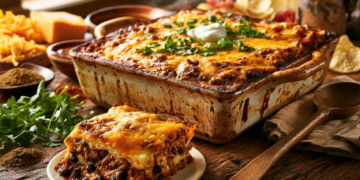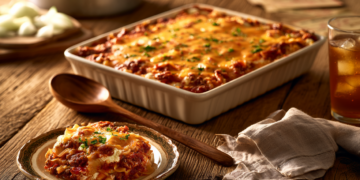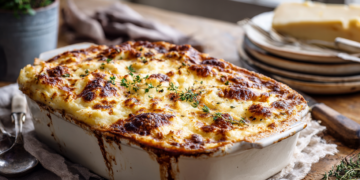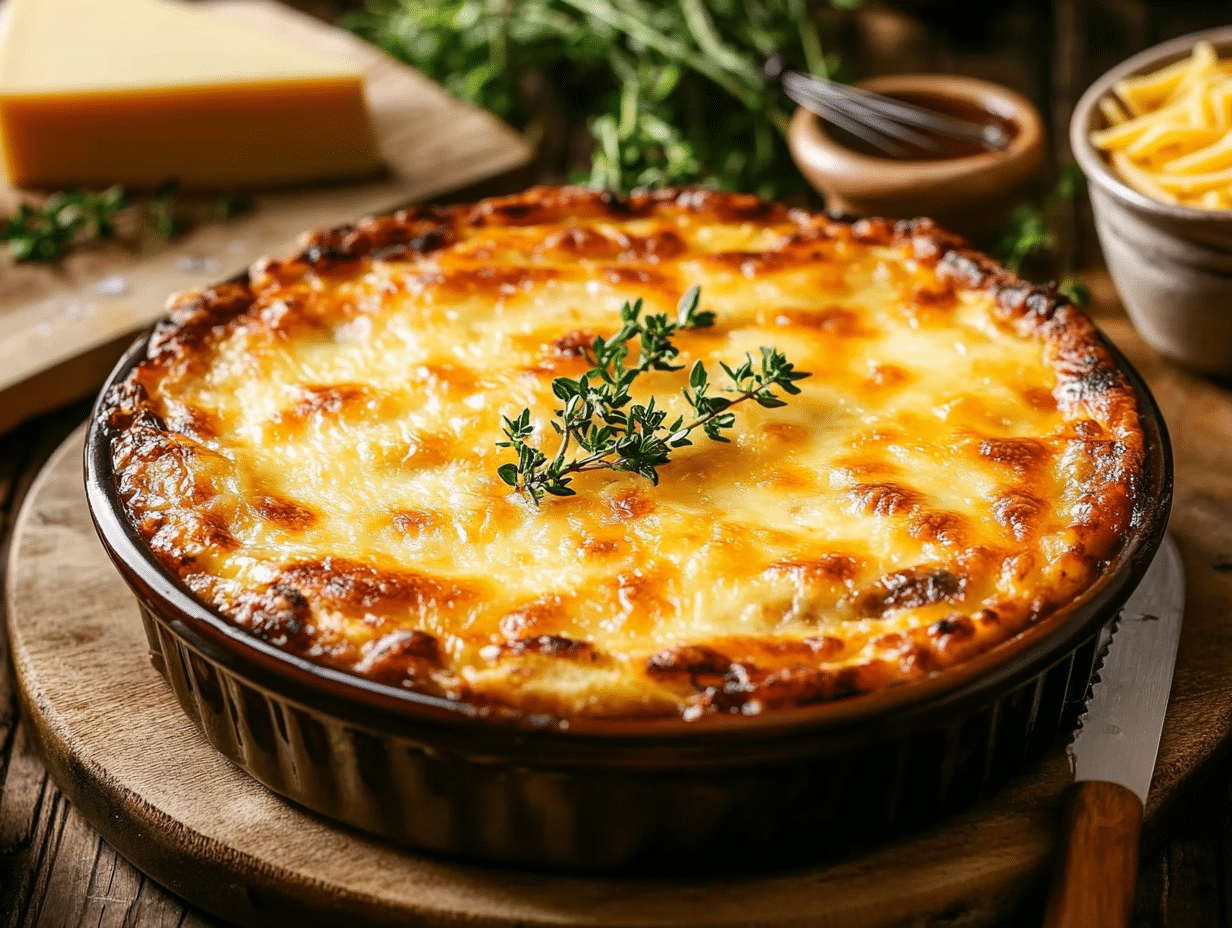
This is a beef mince lasagne built in layers — but instead of pasta sheets, Yorkshire puddings do the structural work. It takes more steps than a standard lasagne, but you end up with something genuinely different: crisp, eggy pudding layers soaking up a Worcestershire-spiked beef sauce under a cheddar béchamel. Make it when you want a proper weekend project that feeds six without spending a lot.
The technique that matters
The Yorkshire puddings are the hinge this whole dish turns on, and the technique is unforgiving in one specific way: the fat in the muffin tin must be smoking hot before the batter goes in. Pull the tin from the oven, work fast, and pour immediately — hesitation drops the fat temperature and you get flat, dense puddings that won’t hold up to the sauce. The second thing worth getting right is the beef sauce. Give it the full 25-minute simmer so enough liquid cooks off; a watery sauce will make the puddings soggy from the bottom up, and no amount of cheese sauce on top will rescue that.
Substitutions that actually work
- Beef drippings: Lard works just as well and is often cheaper. Vegetable oil is the listed fallback — it works, but the puddings will have slightly less flavour.
- Beef stock: A stock cube dissolved in hot water is fine. If you only have chicken stock, use it — the Worcestershire sauce carries enough depth that the difference is minor.
- Worcestershire sauce: A small splash of soy sauce plus a few drops of cider vinegar gets you close. Don’t skip it entirely; it’s doing real work in the sauce.
- Mature cheddar: Any hard, sharp cheese you have — Red Leicester, aged Gouda, or even a mix of mild cheddar and a little Parmesan — will melt into the béchamel without issue. Stilton is listed as optional; skip it if you don’t have it, the dish is complete without it.
- Whole milk (both the puddings and the cheese sauce): Semi-skimmed works in both. The puddings may rise slightly less and the béchamel will be a touch thinner, but neither is a dealbreaker.
Mistakes to avoid
- Assembling while the puddings are still hot: Let them cool for five minutes first. Steam trapped under the cheese sauce turns the crisp edges soft before the dish even goes back in the oven.
- Under-seasoning the cheese sauce: Taste it before it goes on. Béchamel made with unsalted butter and plain milk needs salt adjusted at the end — the nutmeg alone won’t carry it.
- Skipping the fat check on the beef: The recipe calls for 20% fat mince. If you use leaner mince, drain any liquid that pools in the pan after browning — lean beef releases water instead of fat, and that liquid dilutes the sauce.
- Overfilling the muffin tin: Fill each cup about two-thirds full. Overfilled puddings spill over, stick, and collapse when you try to lift them out.
- Not checking the beef is cooked through: Ground beef must reach 160°F (71°C) internally. If you’re not sure the sauce has simmered long enough, use an instant-read thermometer before assembling.
Make-ahead notes
The beef sauce keeps well — make it up to two days ahead and refrigerate it in a sealed container. The Yorkshire puddings are best made on the day; they soften in the fridge and won’t re-crisp reliably. The cheese sauce can be made a day ahead: press cling film directly onto the surface before refrigerating to stop a skin forming, then reheat gently over low heat with a splash of milk to loosen it. Once the full dish is assembled and baked, leftovers keep for three days in the fridge. Reheat individual portions in the oven at 350°F (175°C) for 15 minutes rather than the microwave — skip the microwave here, it turns the pudding layers rubbery and isn’t worth it.
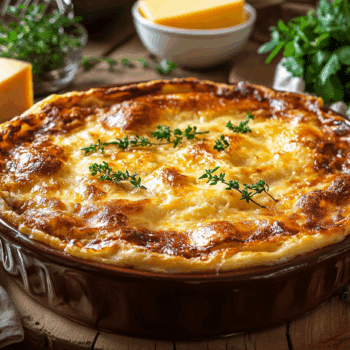
Beef Mince Lasagne Yorkshire Style

Equipment

Ingredients
For the Mince Sauce
 1 lb ground beef (minced beef) - (20% fat), For best flavor, use freshly ground beef.
 1 large Onion - Finely chopped.
 2 cloves Garlic - Minced.
 1 tbsp Tomato paste
 1 cup beef stock (beef broth or beef bouillon) - Preferably homemade or high-quality store-bought.
 1 cup tomatoes - Chopped
  1 tsp Worcestershire sauce
 1 tsp Dried thyme
 1 tsp Salt
 ½ tsp ground black pepper
For the Yorkshire Puddings
 1 cup all purpose flour (plain flour Australia and UK)
 4 large Eggs
- 1 cup Whole milk
- ½ tsp Salt
- 2 tbsp Beef drippings - Or vegetable oil
For the Cheese Sauce
 2 tbsp Unsalted butter
- 2 tbsp all purpose flour (plain flour Australia and UK)
- 1.5 cups Whole milk
 1 cup Cheddar cheese - Grated
 ½ tsp Ground nutmeg
Instructions
- Preheat the oven to 425°F (220°C) to prepare for the Yorkshire puddings.
- To make the beef filling, heat a large frying pan over medium heat. Add the onion and sauté until softened, about 5 minutes.
- Add the minced garlic and cook for another minute until fragrant. Stir in the ground beef and cook until browned.
- Mix in the tomato paste, chopped tomatoes, Worcestershire sauce, thyme, salt, and pepper. Pour in the beef stock and let simmer for 25 minutes until thickened.
- For the Yorkshire puddings, whisk together flour, eggs, milk, and salt until smooth. Heat a muffin tin with beef drippings for 5 minutes, then pour the batter evenly. Bake for 20 minutes until puffed and golden.
- For the cheese sauce, melt butter in a saucepan over medium heat. Stir in flour and cook for 1 minute, then whisk in milk. Add grated cheese and nutmeg, stirring until melted and smooth.
- To assemble, layer Yorkshire puddings with beef filling and cheese sauce in a baking dish. Repeat layers and top with extra cheese. Bake at 375°F (190°C) for 15-20 minutes until golden and bubbling.
Notes
- For an extra Yorkshire twist, add crumbled Stilton cheese to the cheese sauce.
Nutrition
Frequently asked questions
Can I make this in a standard baking dish instead of a muffin tin?
You can, but the Yorkshire puddings won’t work the same way — they need individual cups to rise properly. If you don’t have a muffin tin, make one large Yorkshire pudding in a roasting tin, let it cool, then cut it into rough squares to layer like pasta sheets.
Can I use pre-made or frozen Yorkshire puddings?
Yes, and it saves real time. Supermarket frozen Yorkshire puddings work fine here — bake them according to the packet, let them cool slightly, then use them exactly as you would homemade. The flavour won’t be quite as rich without the beef drippings, but the dish still comes together well.
My cheese sauce keeps going lumpy — what am I doing wrong?
The most common cause is adding cold milk to the hot roux too fast. Add the milk gradually, a splash at a time, whisking constantly before adding more. If it’s already lumpy, take it off the heat and whisk hard — small lumps often smooth out. A fine sieve as a last resort will fix it.
Can this be frozen after baking?
It can, but the Yorkshire puddings lose their texture significantly after freezing and thawing — they go soft all the way through. If you want to freeze components, freeze the beef sauce only (up to three months), then make fresh puddings and cheese sauce when you’re ready to assemble.
Try these next
- Beef Ricotta Lasagna Rolls
- Savory British Beef Pies
- Ultimate Cheesy Beef Bake
- Cumberland Sausage Mince Pie