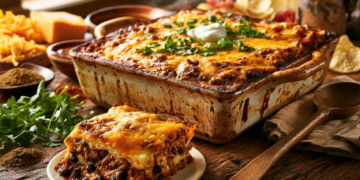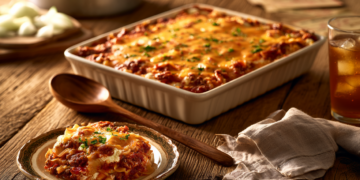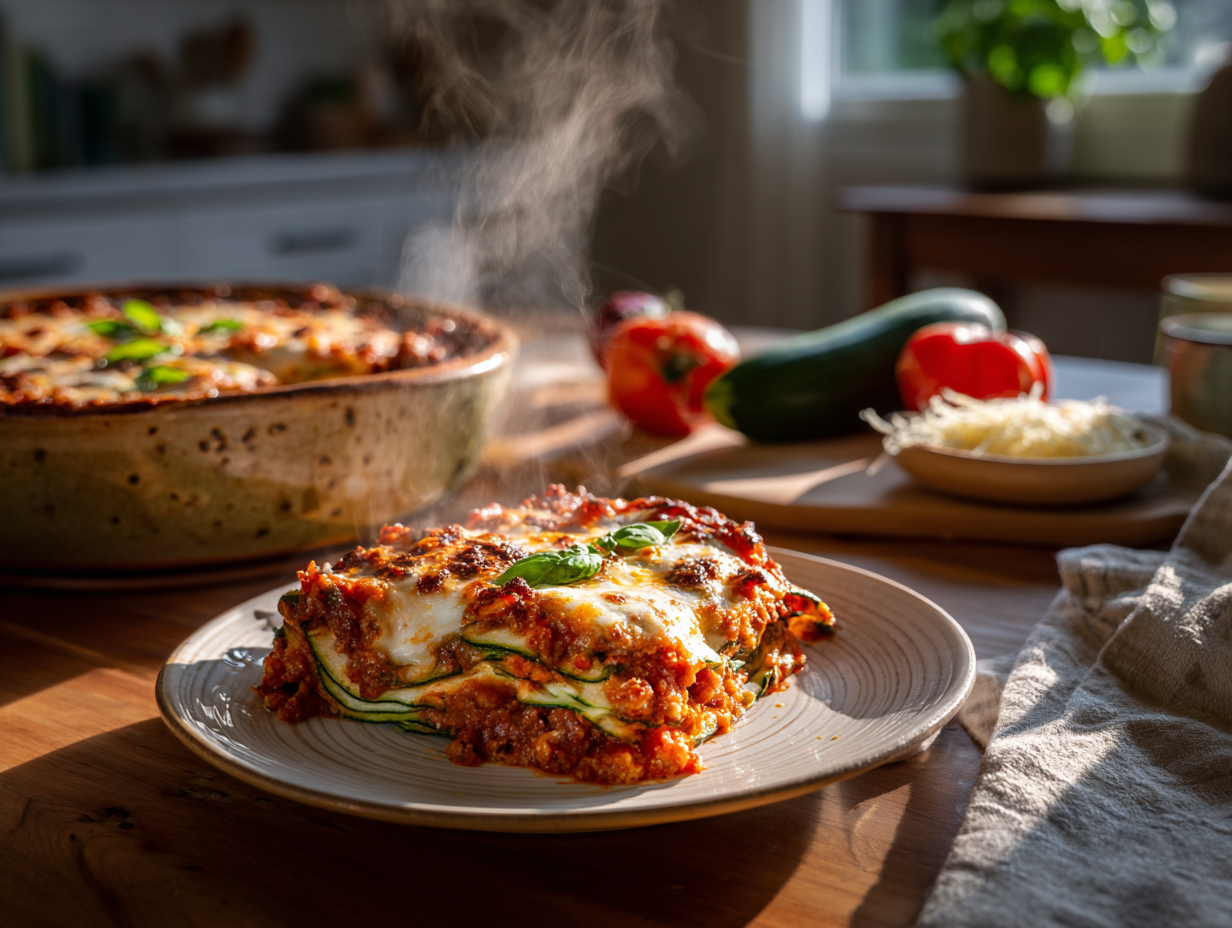
This is a ground beef lasagna built with thin zucchini strips instead of pasta sheets — same meat sauce, same three-cheese filling, just fewer carbs and a lighter result. It works well as a complete meal on its own because the beef and cheese together deliver a solid hit of protein in every slice. If you’ve been skeptical about vegetable-based lasagna, the technique here addresses the main reason those versions usually disappoint.
What makes this version work
Two things separate a good zucchini lasagna from a watery, collapsed one. First, moisture control: zucchini releases a significant amount of liquid during baking, and if you don’t draw it out beforehand — by salting the strips and letting them rest on a rack or paper towels for at least 15 minutes, then patting them dry — that liquid thins the sauce and makes the layers slide apart. Second, the meat sauce needs to be cooked down thicker than you’d make it for pasta. Because zucchini adds moisture back in during baking, a sauce that looks slightly too thick in the pan will be exactly right in the finished dish. Get those two things right and the layers hold, the cheese sets properly, and you get clean slices.
Smart swaps
- Zucchini strips: A mandoline set to about 3mm gives more consistent thickness than a vegetable peeler and speeds up prep considerably. Consistent thickness means even cooking across all layers.
- Ground beef: An 85/15 lean-to-fat ratio works well here — enough fat to keep the sauce rich without making it greasy. Leaner than 90/10 and the sauce can taste flat.
- Ricotta: Full-fat ricotta holds its texture better than part-skim during baking. Part-skim tends to weep more liquid into the layers.
- Mozzarella: Use low-moisture mozzarella for the topping, not fresh. Fresh mozzarella contains too much water and will make the top layer soggy rather than golden.
If something goes sideways
- Layers are soupy after baking: The zucchini wasn’t dried enough before assembly, or the sauce was too thin going in. Let the finished lasagna rest uncovered for 10–15 minutes after it comes out of the oven — some of that liquid will reabsorb as it cools. Skip the garnish of fresh herbs on top; it just wilts into the liquid and isn’t worth the extra dish.
- Cheese topping is brown but the center is still cold: Cover loosely with foil and return to the oven for another 10 minutes. An instant-read thermometer in the center should read at least 160°F (71°C) for the beef to be safe.
- Zucchini strips tear during layering: They were sliced too thin or dried out too long. Strips around 3mm thick are flexible enough to handle without splitting. If they do tear, just overlap the pieces — it won’t affect the final result.
- Meat sauce tastes flat: Ground beef needs real browning, not just grey cooking. If the pan was overcrowded, the meat steamed instead of seared. Drain excess fat after browning, then add aromatics and let the sauce simmer uncovered long enough to concentrate.
- Lasagna won’t slice cleanly: It needs more resting time. Ten minutes minimum after coming out of the oven; 20 is better. The cheese and layers need to firm up before you cut.
The Ultimate Low-Carb Lasagna | Easy and Delicious

Ingredients
 2 large zucchini
 225 grams mushrooms
 500 grams ground beef (minced beef)
 2 cloves garlic
 1 large green onions (scallions or green shallots)
 2 tablespoons olive oil
 1 bottle tomato paste - 680-millimeter
 1 splash red wine - optional
- 300 grams dry mozzarella
 475 grams Ricotta cheese - 1 container
 2 tablespoons basil
 2 tablespoons parsley
 1 pinch salt - to taste
 1 pinch ground black pepper - to taste
Instructions
- Slice mushrooms – the thinner they are, the faster they’ll cook.
- Chop shallot and garlic.
- Heat a large deep-dish pan over medium-high heat.
- Add olive oil, garlic, and shallot to the pan and soften (about 1-2 minutes).
- Add mushrooms to the pan and saute until lightly caramelized. (about 3 minutes).
- Move mushrooms to one side of the pan and add ground sirloin.
- Brown the ground sirloin and slowly incorporate the mushrooms back in.
- Add a splash of red wine just as the beef is finishing.
- While the alcohol cooks off, chop the fresh basil.
- Add the tomato puree and fresh basil and incorporate them into the beef and mushroom mixture. Reduce heat to medium-low and let simmer.
- Preheat the oven to 350°F.
- Slice the zucchini with a vegetable peeler and set it aside.
- Add a thin layer of sauce to the bottom of your baking dish and cover with a layer of zucchini.
- Add about half of the remaining sauce and cover with a layer of zucchini.
- Add a layer of ricotta and crack some fresh black pepper over the top and cover with a layer of zucchini.
- Add the remaining sauce, and cover with grated mozzarella cheese.
- Bake in the oven for 30-45 minutes – The top should be golden brown.
- Let rest for 10-15 minutes before serving.
Nutrition
Common questions
How do I know when the lasagna is fully cooked through?
The center should reach at least 160°F (71°C) on an instant-read thermometer — that’s the safe internal temperature for ground beef. The cheese on top should be bubbling and lightly browned, and a knife inserted in the middle should meet no resistance from the zucchini layers.
Can I make this ahead and refrigerate it before baking?
Yes, assemble it up to 24 hours ahead, cover tightly, and refrigerate unbaked. Add about 10–15 minutes to the baking time since you’re starting from cold, and check the internal temperature before pulling it out.
How many servings does this actually make as a main meal?
Cut into 6 portions, this is a filling main course for most adults — the beef and three-cheese filling make it more substantial than it looks. If you’re serving it alongside a salad, 8 smaller portions is reasonable.
Can I use a different ground meat instead of beef?
Ground turkey or chicken works well and keeps the carb count the same, but cook it to 165°F (74°C) and make sure there’s no pink remaining. Ground pork is also a good option at 160°F (71°C); it produces a slightly richer sauce.
Why is there liquid pooling in the dish when it comes out of the oven?
Zucchini releases water during baking even when prepped well — some pooling is normal. Let the lasagna rest uncovered for at least 10–15 minutes and most of it will reabsorb into the layers before you serve.
Does this reheat well for leftovers the next day?
It reheats well and the layers actually firm up overnight in the fridge, making it easier to slice cleanly. Reheat individual portions in a microwave covered loosely, or return the whole dish to a 350°F oven covered with foil until heated through to 160°F (71°C).
More mince recipes to try
- Beef Ricotta Lasagna Rolls
- Hearty Beef Cauliflower Bake
- Spicy Beef Stuffed Peppers
- Ultimate Cheesy Beef Bake