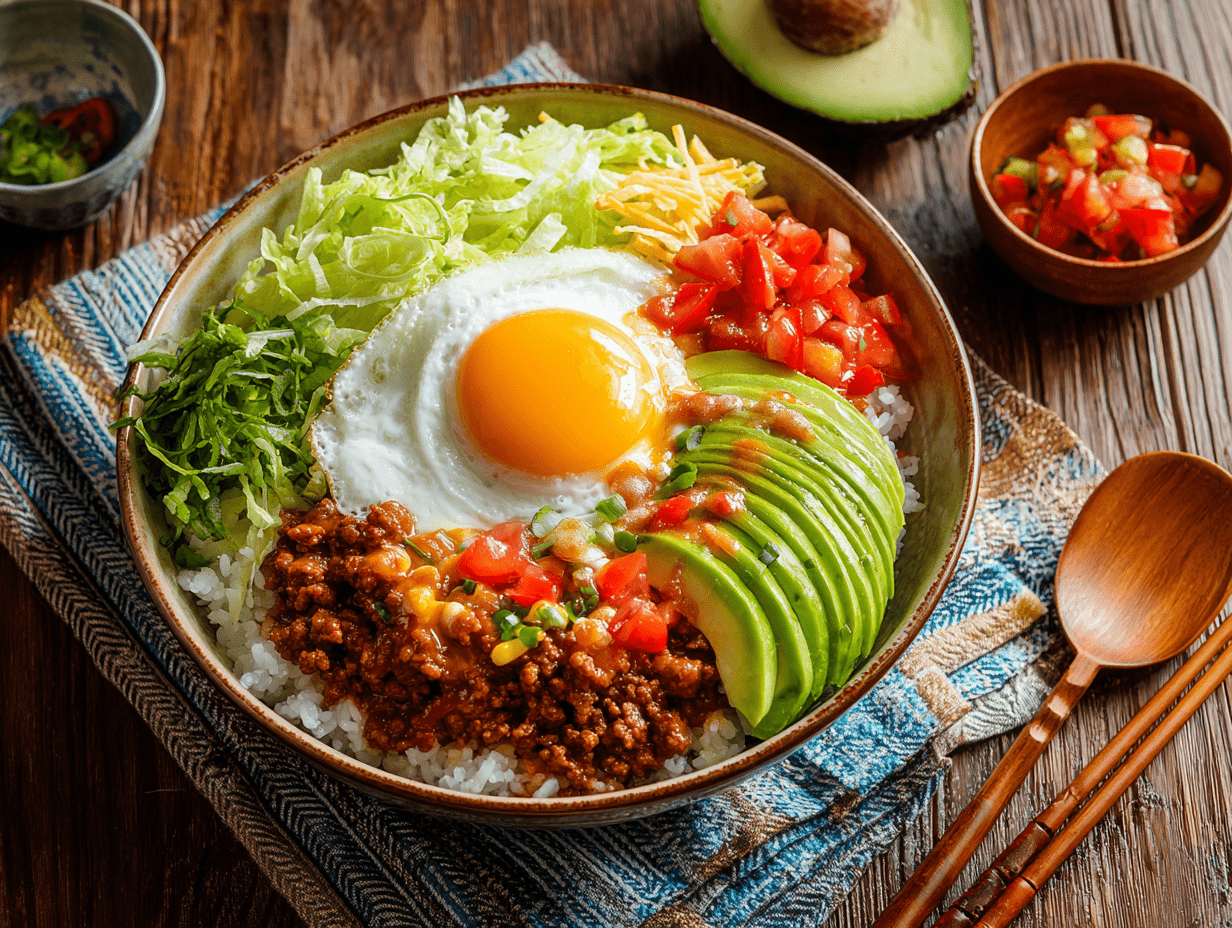
Taco rice is an Okinawan dish that puts seasoned ground beef over short-grain white rice and tops it with fresh vegetables, a fried egg, and whatever else you have on hand. It comes together in about 30 minutes using one pan for the beef and one pot for the rice — that’s genuinely it. If you need a filling weeknight dinner with minimal cleanup, this is a strong option.
Why this recipe works
Two things make the difference here. First, the canned tomatoes go in with their juice — that liquid deglazes the pan and keeps the beef from drying out as the spices cook through, which is why the dish earns the word “juicy” in its name. Second, short-grain Japanese-style rice is the right call over long-grain. It’s slightly sticky and dense, so it holds the beef and its juices rather than letting everything slide off. That texture is what makes the bowl feel like a proper meal instead of a plate of loose toppings.
About the ingredients
- Short-grain white rice: Sold as sushi rice or Japanese rice at most supermarkets. Medium-grain works in a pinch. Long-grain will do the job but the bowl will feel looser.
- Taco seasoning: A store-bought packet is fine and saves time. If you’re mixing your own from the spice rack, the key players are cumin, chili powder, garlic powder, and onion powder — the recipe uses all of these.
- Iceberg lettuce: It wilts fast once the hot beef hits it, so shred it right before serving, not ahead of time.
- Avocado: Skip it if yours isn’t ripe — an underripe avocado adds nothing. Sour cream alone handles the creamy element just fine.
- Corn chips: Any plain salted chip works. Save the fancy flavored ones for snacking; they fight with the taco seasoning.
What can go wrong
- Beef steams instead of browning: This happens when the pan is overcrowded or the heat is too low. Use a wide skillet and don’t stir constantly — let the meat sit undisturbed for a minute or two so it gets some color before you break it up.
- Rice turns gluey: Short-grain rice needs rinsing before cooking to remove excess surface starch. If you skip that step, the cooked rice can clump into a dense mass that’s hard to portion.
- Spices taste raw or dusty: Add the dry spices directly to the beef in the pan and let them cook for 60–90 seconds before adding the tomatoes. That brief heat blooms the spices and removes the raw edge.
- Fried egg breaks when you plate it: Slide the egg onto the bowl last, after everything else is already in place. Trying to build the bowl around a fragile egg just leads to a broken yolk — skip the garnish on the egg and just get it in the bowl intact.
- Beef reads undercooked: Ground beef must reach 160°F (71°C) internally. With the tomato liquid in the pan it can look pale and wet even when it’s fully cooked, so use an instant-read thermometer if you’re unsure rather than going by color alone.
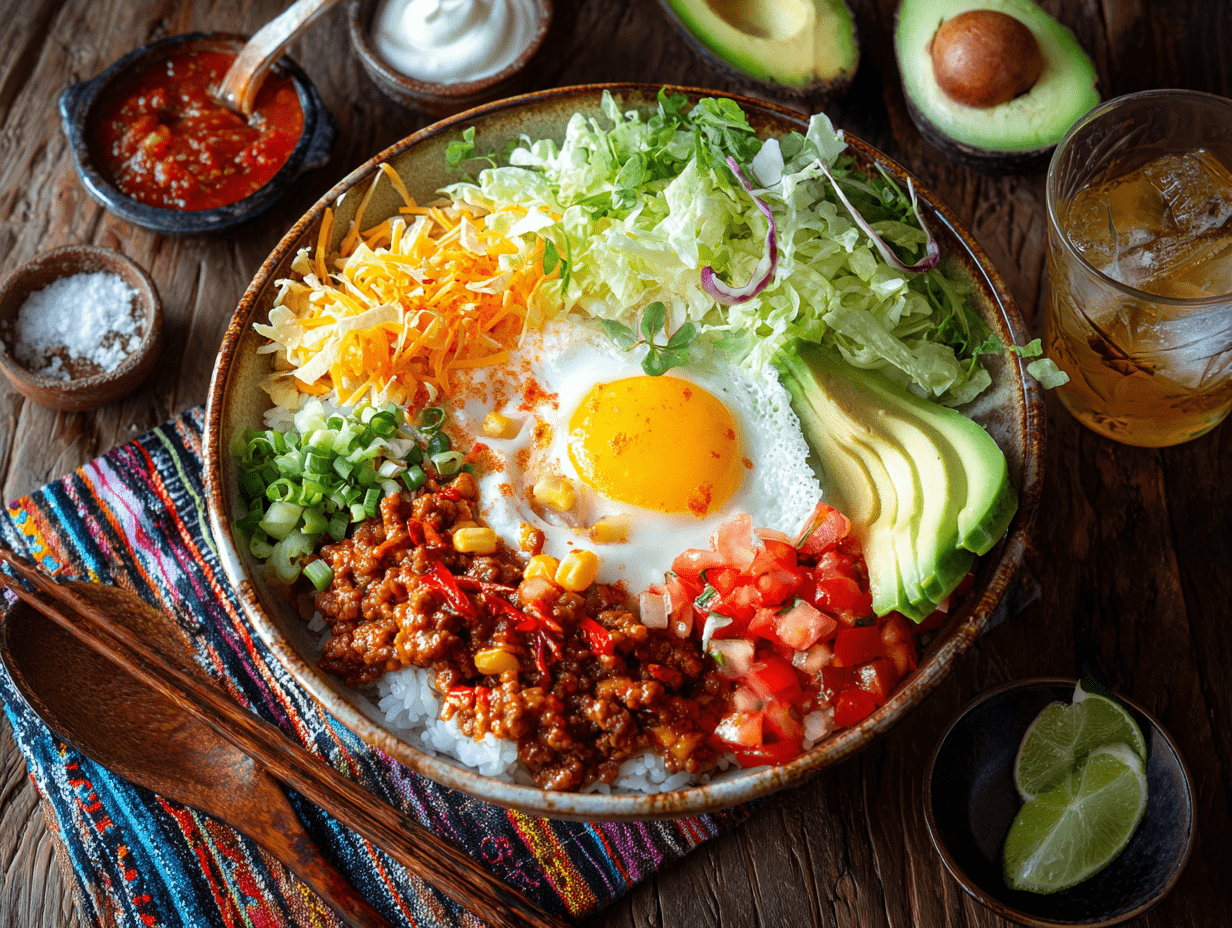
Juicy Taco Rice Recipe

Ingredients
Base Ingredients
 1 cup white rice - short-grain
 250 grams ground beef (minced beef) - lean
 1 tablespoon taco seasoning
 ½ teaspoon cumin
 ½ teaspoon onion powder
 ½ teaspoon garlic powder
 ¼ cup tomato - diced with juice
- 1 teaspoon chilli powder - optional, for heat
Toppings Ingredients
 ½ cup iceberg lettuce - shredded
- ½ cup tomato - diced
 2 small eggs - fried
 1 medium avocado - sliced
 ½ cup sour cream - optional
 ½ cup tortilla chips - broken (optional)
 1 cup salsa - optional
Instructions
- Cook a mixture of white and brown rice for texture.
- In a fry pan, cook the ground beef over medium-high heat until it turns light brown. Add all the dry seasonings, and cook for 1 minute. Stir in the diced tomato and juice and cook for another 1 to 2 minutes.
- Assembly: In a shallow bowl, add a base layer of rice, then top with the ground beef mixture.
- Add diced tomatoes and shredded cheese, and top off with a fried egg.
- Add the shredded lettuce around the perimeter of the bowl. Add any other desired toppings.
Nutrition
FAQ
Can I use ground turkey or chicken instead of beef?
Yes, both work. Ground poultry must reach 165°F (74°C) internally — cook it through completely with no pink remaining. The flavor will be milder, so lean into the spices a little more to compensate.
Can I make the beef mixture ahead of time?
Yes, and it actually reheats well. Store the cooked beef in an airtight container in the fridge for up to 3 days and reheat it in a skillet with a splash of water to loosen it. Add the fresh toppings only after reheating.
My family doesn’t eat eggs — is the fried egg necessary?
No, it’s optional. The bowl is complete without it. If you want to replace the richness it adds, a spoonful of extra sour cream or a few slices of avocado does the same job.
Can I use leftover rice from the fridge?
Yes, and it’s a good use of it. Break up any cold clumps before serving and warm the rice briefly in the microwave with a damp paper towel over the bowl so it steams back to a soft texture.
How do I keep the lettuce from wilting before everyone sits down?
Serve the shredded lettuce on the side so each person adds it themselves right before eating. Once hot beef touches it, it wilts within a minute or two.
Is this dish spicy?
At the base level, no — standard taco seasoning is mild. The optional chili powder topping is where the heat comes from, so you can leave it off entirely for kids or anyone sensitive to spice.
What to cook next
- Beef Fusion Sushi Rolls
- Spicy Beef Stuffed Peppers
- Japanese Pork Lettuce Cups
- Authentic Szechuan Dan Dan