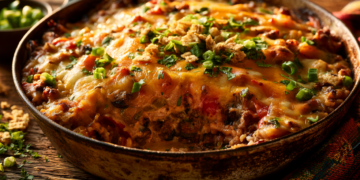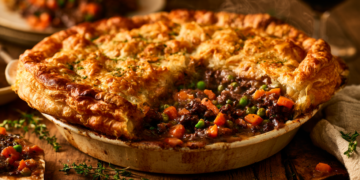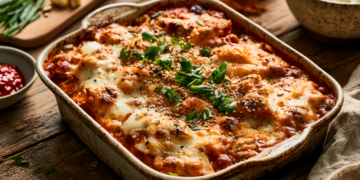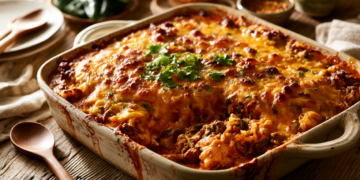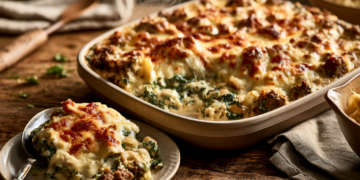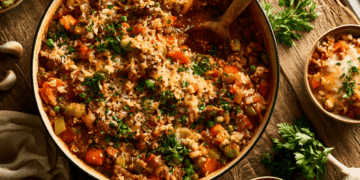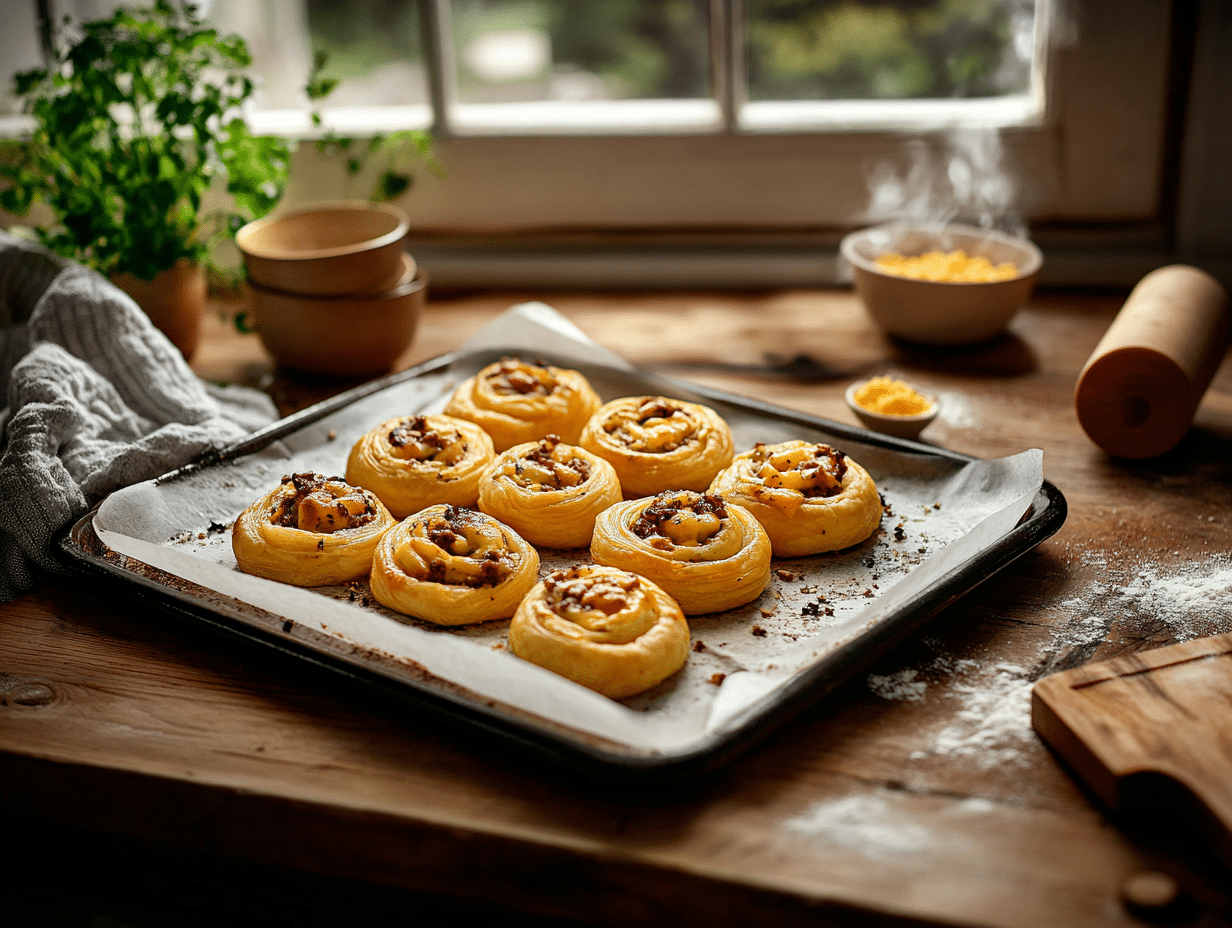
These are puff pastry scrolls filled with seasoned ground beef, onion, garlic, cheddar, and Worcestershire sauce, baked until the pastry is crisp and the cheese is melted through. Each scroll is a self-contained portion, which makes them genuinely useful for grabbing from the fridge throughout the week. Four scrolls come together in under an hour, and they reheat well — that’s the honest case for making them.
The short version of why this works
Two things matter here. First, the beef filling must be cooled before it goes onto the pastry. Warm filling softens the fat in puff pastry before it hits the oven, and you lose the flaky layers — you get something closer to a soggy wrap. Spread it out on a plate for 10 minutes while you prep the pastry. Second, roll the log tightly. A loose roll means the scrolls unravel as they bake and the filling slides out. Use your fingers to keep tension as you roll from the long edge, and press the seam lightly to seal before you slice.
Shopping notes
- Puff pastry: A standard 500 g sheet from the freezer section works fine. Thaw it in the fridge overnight — counter-thawing makes it sticky and hard to handle.
- Ground beef: Aim for 80–85% lean. Leaner beef dries out during the skillet cook and the scrolls end up tight and chalky inside.
- Worcestershire sauce: Don’t skip it or substitute soy sauce — the flavor profile is different enough to matter. A standard bottle lasts months, so it’s worth having.
- Cheddar: Grate it yourself. Pre-shredded cheddar has a starch coating that slows melting and makes the filling grainy. Skip the fancy aged stuff too — a mid-range sharp cheddar melts better and costs less.
Keeping and reheating
Baked scrolls keep in an airtight container in the fridge for up to 4 days. To reheat, put them in a 180°C (350°F) oven for 8–10 minutes — this brings the pastry back to crisp. The microwave works in a pinch (90 seconds on medium), but the pastry goes soft and slightly chewy. For freezing, wrap individual cooled scrolls in plastic wrap, then bag them. They freeze well for up to 2 months. Reheat from frozen at 180°C (350°F) for 18–20 minutes, no need to thaw first. Make sure the center reaches 74°C (165°F) if you’re checking with a thermometer — the beef filling needs to be fully hot through, not just warm on the outside.
Mistakes to avoid
- Slicing with a sawing motion: A back-and-forth cut compresses the layers and distorts the spiral. Use a sharp knife and press straight down in one clean cut.
- Overcrowding the baking sheet: Scrolls need space for steam to escape. Leave at least 3–4 cm between each one or the sides stay pale and doughy instead of browning.
- Skipping the border when spreading the filling: If filling goes all the way to the edge, it spills out during rolling and burns on the pan. The 1 cm gap is functional, not decorative.
- Under-browning the onion: Translucent is the minimum — but a few extra minutes until the onion is lightly golden adds sweetness that balances the Worcestershire. Raw-tasting onion in the finished scroll is a common complaint.
- Cutting scrolls too thin: Slices under 3 cm tend to unroll during baking. Stick to the 4 cm thickness in the recipe or go slightly thicker rather than thinner.
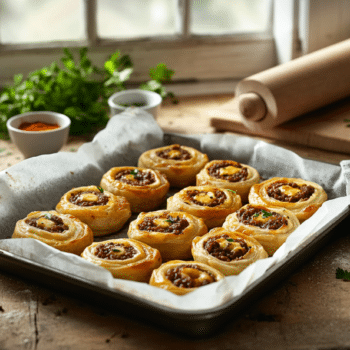
Minced Beef and Cheese Spiral Scrolls

Ingredients
- 500 grams puff pastry - store-bought or homemade, chilled
 300 grams ground beef (minced beef) - grass-fed for richer flavor
 1 medium onion - finely chopped
 2 cloves garlic - minced
 100 grams cheddar cheese - grated
 1 tablespoon Worcestershire sauce
 1 teaspoon dried oregano
 1 medium eggs - beaten, for egg wash
 1 pinch salt - to taste, freshly ground
 1 pinch ground black pepper - to taste
Instructions
- Preheat your oven to 200°C (390°F) and line a baking sheet with parchment paper.
- In a large skillet over medium heat, sauté the chopped onion in a drizzle of olive oil until translucent. Add the minced garlic and cook until fragrant.
- Add the minced beef to the skillet and cook until browned. Stir in the Worcestershire sauce, dried oregano, salt, and black pepper. Remove from heat and let cool slightly.
- Roll out the puff pastry on a lightly floured surface into a large rectangle. Spread the cooled meat mixture evenly over the pastry, leaving a 1 cm (0.4 inch) border.
- Sprinkle the grated cheddar cheese over the meat mixture. Starting from one long side, roll the pastry tightly into a log.
- Slice the log into approximately 4 cm (1.5 inch) thick scrolls. Place each scroll on the prepared baking sheet spiral side up.
- Brush the tops with beaten egg and bake in the preheated oven for 25 minutes or until golden and cooked through.
Notes
Nutrition
Common questions
Can I assemble the scrolls the night before and bake them in the morning?
Yes — assemble, slice, and place them on the lined baking sheet, then cover tightly with plastic wrap and refrigerate overnight. Pull them out while the oven preheats, brush with egg wash, and bake as directed. The cold pastry actually goes into the oven in better shape than room-temperature pastry.
How do I know the beef filling is cooked through before I roll it up?
Ground beef is safe to eat once it reaches an internal temperature of 160°F (71°C) — no pink should remain anywhere in the pan. Break up any clumps while it cooks so you’re not hiding undercooked meat in the middle of a chunk.
Can I double the batch and freeze half before baking?
Freeze them after slicing but before baking — place the raw scrolls on a parchment-lined tray, freeze until solid (about 2 hours), then transfer to a bag. Bake from frozen at 200°C (390°F) for 30–35 minutes, adding the egg wash just before they go in.
The pastry on the bottom is soggy — what went wrong?
The most common cause is a filling that was still warm when rolled, or too much liquid left in the pan after cooking the beef. Drain any excess fat and liquid from the skillet before spreading the filling, and make sure the mixture has cooled and is not wet to the touch.
Try these next
- Savory Beef Sausage Rolls
- Spiced Lamb Curry Scrolls
- Savory Beef Carrot Turnovers
- Savory Beef Kolachki Pastries