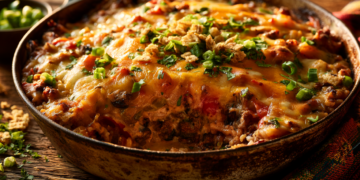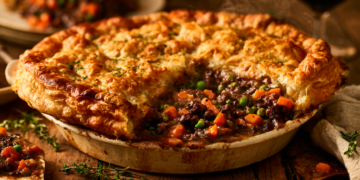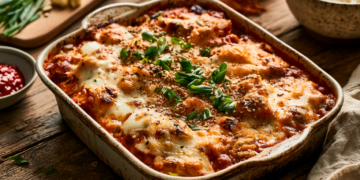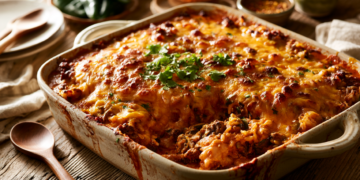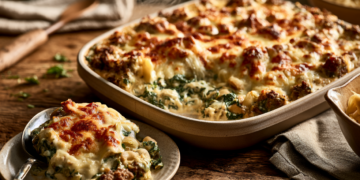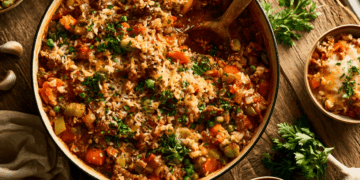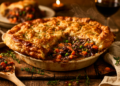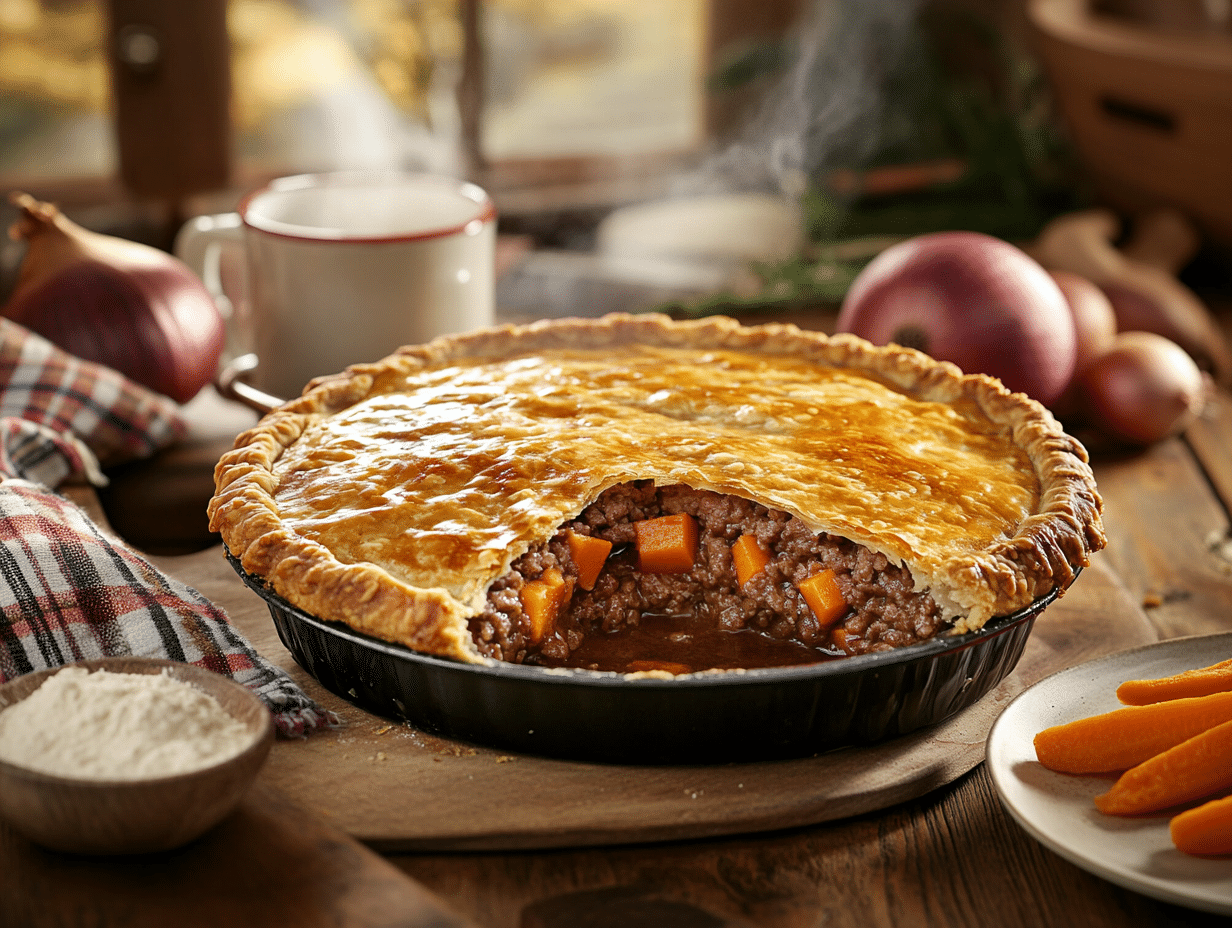
This is a ground beef and sweet potato pie with a gluten-free, dairy-free pastry crust. It feeds five people from one dish, and the filling — beef, sweet potato, carrot, onion, marmite, and nutritional yeast — is genuinely satisfying without needing any substitutions to taste good. If you have family members avoiding gluten or dairy, this is the recipe that doesn’t make them feel like they got the lesser version.
About the ingredients
- Gram flour (chickpea flour): This is the main flour in the pastry. It has a slightly earthy flavour and behaves differently from wheat flour — it absorbs fat well but the dough will feel denser than you expect. That’s normal.
- Sorghum flour: Adds lightness to the crust. Find it at health food stores or online. Don’t swap it for more gram flour — the texture will suffer.
- Tapioca starch: Binds the pastry and gives it a little flex so it doesn’t shatter when you cut it. Arrowroot starch works as a 1:1 substitute.
- Nutritional yeast: Adds a savoury, slightly umami depth to the filling. It’s not cheesy exactly, but it rounds out the flavour. Don’t skip it — it does real work here.
- Marmite: One teaspoon goes a long way. It deepens the beef flavour without tasting like Marmite on toast. Vegemite is a direct swap. If you can’t find either, a teaspoon of dark soy sauce gets you close.
- Dairy-free margarine: Use a block-style margarine rather than a soft spread — the fat content is higher and the pastry will hold together better.
Before you start
The one thing that will make or break this recipe is keeping the pastry cold. Gluten-free dough has no gluten network to hold it together, so warmth from your hands is enough to make it greasy and unworkable. Make the pastry first, get it into the fridge, and don’t take out the second portion until the filling is fully cooked and cooled slightly — hot filling steaming under cold pastry causes the base to go soggy before it even hits the oven. While the filling simmers, that’s your window to roll the base portion between cling film and line the dish, then return the lined dish to the fridge until you’re ready to fill and top it. Cold pastry going into a hot oven is what gives you a crust that holds a clean slice rather than collapsing on the plate.
Troubleshooting
- Pastry tears when you try to lift it: It didn’t chill long enough, or it warmed up during rolling. Press it back together — gluten-free dough is forgiving about patching. Chill the patched section for 10 minutes before continuing.
- Filling is watery after simmering: The sweet potato releases moisture as it cooks. If most of the water hasn’t absorbed after 30 minutes, remove the lid and cook on a higher heat for a few more minutes, stirring constantly. A wet filling makes the base soggy.
- Base is undercooked and pale after the full bake time: Deep pie dishes insulate the base. Place the dish on the lowest oven rack for the last 10 minutes of baking to get direct heat on the bottom.
- The top crust cracks across the middle: This is normal with gluten-free pastry and doesn’t affect the result — skip the garnish, not worth the extra dish. Score a small steam vent before baking to control where it opens.
- Filling tastes flat: Check your marmite quantity. Also, ground beef needs to be fully browned before adding liquid — grey, steamed mince won’t develop the same depth of flavour as properly browned meat.
Leftovers and meal prep
Leftover pie keeps well in the fridge for up to 3 days, covered. Reheat individual slices in the oven at 350°F (180°C) for 15 minutes rather than the microwave — the crust stays firmer. For freezing, cool the pie completely, then wrap individual slices tightly in cling film and freeze for up to 2 months. Thaw overnight in the fridge before reheating. The pastry texture softens slightly after freezing but the filling holds up well. If you want to get ahead, the filling can be made 2 days in advance and stored in the fridge — assemble and bake the pie fresh when you need it for the best crust result.
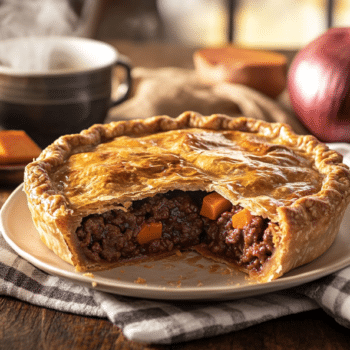
Gluten-Free Meat & Sweet Potato Pie

Equipment
Ingredients
For the filling
 1 small red onion
 2 medium carrots
 1 large sweet potato - peeled, approximately 350g / 12oz
 1 pound ground beef - minced beef, 450g
- 2 tablespoons nutritional yeast
- 1 teaspoon marmite
 ⅔ cup water - 160ml
For the pastry
- 1 ¼ cups gram flour - chickpea flour, 155g
- ¾ cup sorghum flour - 100g
- ½ cup tapioca starch - 60g
- ⅔ cup dairy-free margarine - cold and cubed, 150g
- 5 tablespoons cold water - 75ml
For assembly
- 1 tablespoon dairy-free milk - for brushing
- 1 teaspoon cooking oil or spray - for greasing the pie dish
Instructions
- Preheat the oven to 400°F / 200°C (Gas Mark 6 / 180°C fan-forced).
- Lightly grease the pie dish with dairy-free margarine or cooking spray.1 teaspoon cooking oil or spray
- Make the pastry first: Mix the gram flour, sorghum flour and tapioca starch, rub in the margarine until the mixture resembles breadcrumbs, then add the cold water and bring together to form a dough. Wrap in a large piece of cling film and put it in the fridge.1 ¼ cups gram flour, ¾ cup sorghum flour, ½ cup tapioca starch, ⅔ cup dairy-free margarine, 5 tablespoons cold water
- Chop the onion, carrots and sweet potato into small chunks and dry fry for 5-10 minutes. Add the mince and continue to fry until it has browned.1 small red onion, 2 medium carrots, 1 large sweet potato, 1 pound ground beef
- Add the nutritional yeast and marmite and stir into the mixture before adding the ⅔ cup (160ml) of water.2 tablespoons nutritional yeast, 1 teaspoon marmite, ⅔ cup water
- Simmer for 20-30 minutes (occasionally stirring, so it doesn’t stick) until the vegetables are softened and most water has been absorbed into the mixture.
- Whilst the vegetables and meat are cooking, roll out the pastry: Take two thirds and put the other third back in the fridge.
- IMPORTANT NOTE: gluten-free pastry is very ‘short’, which means it will easily crumble. The best and easiest way to handle it is to roll out between a folded over sheet of cling film so it doesn’t stick to either the work surface or the rolling pin.
- Flatten your large piece of cling film on your work surface and put the dough roughly in the middle, folding the other half over the top of the dough. Now roll out, occasionally measuring against your pie dish. When big enough, peel back the top side of the cling film and lift the rolled out pastry, carefully inverting it into the greased pie dish. Once placed in the dish, peel back the bottom layer of cling film, and you can cut away any of the sides if they are too long.
- Don’t worry if your pastry doesn’t quite fit. Use your fingers to stretch it out and add extra pieces if it’s too short. It doesn’t need to be perfect.
- Once the mince and vegetables are cooked, and water has been mostly absorbed into the mixture, add it to the pastry case.
- Roll out the rest of the pastry in the cling film like before and place it on top of the mince and vegetable mixture to close your pie. Use your thumbs to press the lid of the pastry together with the edges of the case. Pierce with a fork several times and brush with a little dairy-free milk.1 tablespoon dairy-free milk
- Place the pie in the centre of the oven and bake for 30 minutes until the pastry is golden brown all over. If the edges are browning too quickly, loosely cover with foil for the final 10 minutes. Allow the pie to rest for 10 minutes before slicing — this lets the filling set and makes for cleaner slices.
Notes
Nutrition
Frequently asked questions
Can I use regular flour and butter instead of the gluten-free flours and dairy-free margarine?
Yes. Use 2 cups of plain all-purpose flour and cold butter in the same total weight as the margarine. The method is the same, and the pastry will be easier to handle.
How do I know when the ground beef is cooked through?
Ground beef is safe to eat at an internal temperature of 160°F (71°C). In practice, the meat should be fully browned with no pink remaining before you add the liquid — if you’re unsure, use an instant-read thermometer.
Can I use white potato instead of sweet potato?
Yes, it works as a straight swap by weight. The filling will be less sweet and slightly drier, so you may need to add a splash more water during simmering.
My family is large — can I double this recipe?
You can double the filling easily. For the pastry, double the quantities but work in two separate batches rather than one large one — gluten-free dough becomes harder to manage at larger volumes.
Can I make this ahead and bake it the next day?
Yes. Assemble the pie fully, cover it tightly, and refrigerate overnight. Add 5–10 minutes to the bake time since it’s going in cold from the fridge.
What can I serve with this to make it a full meal?
Steamed green beans or peas work well — they’re quick and don’t compete with the pie. A simple green salad on the side is enough for a complete dinner without extra cooking.
What to cook next
- Savory British Beef Pies
- Cumberland Sausage Mince Pie
- Wild Venison Mushroom Pies
- Kumara Beef Hash Cakes