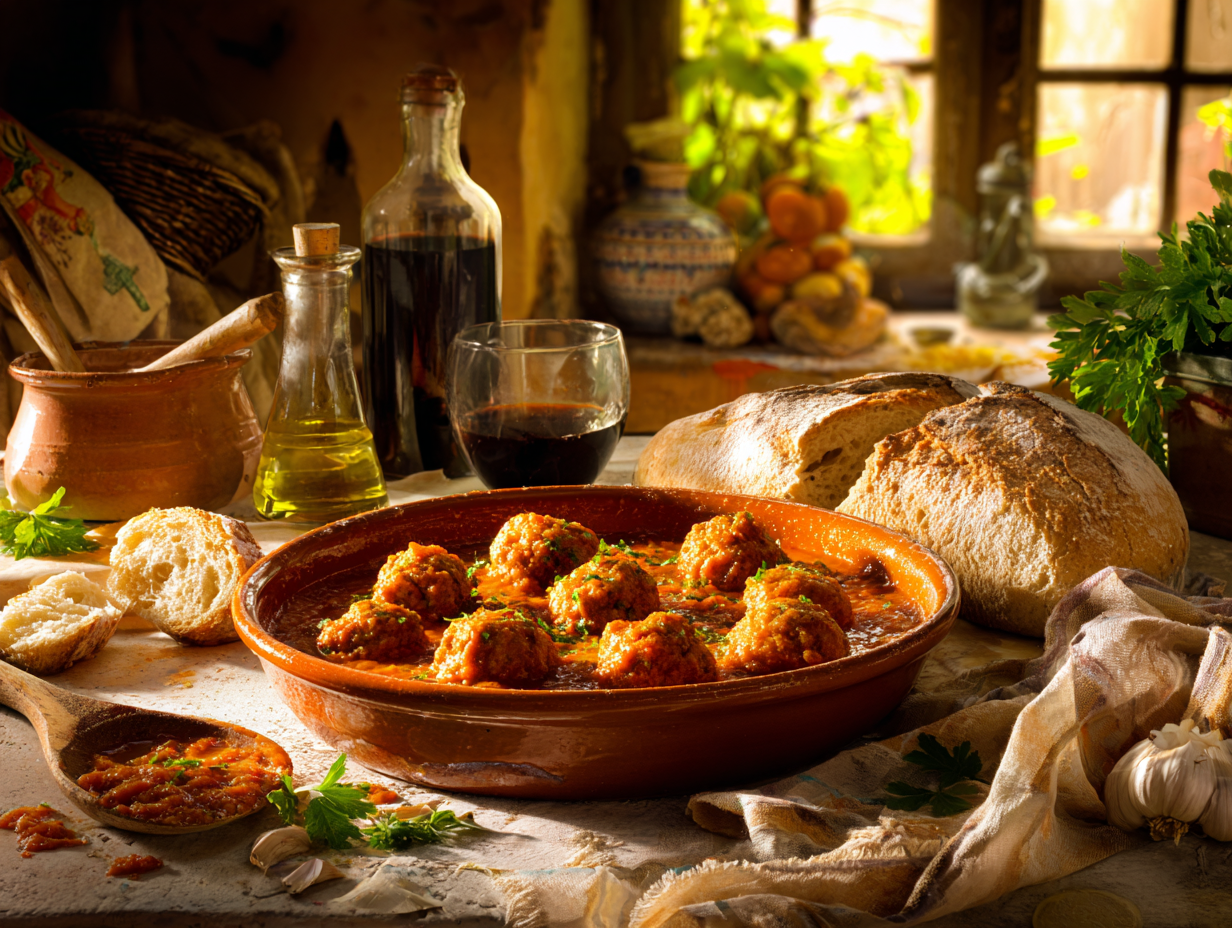
Sicilian meatballs — polpette — are simmered in tomato sauce rather than served on top of pasta, which means the sauce does double duty as a braise and a dipping medium for bread. The mix is ground beef and pork with soaked breadcrumbs, Parmigiano-Reggiano, garlic, parsley, and egg, all cooked in a soffritto-based tomato sauce. It takes about an hour start to finish and uses ingredients most households already have on hand.
Before you start
The two things that actually determine whether these meatballs hold together and stay tender are how you handle the breadcrumbs and how gently you brown the meatballs. Soak the breadcrumbs in milk until fully saturated — squeeze out the excess before mixing, but don’t wring them bone dry. That retained moisture is what keeps the interior soft after simmering. When you brown the meatballs, resist moving them for the first 2 minutes per side; a crust that forms naturally releases cleanly from the pan, while one that’s forced off tears and falls apart in the sauce. Use medium heat, not high — you want color, not a scorched exterior with a raw center.
Mistakes to avoid
- Overworking the meat mixture. Mix until the ingredients just come together. Compacting the mixture makes the meatballs dense and rubbery once cooked.
- Skipping the soffritto cook-down. If you rush the onion, carrot, and celery stage, the sauce tastes raw and sharp. Give it at least 8 minutes on low heat until the vegetables are soft and slightly translucent before adding tomatoes.
- Making the meatballs too small. Smaller meatballs overcook quickly during the sauce simmer. Aim for golf-ball size — roughly 1.5 oz each — so the interior stays moist by the time the sauce is done.
- Not checking internal temperature. The meatballs contain both ground beef and ground pork, so they need to reach 160°F (71°C) at the center. Cut one open if you don’t have a thermometer — no pink, clear juices.
- Adding the meatballs to cold sauce. The sauce should be at a steady simmer before the meatballs go in. A cold drop in temperature stalls the cooking and can cause the meatballs to break apart as they slowly come up to heat.
Substitutions that actually work
- Parmigiano-Reggiano: Pecorino Romano works well and is often cheaper. Grana Padano is a milder but perfectly fine stand-in. Pre-grated shelf-stable parmesan is a last resort — it’s drier, so reduce it slightly to avoid a grainy texture.
- Fresh breadcrumbs: Stale sandwich bread torn into small pieces soaks up milk just as well. Panko absorbs less liquid, so use a little less milk and let it sit longer.
- Fresh parsley: Dried parsley works in a pinch — use one-third the amount. Skip the garnish — not worth the extra dish.
- Ground beef and pork mix: All ground beef produces a firmer, slightly drier meatball. If you only have beef, add an extra tablespoon of olive oil to the mix to compensate for the missing pork fat.
- Whole milk: 2% milk or even unsweetened oat milk soaks the breadcrumbs adequately. Full-fat dairy gives a marginally richer result but the difference is small.
Make-ahead notes
The fully cooked meatballs in sauce keep well in the fridge for up to 4 days in a sealed container — the flavor actually improves overnight as the sauce absorbs into the meat. Reheat gently on the stovetop over low heat with a splash of water to loosen the sauce, or microwave covered at 50% power to avoid drying out the exterior. For freezing, cool completely, then freeze meatballs and sauce together in portions for up to 3 months. Thaw overnight in the fridge before reheating. If you want to prep ahead without cooking, formed raw meatballs can be refrigerated on a tray for up to 24 hours before browning — useful if you’re breaking the recipe across two days.
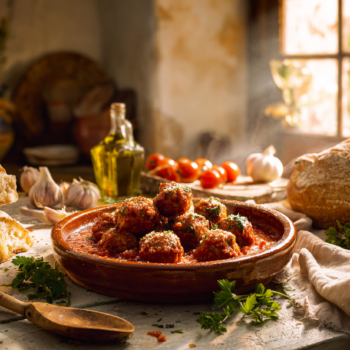
Lip-Smacking Sicilian Meatballs

Ingredients
Meatball Ingredients
 1 kilogram ground beef (minced beef)
 250 grams ground pork (minced pork)
 5 medium eggs
 ½ glass milk
- 150 grams Parmigiano-Reggiano - grounded
 1 clove garlic - thinly chopped
 150 grams breadcrumbs
 1 pinch salt
 1 pinch ground black pepper
- 1 pinch persil
Sauce Ingredients
 1 kilogram Neapolitan Sauce or Pasta sauce Southern Hemisphere (Tomato Sauce in North America) - sweet
 1 medium onion
 1 medium carrot
Instructions
- Combine the meatball with a wet hand (they have to be round and about 1 to 2 centimetres in diameter). Pan-fry the meatballs until they are golden brown.
- Make the soffritto in a pan (a mixture of finely chopped onions, celery, and carrot sauteed in olive oil).
- When the soffrito is well melted, add the tomato sauce, salt and pepper and cook slightly until you have a tasty and silky tomato sauce.
- Put the meatball in the sauce and cook everything together for about 10 to 15 minutes. Then turn off the fire and eat (tastier if you eat them directly from the pan dipping a good piece of bread in the sauce).
Nutrition
Your questions, answered
Can I use all ground beef instead of a beef and pork mix?
Yes, all ground beef works, but the meatballs will be slightly firmer and less juicy. Adding an extra tablespoon of olive oil directly into the meat mixture helps compensate for the fat you lose by leaving out the pork.
Do I have to brown the meatballs before simmering them in the sauce?
Browning is worth the extra 10 minutes — it builds a crust that holds the meatball together during the sauce simmer and adds flavor to the sauce itself. Skipping it means softer, more fragile meatballs and a thinner-tasting sauce.
How do I know the meatballs are fully cooked through?
The safest check is an instant-read thermometer inserted into the center of the largest meatball — you need 160°F (71°C) since the mix contains both beef and pork. If you don’t have a thermometer, cut one open: the interior should show no pink and the juices should run clear.
What to cook next
- Olive Beef Polpette Perfection
- Spicy Calabrian Lamb Ragù
- Beef Ricotta Lasagna Rolls
- Spicy Beef Stuffed Peppers