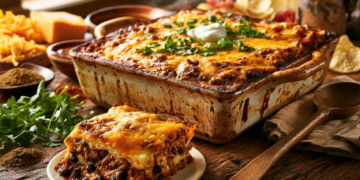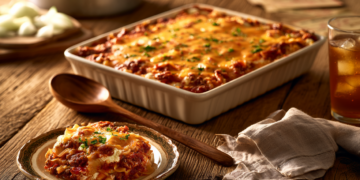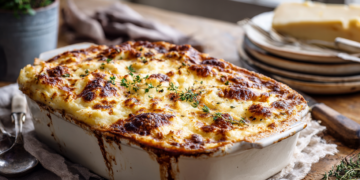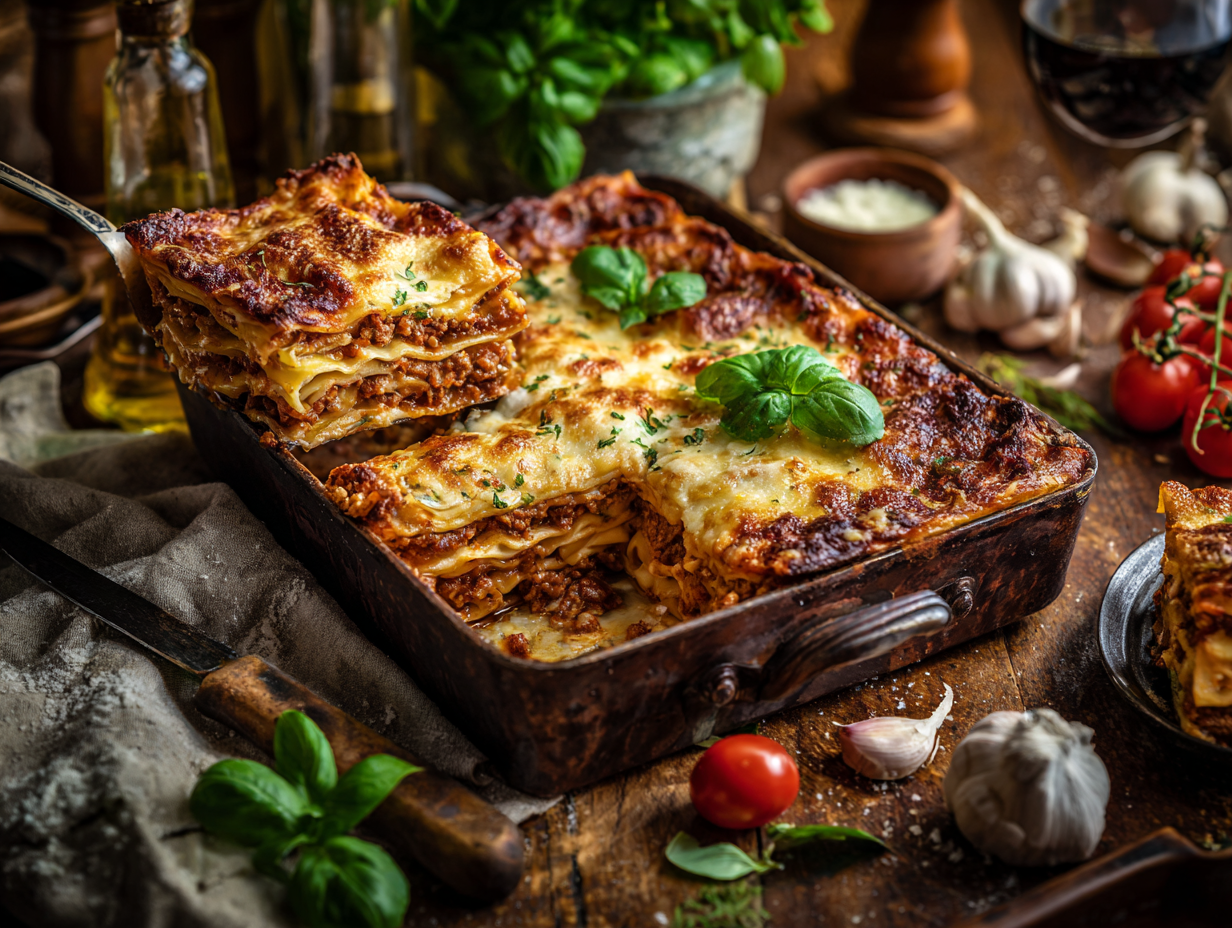
This is a beef Bolognese lasagna built on a slow-simmered meat sauce, a simple béchamel, and freshly grated Parmigiano-Reggiano — no ricotta, no shortcuts. It takes real time, mostly hands-off simmering, and the payoff is a dish that feeds a crowd a complete, protein-rich meal from a single pan. If you have a free afternoon, this is worth every minute.
Before you start
Two things determine whether this lasagna works. First, the Bolognese needs a full three-hour simmer — not because it sounds impressive, but because ground beef releases moisture early and then slowly concentrates into a rich, cohesive sauce. Pull it at 90 minutes and you get a flat, watery result that no amount of cheese will fix. Second, the béchamel must be lump-free before it goes into the dish. Cook the flour in the butter for a full two minutes over medium heat before adding any milk, and add the milk gradually while whisking constantly. A lumpy béchamel stays lumpy in the oven. Get both of these right and the assembly is straightforward.
About the ingredients
- Ground beef: Use an 80/20 blend. Leaner beef dries out during the long simmer and produces less flavor. The fat renders into the sauce and is largely left behind in the pan if you drain before layering.
- Parmigiano-Reggiano: Buy a block and grate it yourself. Pre-shredded Parmesan contains anti-caking agents that prevent it from melting cleanly — skip the pre-shredded entirely, it’s not worth the compromise here.
- Pasta sheets: Fresh pasta is ideal. If using dried no-boil sheets, check the package — some brands need a brief soak in warm water first or they pull moisture from the sauce and stay leathery.
- White pepper and nutmeg in the béchamel: These are not decorative. White pepper keeps the sauce visually clean, and nutmeg cuts the heaviness of the butter-milk base. A small pinch of each is enough.
Leftovers and meal prep
Lasagna holds well and actually slices more cleanly on day two once the layers have fully set. Store leftovers covered in the fridge for up to four days. For freezing, portion into individual servings before freezing — they reheat faster and more evenly than a whole slab. Frozen portions keep for up to three months. Reheat refrigerated portions in a 350°F oven covered with foil for 20 minutes, or microwave on medium power to avoid drying out the edges. The Bolognese sauce alone freezes beautifully for up to three months, so making a double batch and freezing half is a practical move — you get a second lasagna or a quick pasta dinner with almost no extra effort.
Common problems and fixes
- Lasagna is watery when cut: The Bolognese was too wet going in, or the dish wasn’t rested long enough after baking. Simmer the sauce until it holds its shape on a spoon before assembling, and rest the finished lasagna at least 20–30 minutes uncovered before slicing.
- Pasta layers are tough or chewy: Dried sheets weren’t hydrated enough. Make sure there is adequate sauce covering every sheet edge — exposed pasta won’t soften in the oven. A loose béchamel layer over each pasta sheet helps.
- Béchamel tastes floury: The roux wasn’t cooked long enough. The raw flour smell should be gone before you add any milk. Two minutes of stirring over medium heat is the minimum.
- Top layer is burnt before the center is hot: The oven temperature was too high, or the foil was removed too early. Bake covered with foil for the first two-thirds of the cooking time, then uncover only to brown the top.
- Meat sauce tastes flat despite long cooking: The soffritto wasn’t cooked down enough at the start, or the wine was added before the meat was properly browned. Brown the ground beef in batches if needed — crowding the pan steams the meat instead of browning it, and that step is where most of the flavor comes from.
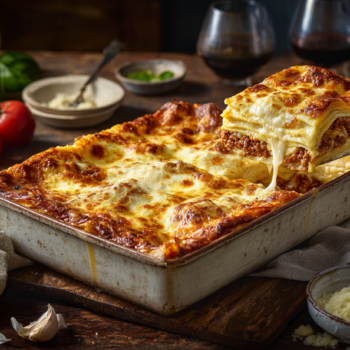
How To Make The Best Gourmet Lasagna

Ingredients
Bolognese Sauce:
 2 tablespoons vegetable oil
 ¾ cup onion - chopped
 1 cup celery - chopped
 1 cup carrots - chopped
- ½ pound pancetta - Italian bacon, diced
 1¼ pound ground beef (minced beef)
 ½ teaspoon salt
 ½ teaspoon ground black pepper
 ½ cup white wine
 2 ½ cups tomato - diced
Bechamel Sauce:
 2 cups milk
 2 tablespoons butter
 4 tablespoons all purpose flour (plain flour Australia and UK)
- ½ teaspoon salt
- ½ teaspoon ground black pepper
 1 pinch nutmeg
Lasagna Preparation:
 1 box lasagna sheets - or 375 grams
 1 cup Parmesan cheese
- 1 cup Italian blend cheese - shredded
Instructions
To Make The Bolognese Sauce:
- In a large pot, add oil and chopped onion on medium heat and cook until clear.
- Add the pancetta and cook for 1 minute.
- Add the celery and carrots and cook for a further 2 minutes.
- Add the ground beef, salt and pepper to taste and cook until the beef is no longer red.
- Add the wine and let simmer on low and add canned tomatoes. Cook uncovered and let simmer for 3 hours, stirring occasionally.
To Make The Bechamel Sauce:
- Melt the butter in a pan over medium heat and whisk in flour. Cook for 2 minutes until thickened.
- Slowly pour in the milk and whisk constantly.
- Season with salt, pepper and nutmeg. Simmer gently on low for 20 minutes. The sauce will thicken. Remove the pan from the heat.
Lasagna Preparation:
- Cook Lasagna noodles (1 box 375grams) according to package directions. Drain and pat dry.
- Toss noodles with olive oil and begin layering noodles, Bolognese sauce, Bechamel sauce and parmesan cheese. There should be 4 layers, including the top.
- Top off the last layer of noodles with shredded cheese blend.
- Bake in the center of the oven at 400°F for 40 to 50 minutes or until the cheese is melted on top.
- Let cool for 5 minutes before cutting into sections and serving.
Notes
Nutrition
FAQ
Can I make this lasagna the day before serving?
Yes — assembling it a day ahead actually improves the result. Cover the unbaked dish tightly and refrigerate overnight, then bake straight from the fridge, adding about 15 extra minutes to the covered baking time to account for the cold start.
What internal temperature should the lasagna reach?
The ground beef in the Bolognese must reach 160°F (71°C) during cooking — this happens well before the sauce finishes its three-hour simmer, so it’s not a concern if the sauce is fully cooked before assembly. If you’re reheating a cold assembled lasagna, the center should reach at least 165°F (74°C) to be safe throughout.
Can I use a mix of ground beef and ground pork?
Yes, a 50/50 mix works well and is common in traditional Bolognese. Ground pork adds fat and a slightly sweeter flavor. Both beef and pork need to reach 160°F (71°C), which the long simmer handles easily.
How many people does this lasagna serve as a main meal?
A standard 9×13-inch pan cut into 12 portions serves 6 adults generously as a main, or up to 8 with a side salad and bread. The Bolognese and béchamel together make this a filling, protein-forward dish, so smaller portions go further than you might expect.
Can I assemble and freeze the lasagna before baking?
Yes. Assemble fully, wrap tightly in two layers of plastic wrap plus foil, and freeze for up to two months. Thaw completely in the fridge overnight before baking — do not bake from frozen or the center will stay cold while the edges overcook.
If you liked this one
- Beef Ricotta Lasagna Rolls
- Creamy Beef Spinach Pasta
- Spicy Calabrian Lamb Ragù
- Hearty Beef Mushroom Stroganoff